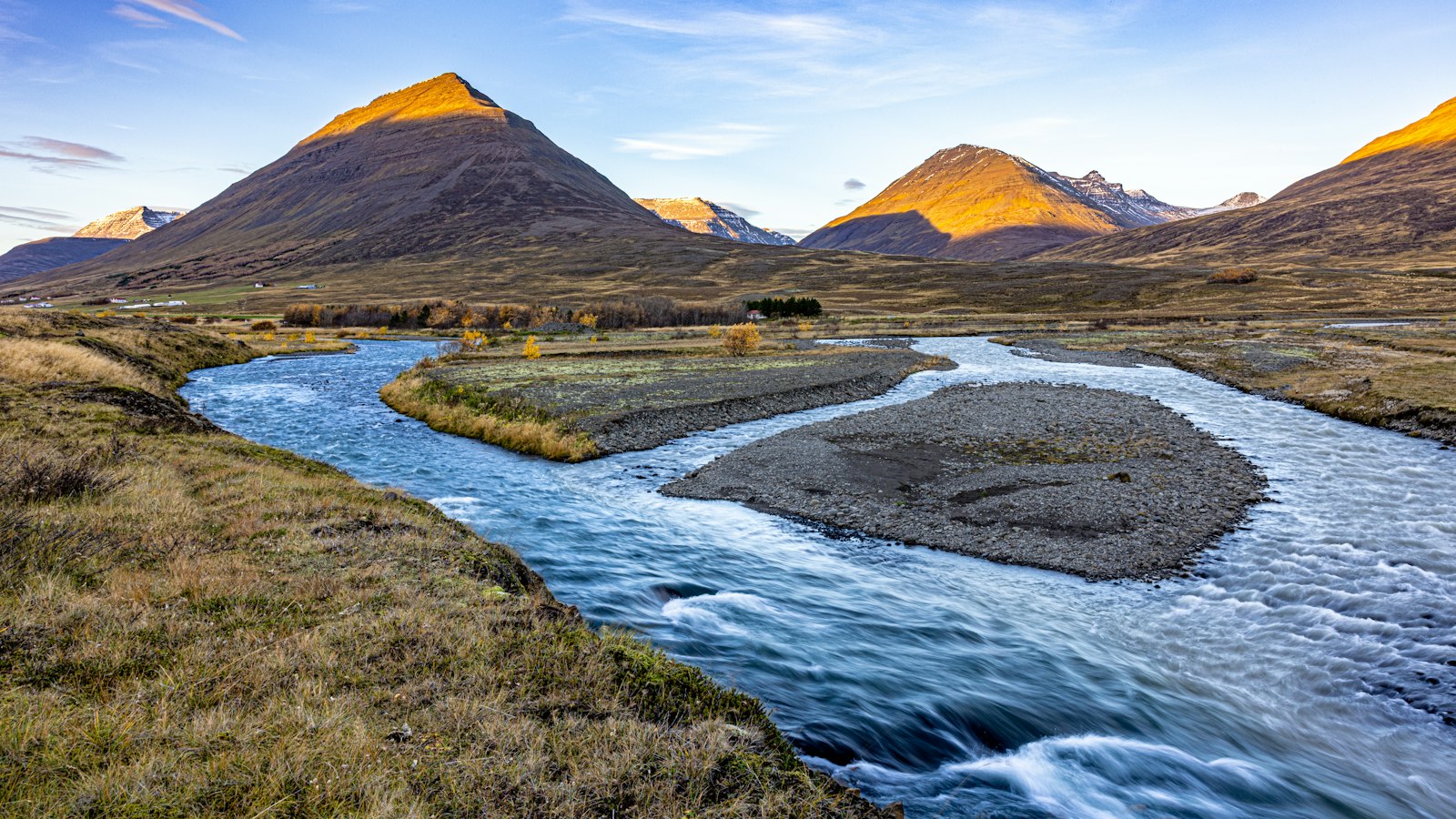
In the far north of Iceland, the valley of Hjaltadalur hides a place with unique significance: Neðri-Ás, whose name means “Lower Ridge.” Positioned at the northern entrance of the valley, this farmstead marks where the land rises between Hjaltadalur and neighbouring Kolbeinsdalur. While today it appears as part of Iceland’s rural landscape, its soil holds clues to a transformative era in the country’s past.
Originally, the entire estate carried the simple name Ás. Over time, the property was split in two, with Efri-Ás (“Upper Ridge”) founded slightly deeper into the valley. The history of Neðri-Ás, however, predates this division. It is closely tied to the arrival of Christianity in Iceland, a change that shaped every aspect of society for centuries to follow.
An early church and an English connection
In the late 900s, Þorvarður Spak-Böðvarsson, a farmer of some renown, called Ás his home. He chose to convert to Christianity well ahead of most Icelanders. Long before Christianity was officially adopted in the country, Þorvarður built a church on his farm. According to the Kristni saga, a medieval written account penned some 300 years later, this church was completed in either 983 or 984, sixteen years before the conversion was formally declared in 999.
What makes this account especially intriguing is the detail that wood for construction came from England. Timber suitable for building was scarce in Iceland, so importing wood represented a considerable undertaking. The early church at Ás would later become the first known example of its kind on Icelandic soil. Archaeological excavations carried out at Neðri-Ás in 1998 and 1999 revealed foundations dating from around the year 1000, confirming that such a building did stand here before 1104.
From churchyard to quiet field
The same excavations found the remains of three successive church buildings on the site. The final one was destroyed by fire, likely around the year 1300. Also uncovered were about 100 graves in the surrounding churchyard. Nearly all of these burials predate 1104, possibly reflecting the shift in local religious life when Hólar, the nearby episcopal seat, was established in 1106.
For centuries, the land at Neðri-Ás saw the comings and goings of generations, farmers, worshippers and the newly Christianised. Today, fields and ridges remain quiet, but the foundations underfoot hint at a time when this remote valley was at the centre of a cultural change that shaped all of Iceland.
Sources
- Wikipedia
- Wikipedia (Icelandic) in Icelandic


