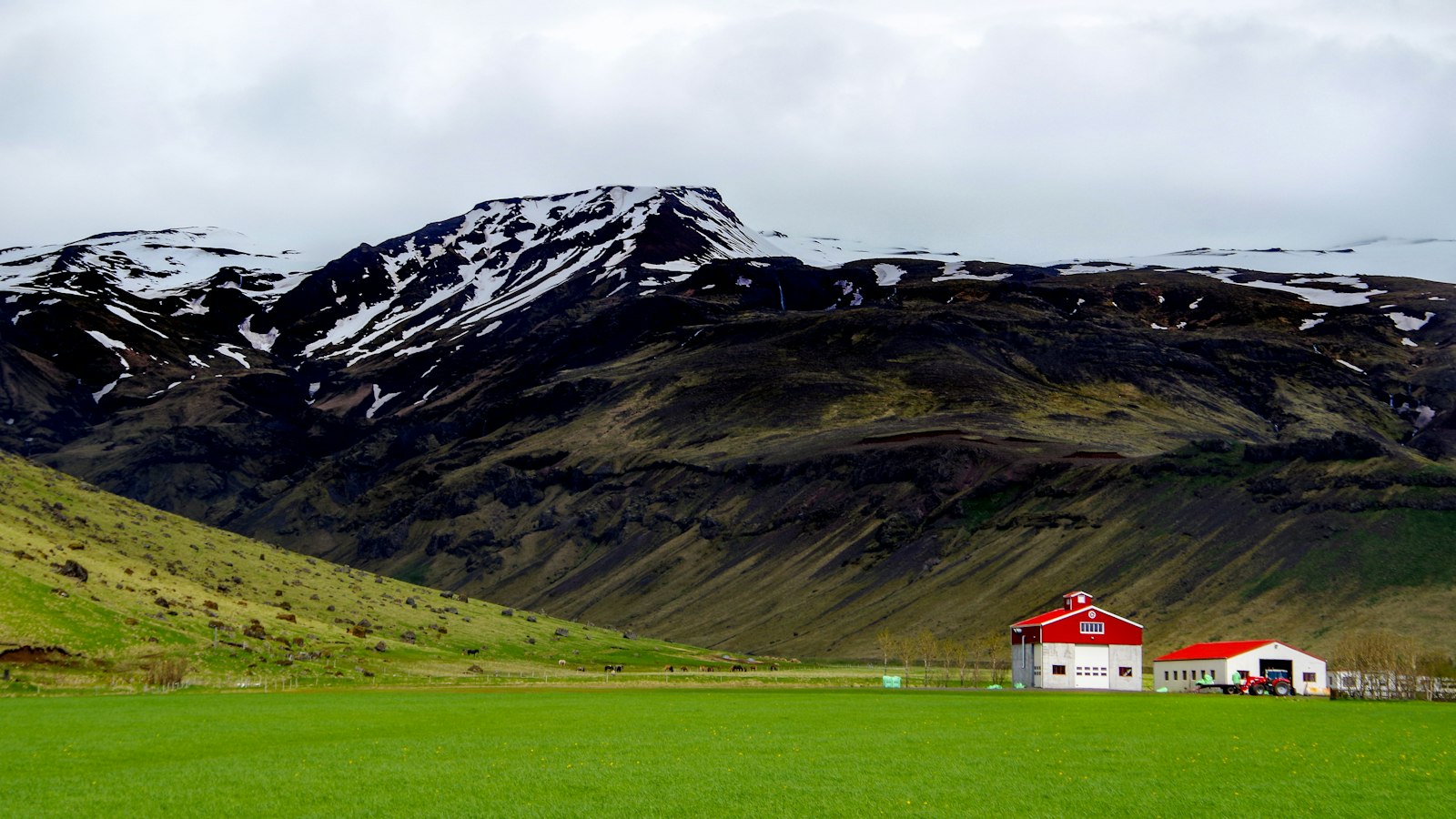
In the far north of Austurdalur valley, where the land narrows and mountains loom above, Merkigil once marked the final farmstead before the wilderness. The farm stood encircled by sheer gorges and peaks so high they shaped daily life for generations. Its location offered rich farmland, but reaching it required overcoming steep cliffs and formidable rivers.
Landscape forged by rivers and effort
Austari-Jökulsá, a glacial river flowing in the west, created a deep gorge that defined Merkigil’s borders. North of the farm lies a ravine of the same name, cutting between Kjálki and the rest of Austurdalur. This dramatic geography meant journeys to nearby communities, like Kjálki or Blönduhlíð, often involved crossing perilous paths hugging the cliffs. Traditional routes led along a narrow track, making the delivery of bulky goods to Skagafjörður market nearly impossible. Instead, wool and other materials followed longer routes, passing over Nýjabæjarfjall into Eyjafjörður and then to Akureyri.
Resilience in a remote valley
The farm at Merkigil supported families for centuries, but its most famous resident was Monika Helgadóttir. She arrived in 1926 with her husband, Jóhannes, and after his early death in 1947, she remained with their eight children, the youngest only weeks old. Monika is remembered for her determination in the face of hardship. She managed the land alone, and in 1949, oversaw the construction of a concrete farmhouse, transporting every building material by horse across the gorge.
Monika’s story reached readers across Iceland after Guðmundur G. Hagalín described her life in his 1954 book about her and her daughters. Recognising the dangers of the daily crossing, Monika campaigned for a bridge over Austari-Jökulsá to assist access. Her efforts were rewarded when a bridge was constructed, later dubbed Monikubrú, or Monica’s Bridge, in her honour.
By 1972, with her children grown and living elsewhere, Monika arranged for Helgi Jónsson to manage the farm, with an agreement he would inherit it if he supported her. After Monika’s death in 1988, Helgi became Merkigil’s last resident until a fatal fall into the gorge in 1997 marked the end of farming in this isolated place. In his final years, Helgi was reportedly the only parishioner in the local Ábær church.
Sources
- Wikipedia
- Wikipedia (Icelandic) in Icelandic


