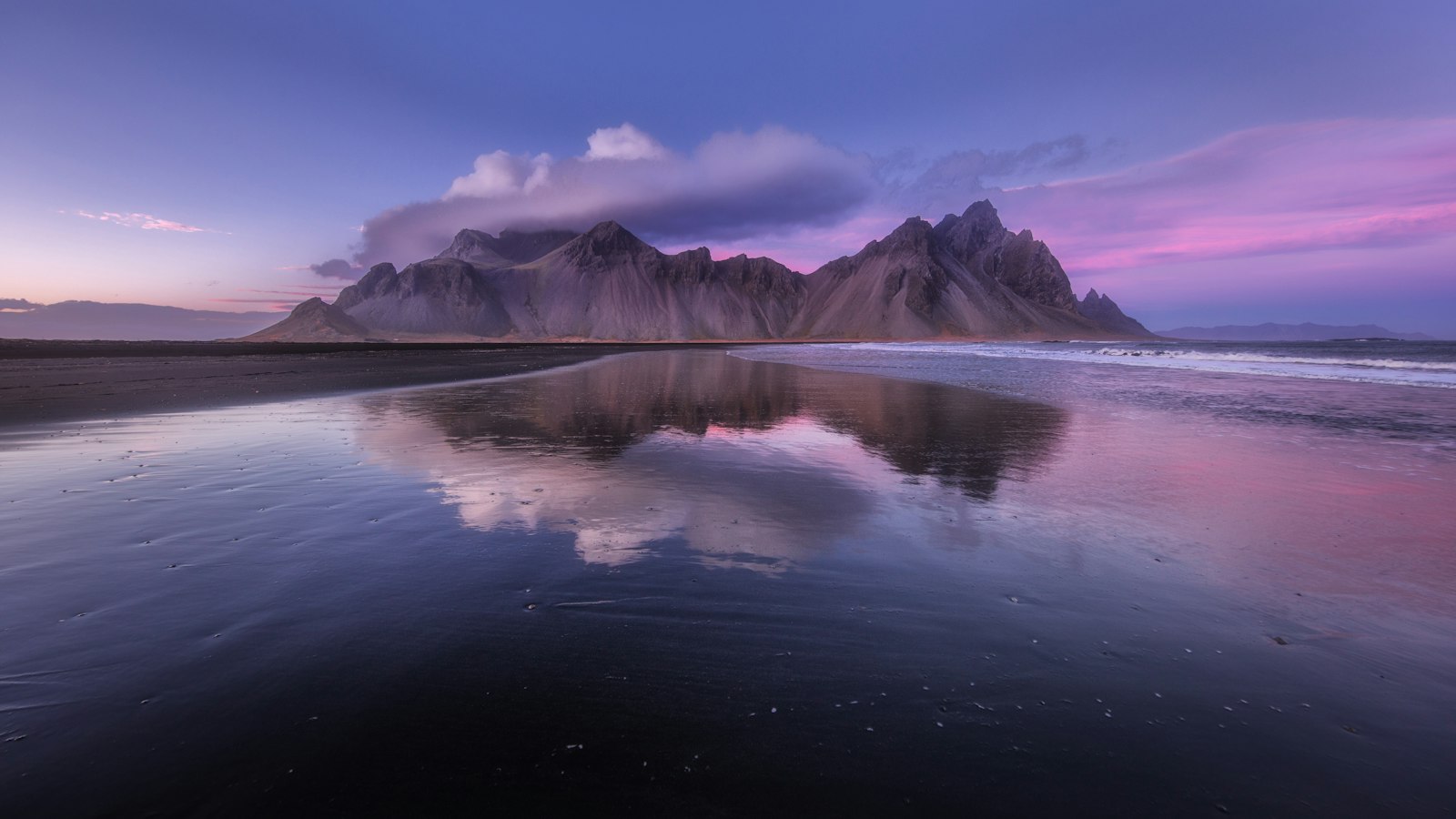
Lónsöræfi, pronounced [ˈlounsˌœːrˌaiːvɪ], lies in southeast Iceland, where glacier tongues from Vatnajökull and weathered volcanic peaks shape a landscape with few rivals in Europe. The region is distinct for its rugged isolation, dramatic geology and vibrant wildlife. Despite its relative obscurity compared to more visited Icelandic destinations, Lónsöræfi preserves a rare sense of wilderness.
Shaped by volcanoes and glaciers
The area’s most captivating features are its geological forms, which mostly emerged 5 to 7 million years ago during an era of pronounced volcanic activity from Kollumúlaeldstöðvar. Some formations are even younger, tracing to the Ice Age, resulting in steep mountains, deep ravines, and basalt columns. Lónsöræfi’s terrain is studded with pillars, cliffs and rocky outcrops, while the glacier Jökulsá í Lóni river marks its southern boundary. Snæfell, at 1833 metres, stands to the north-west as Iceland’s highest non-glacial peak, overlooking Lónsöræfi and its neighbours.
Within the wilderness itself, several peaks rise above 1000 metres, including Sauðhamarstindur (1319 m), Jökulgilstindar (1313 m) and Hnappadalstind (1210 m). From the north, the view extends towards Vatnajökull, with glacier tongues like Eyjabakkajökull, Axarfellsjökull and Vesturdalsjökull reaching into the reserve. The striking geological variety is partly due to ancient volcanic centres and the region’s basalt and rhyolite, easily observed in features such as the worn pillars of Tröllakrókar.
A living landscape and protected reserve
Vegetation clings to riverbanks and lower slopes, especially birch woodlands (birkikjarr), with some taller trees and occasional rowan (reynitré) among the flora. Mountain plants such as jöklasóley and melasól thrive in the slopes and scree, alongside regionally common species like gullsteinbrjótur and bláklukka.
The wildlife, though elusive, adds to the reserves’s mystery. Reindeer roam parts of the landscape, while birds from the raven (hrafn) to various songbirds and waders, including heiðlóa and himbrimi, make Lónsöræfi their summer home.
Human presence in the area is minimal, shaped mostly by old farmsteads and traditional grazing routes leading back to Stafafell. Mountain huts at Geldingafell, Múlaskáli and Egilssel offer shelter to those traversing the wilderness, with recent improvements in access such as the 95-metre hiking bridge over Jökulsá í Lóni at Eskifell, completed in 2004. Lónsöræfi was officially protected in 1977, following local advocacy and landowner agreement. Today, it is managed within Vatnajökull National Park.
Despite its isolation and sparse mobile coverage, Lónsöræfi continues to draw hikers and researchers impressed by its geological history, ever-changing flora, and deep quiet. The region’s legacy remains entwined with both Iceland’s natural evolution and its rural heritage.
Sources
- Wikipedia
- Wikipedia (Icelandic) in Icelandic


