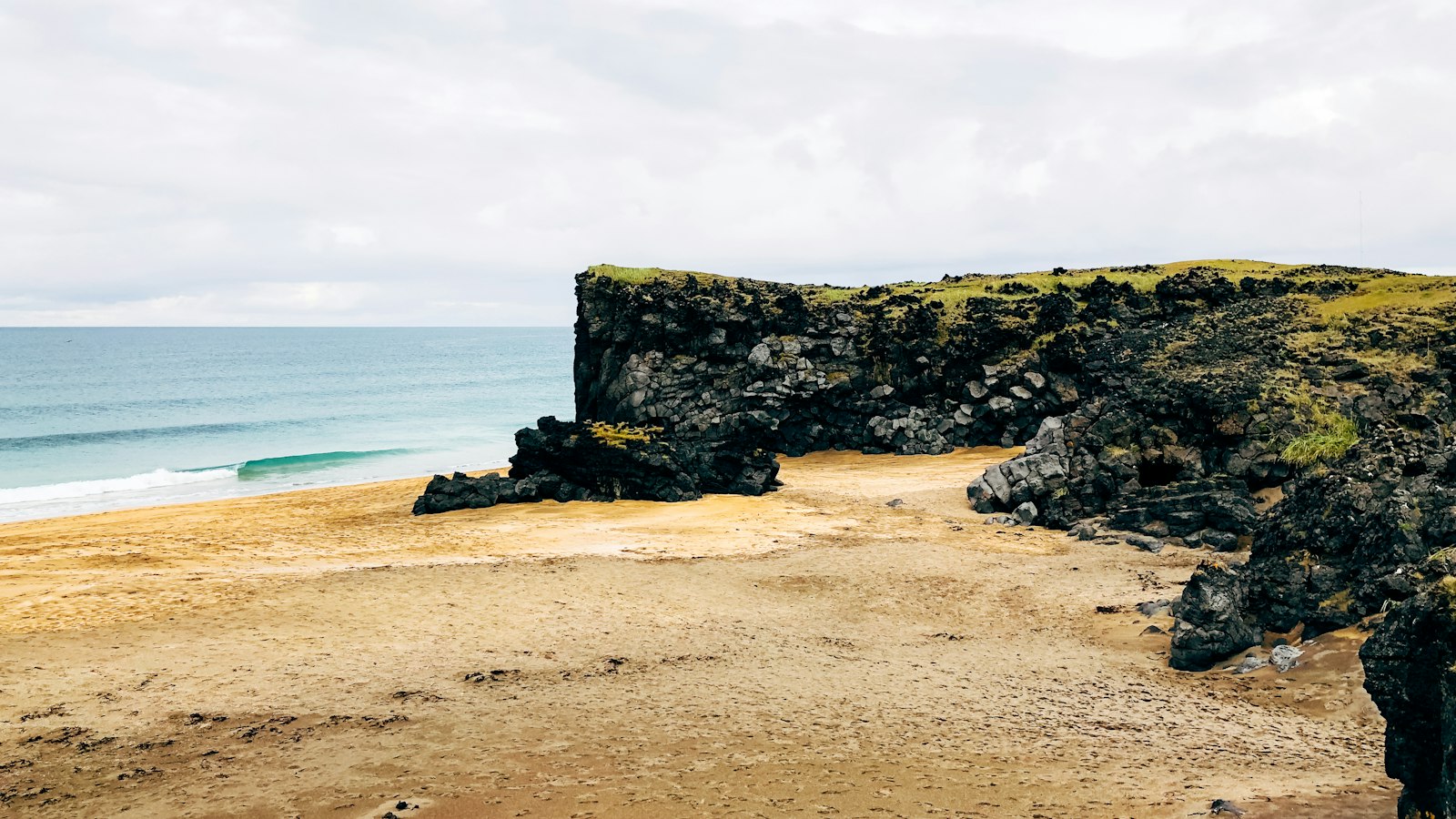
On the southern shore of the Snæfellsnes peninsula, a stark pair of rock spires known as Lóndrangar stand out from the coastal landscape. These twin volcanic plugs, the taller rising to 75 metres and its neighbour to 61 metres, are the remnants of a much larger volcanic crater that has slowly vanished under the relentless work of wind and ocean.
The towers stand due east across from Malarrif and are set about 10 kilometres from Hellnar. Their formation began with a crater; over time, pounding waves and storms eroded away the softer surrounding volcanic material. What remains are these hard basalt columns, along with isolated rocks on the slopes of nearby Svalþúfa, thought to be part of the original crater’s edge.
A magnet for wildlife and fishing boats
Lóndrangar’s steep, craggy sides are home to thousands of nesting birds. Black-legged kittiwakes, common murres, puffins, and northern fulmars all find places to nest in the crevices and ledges. At one time, even a white-tailed eagle nested atop the tallest spire. Above and around these cliffs, the air is often filled with the calls of seabirds.
The coastline here was once more than a wild haven for wildlife. The natural cove known as Drangsvogur, directly east of the taller tower, served as a harbour. As many as 12 fishing boats would set off from this spot when the local fishery was active, taking advantage of the shelter provided by the unique rock formations.
Climbing records and ancient legend
Although the towers are most often seen from below, their challenging forms eventually attracted human climbers. Historical accounts describe the first ascent of the taller stack in 1735, credited to Ásgrímur Bergþórsson. The smaller spire was not climbed until 1938, a testament to its daunting shape.
Lóndrangar has also held a place in Icelandic folklore. The Hauksbók manuscript, a medieval version of the famous Landnámabók (Book of Settlements), refers to the pinnacles as “Drangar rock towers.” According to legend, the settler Lón-Einarr encountered a troll perched on the rocks, whose feet battered the water to create powerful waves. The troll’s verse, told in the saga, recalls ancient giants hurling boulders into the sea, an echo of the dramatic landscape’s origins.
Sources
- Wikipedia
- Wikipedia (Icelandic) in Icelandic


