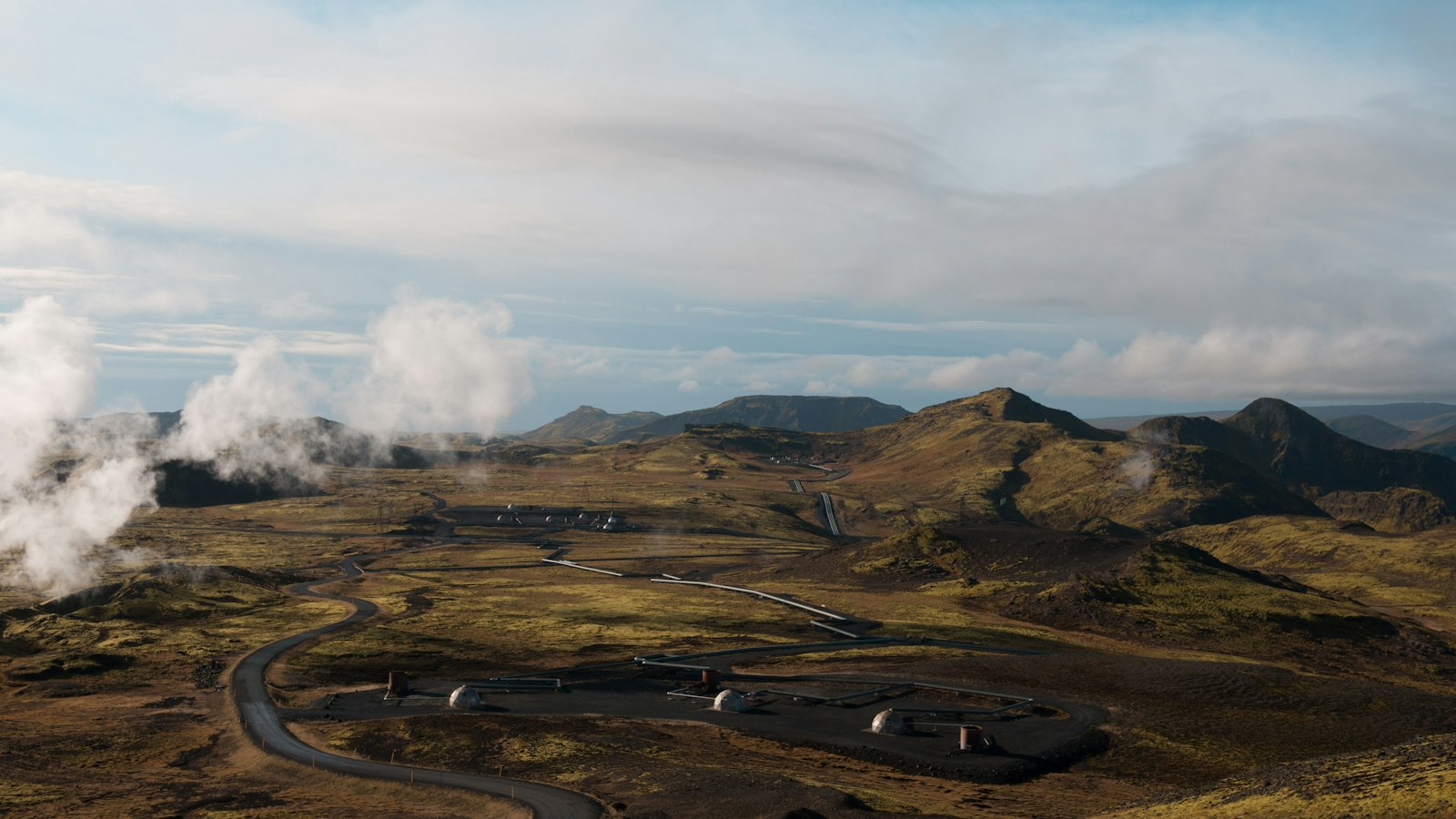
Amid North Iceland’s volcanic landscapes, the Krafla geothermal power plant, Kröflustöð in Icelandic, operates in the shadow of the active Krafla volcano. Less than two kilometres separate it from recent eruption sites, making its story one of adaptation and perseverance in the face of geological unpredictability.
Powering a region with the earth’s heat
Before Krafla’s construction, North Iceland faced notable energy shortages, at times relying on diesel generators. Plans for a major hydropower expansion were shelved due to the Laxá River controversy, redirecting focus to geothermal options. In June 1974, the Kröflunefnd (Krafla Committee) was tasked with preparing for a power plant at either Krafla or Námafjall, and drilling at Krafla began that same year.
However, progress was interrupted almost immediately by an upsurge in seismic activity. In December 1975, an eruption broke out at Leirhnjúk, close to the power station’s construction site, kicking off a period known in Iceland as the Kröflueldar (“the Fires of Krafla”). Over the next nine years, magma repeatedly surged into fissure systems under the caldera, with eruptions and ground deformation causing significant technical and logistical difficulties.
Engineering through eruptions
Teams reinforced the part-built station to withstand earthquakes up to magnitude seven and to bear the weight of up to two metres of volcanic ash. Gaining enough steam for electricity was a challenge; wells were often damaged by seismic shifts and volcanic gases. The power station managed its first generation in March 1978, far below intended output.
It was not until volcanic activity waned in the mid-1980s that drilling more effective production wells became possible. By 1999, after extensive renovations and the installation of a long-stored second turbine, Krafla reached its planned 60-megawatt capacity.
The technical heart of the plant features two 30-megawatt turbines with double-pressure inlets, fed from high- and low-pressure wells. Steam is channelled from deep in the earth, one borehole even reached magma at a staggering temperature of 430°C, making it one of the world’s hottest geothermal wells.
Krafla was originally state-owned and later became part of Landsvirkjun, the National Power Company, and continues to operate as a reliable energy source for Iceland’s northern region, with around 15 full-time employees keeping watch over its complex systems.
Sources
- Wikipedia
- Wikipedia (Icelandic) in Icelandic


