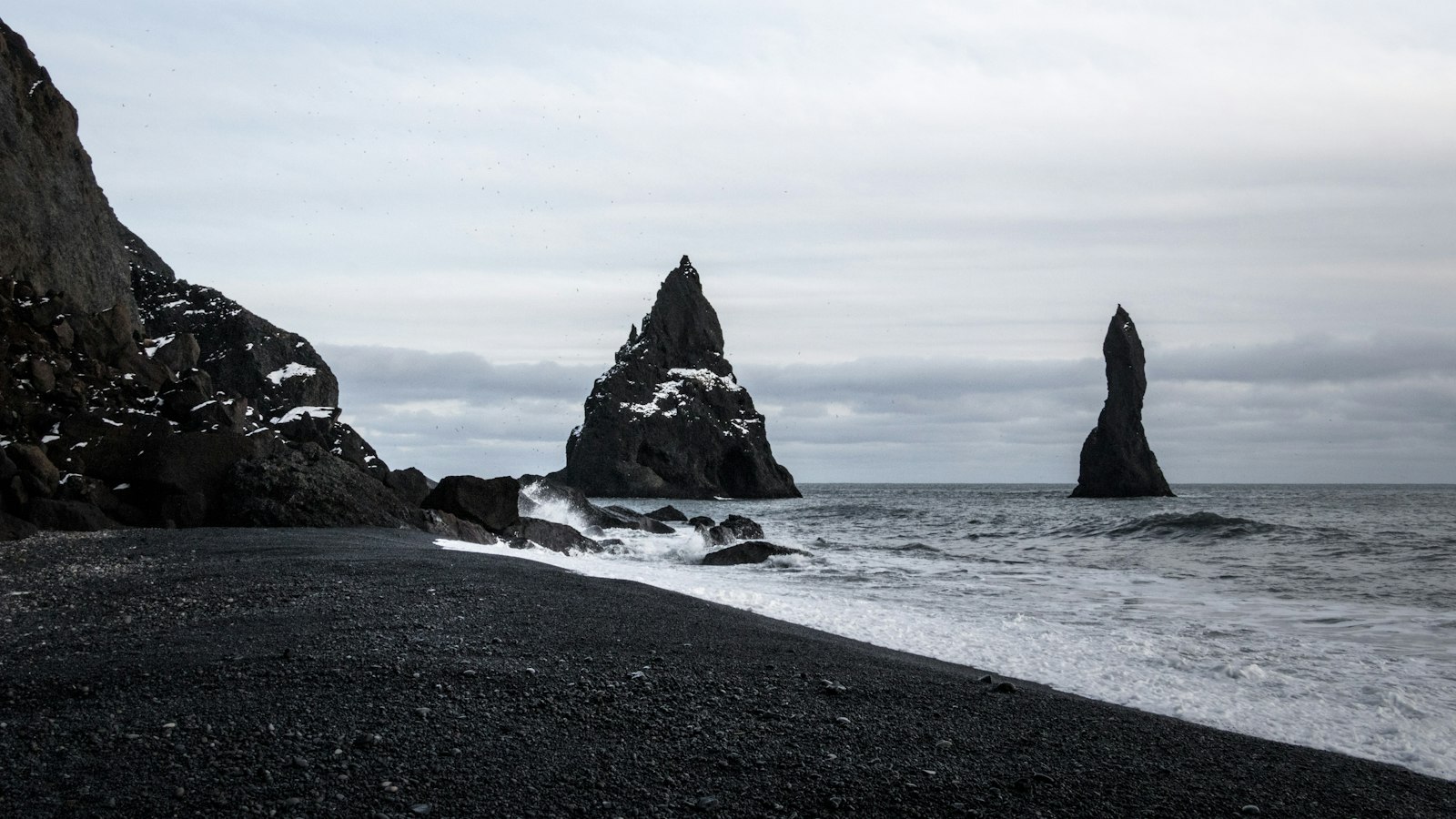
On the eastern coast of the Vatnsnes peninsula in northwest Iceland, a solitary rock known as Hvítserkur rises 15 metres from the sea. Shaped by the relentless waves, this basalt stack is instantly recognisable for its two arches at the base. From some viewpoints, locals say it resembles a dragon bending to drink from the water, an image intertwined with centuries of Icelandic storytelling.
From troll to icon: legend and meaning
The name Hvítserkur, meaning “white shirt” in Icelandic, is likely inspired by the layer of bird droppings coating the rock. Yet it is not just seabirds that have marked Hvítserkur’s identity. According to local legend, this rocky figure is the petrified remains of a troll. The story goes that the troll attempted to destroy the monastery at Þingeyrar nearby, but was caught by the dawn sunlight and turned to stone, frozen at the water’s edge for eternity. Folklore such as this connects daily life with Iceland’s dramatic landscape and natural features.
In the twentieth century, concerns grew that Hvítserkur, also affectionately called the “troll”, might succumb to the same sea that shaped it. Farmers took the unusual step of reinforcing its base with concrete to prevent further erosion. Their efforts mingled practical care with a sense of cultural responsibility, preserving what had become a symbol in the region.
A caldera’s volcanic legacy
While Hvítserkur’s appearance inspires stories, its origins lie in extraordinary geological processes stretching back to the early Miocene period, around 13 to 12 million years ago. The area’s rocks belong to the Hvítserkur ignimbrite, a massive sheet of welded volcanic ash deposited after a powerful eruption in an ancient caldera. Light in colour, this ignimbrite is crisscrossed by basalt dikes and has formed a distinctive mountain. Layers of volcanic deposits, such as hyaloclastites and pillow-lava breccias, suggest that after the caldera-forming eruption, subaqueous volcanic activity continued in a shallow lake that formed inside the depression.
Geologists have reconstructed the caldera as a wide, bowl-shaped structure roughly 7.5 by 4.5 kilometres across. Basalts exposed in its walls dip steeply towards the centre, showing how the entire landscape sagged after the eruption. Within the caldera, sediments built up in the new lake, recording both quiet settling of mud and periods when the water level dropped, allowing hot ash and pumice from later eruptions to wash back in.
Today, the area continues to intrigue researchers curious about Iceland’s mix of volcanic rock types. Hvítserkur’s formation is a window into how Iceland’s predominantly basalt country sometimes produces vast volumes of lighter, felsic ash. Ongoing studies hope to clarify the flow of magma that, in rare moments, transforms the island’s geology.
This marriage of legend and volcanic science makes Hvítserkur more than just a natural curiosity. It is a marker of deep Icelandic time, volcanic, mythical, and very much alive in local memory.
Sources
- Wikipedia
- Wikipedia (Icelandic) in Icelandic


