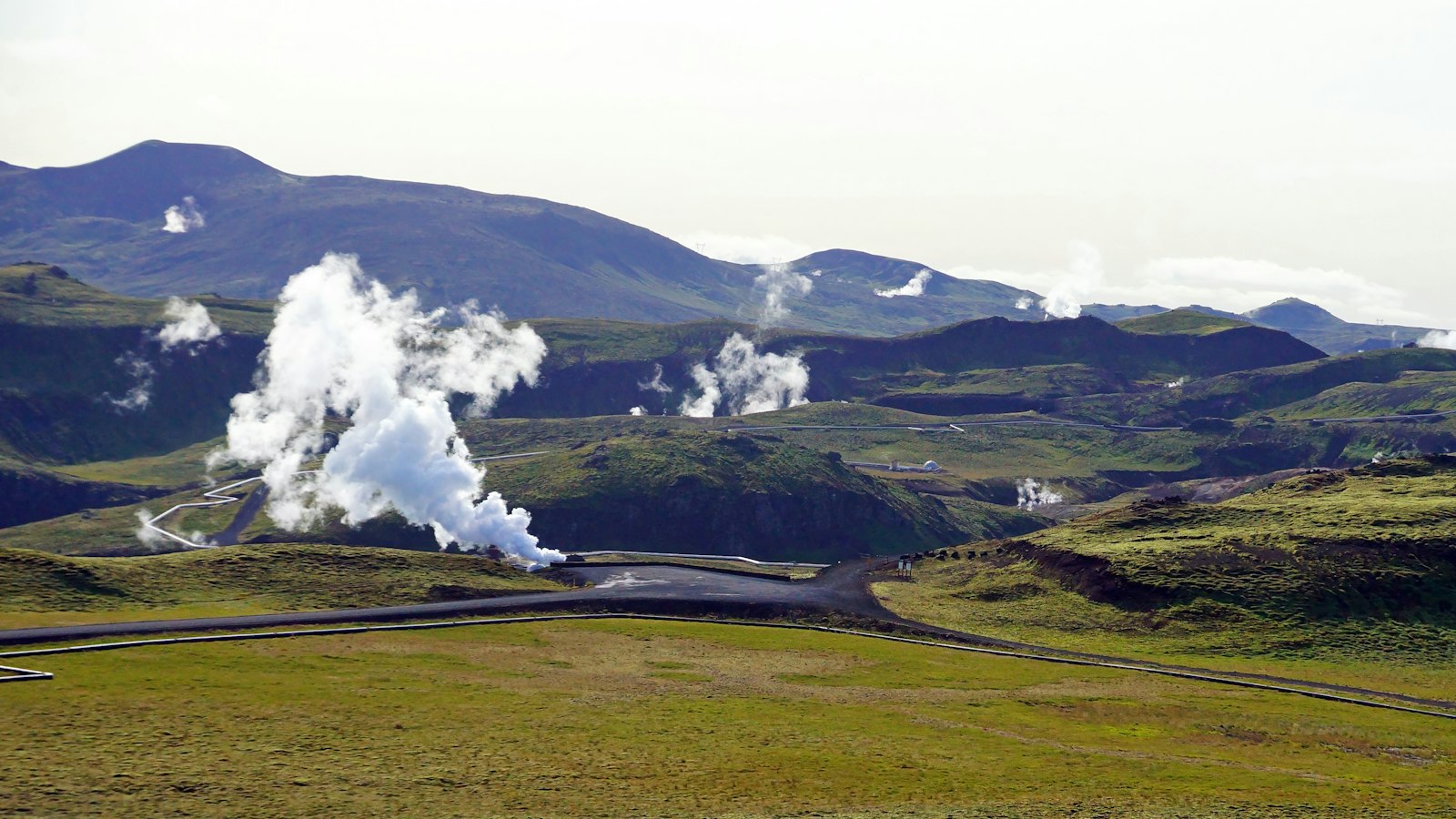
Few countries generate electricity as sustainably as Iceland. As of the early 21st century, the nation relies on renewable sources for over 99.98 percent of its electricity, drawing primarily from hydroelectric and geothermal resources. Wind energy currently plays a minimal but growing role in Iceland’s energy mix.
A rapid rise in electricity production and use
Electricity consumption in Iceland is extraordinary by international comparison. In 2008, the country’s per capita use was seven times the average seen in the fifteen member nations of the European Union at that time. This is due in large part to Iceland’s unique energy landscape, where industrial consumers dominate demand. Heavy industries, most notably aluminium smelters and producers of ferroalloys, bought a majority of the electricity generated, about 70 percent fed the aluminium sector in 2013.
Production rose notably between 2005 and 2008, coinciding with the completion of the Kárahnjúkar Hydropower Plant. At its opening, this plant was the largest in Iceland, with a generating capacity of 690 megawatts.
Transmission, distribution, and the structure of the market
Central to Iceland’s power supply is Landsvirkjun, the largest producer of electricity in the country. The national transmission grid spans 3,000 kilometres and is managed by Landsnet, which is jointly owned by several state energy firms. Electricity is transmitted from about 70 substations, and the voltage levels across the network include 220kV and 132kV lines, as well as a few operating at 66kV.
Most households and small businesses access power through local distribution companies, each holding a monopoly in their region. For instance, Veitur serves Reykjavík and nearby communities, while RARIK supplies rural areas. Other regional utilities include Orkubú Vestfjarða in the Westfjords and Norðurorka around Akureyri. Though retail users pay a per unit distribution fee to their local utility, they are free to purchase the actual electricity from any provider. Recent years have seen the arrival of new retail resellers, reflecting a move towards further competition.
Islanded and potential connections abroad
Two remote islands, Grímsey and Flatey, remain exceptions to Iceland’s electrification, they still rely on diesel generators, being physically disconnected from the main grid.
There are ambitious proposals to link Iceland’s grid with the United Kingdom’s via a high-voltage subsea cable known as Icelink. If realised, this would be the longest marine high-voltage direct current (HVDC) cable in the world, enabling Iceland to export renewable electricity to Europe. The project remains in the planning stage and is contested within Iceland, with concerns around environmental impact and potential price rises.
Alongside these plans, Iceland plays an active role in European electricity certification, trading renewable energy certificates. Export of such certificates was temporarily suspended in 2023 due to oversight concerns, but the ban was later lifted.


