Trains are not part of everyday life in Iceland. The country has no public railway lines crossing its dramatic lava fields or connecting its towns. Yet, for brief and important periods in history, railways played a crucial supporting role in shaping Reykjavík and helping with major construction projects far from the public eye.
Short-lived tracks in Reykjavík and beyond
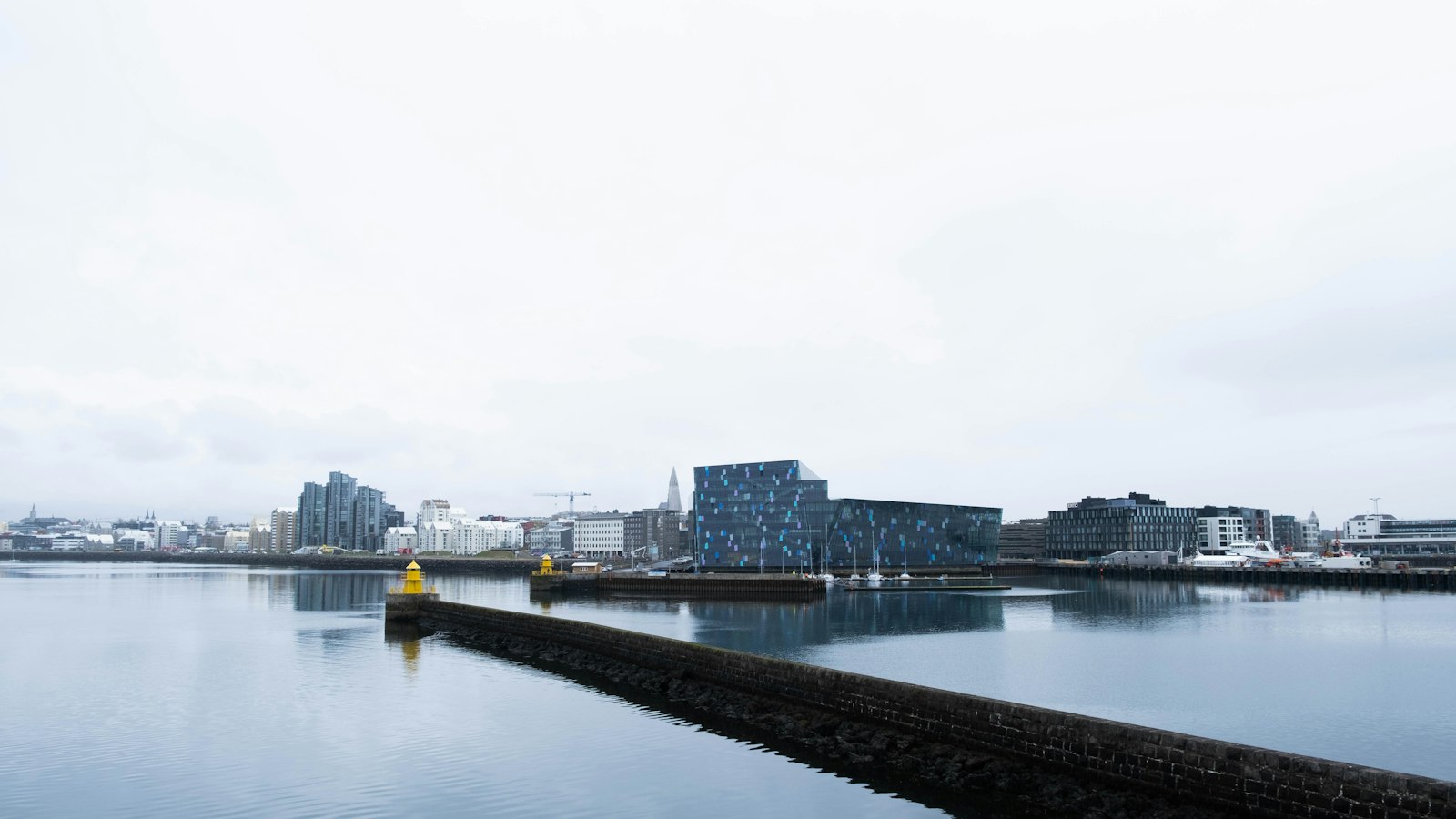
The earliest and best-known use of rail transport in Iceland took place between 1913 and 1928, during the building of Reykjavík’s harbour. Back then, the city required a way to move large quantities of rocks and materials for the construction of new piers and breakwaters. Engineers built a 900 mm gauge narrow railway to haul stone from the Öskjuhlíð quarry, now a well-known landmark in the capital, down to the rapidly developing waterfront.
This railway’s network eventually reached about 12 km, winding its way from quarries, past a passing loop, to endpoints on the harbour’s expanding piers. Its steepest slopes were on a gradient of 1:40, and some curves were as tight as a 55 m radius. The rolling stock included sixty four-wheeled wagons and two steam locomotives, originally built by Arnold Jung Lokomotivfabrik in Germany in the 1890s. These powerful machines, named Pioner and Minør, would go on to become Icelandic museum pieces, their journeys outlasting the railway itself.
Beyond the core harbour work, the railway was pressed into service for all kinds of local transport. It carried oil drums, meat for export, timber and aggregate for city construction, and coal to area distributors. At times, adapted wagons briefly carried workers and dignitaries, but regular passenger usage was never approved for safety reasons.
Railways in Iceland have been rare, but not without drama. In 1913, the Minør locomotive derailed during unloading at a bridge, injuring two workers. Later, the Pioner was deliberately derailed by would-be vandals testing its mettle, and a few tragic incidents occurred involving children by the tracks. With construction completed in 1928, the track was eventually dismantled, its rails reused in other projects or even in rural hay caves. The rolling stock found new homes: the wagons were sold abroad, and the two locomotives survived as display items.
Tunnels and modern construction railways
While proposals for public mainline railway have surfaced over the years, including recent discussions of a city light rail or an airport link to Keflavík, these have never become reality. Instead, the next significant Icelandic railway did not appear until the 2000s, deep beneath the eastern highlands. There, a tunnel-boring machine railway operated between 2004 and 2008 during construction of the Kárahnjúkar hydroelectric project. It helped move workers and spoil along 73 km of water tunnels, with custom-built diesel locomotives from Germany. This construction railway, temporary as its predecessor in Reykjavík, ceased operation after the project ended.
Today, none of these railways remain in use. Iceland’s population outside the capital is sparse, and cars, buses, and planes now serve nearly all travel needs. Still, a visitor to Reykjavik can find the preserved Pioner locomotive at the Árbær Folk Museum and Minør on outdoor display, traces of a time when trains quietly shaped part of Iceland’s development.


