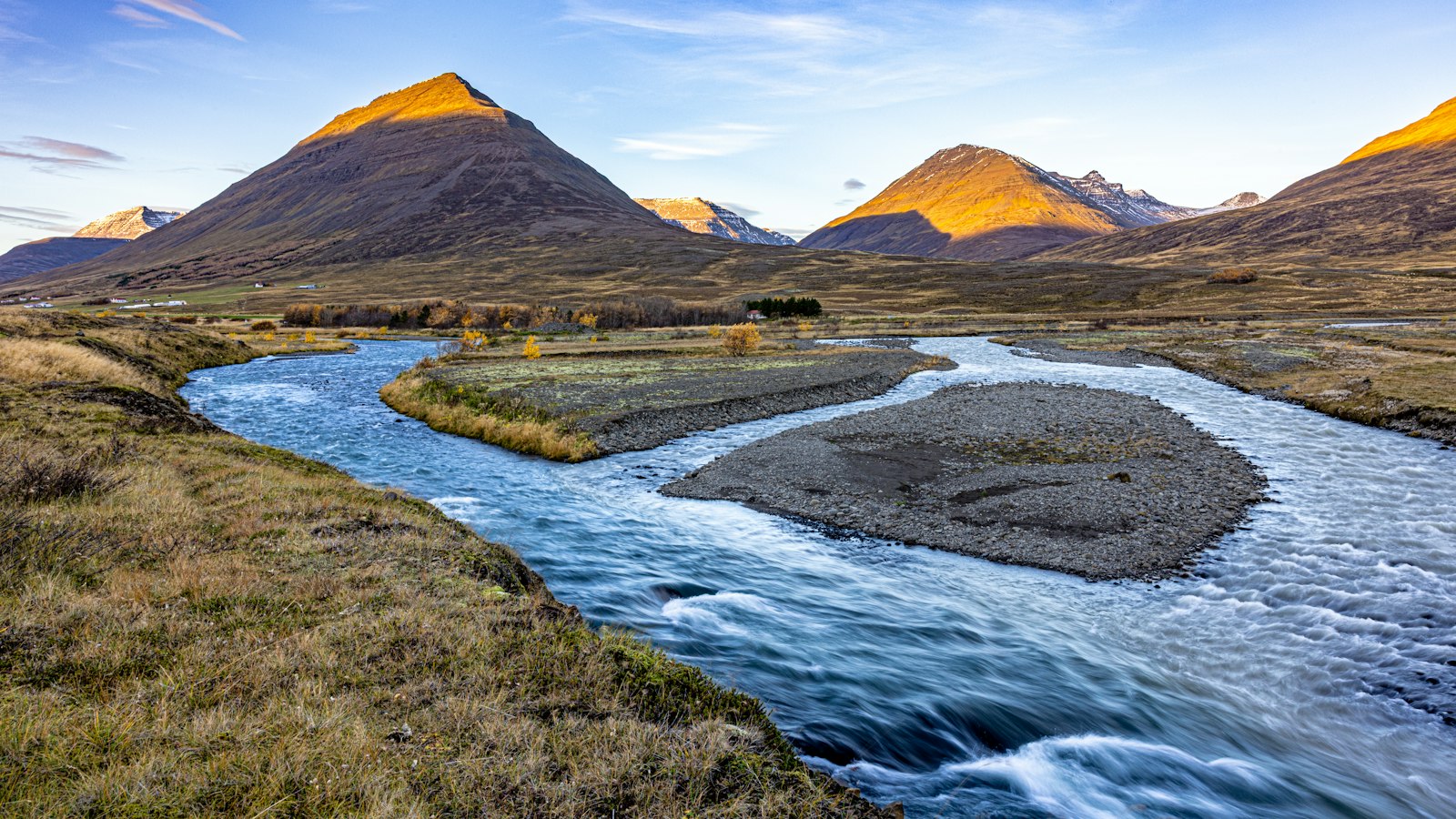
Hjaltadalur rests on the eastern side of Skagafjörður in northern Iceland, nestled among impressive mountains that rise between 1,000 and 2,000 metres. The valley traces its name to one of Iceland’s original settlers, Hjalti Þórðarson skálpr, mentioned in the medieval Landnámabók as arriving by the guidance of Kolbeinn and establishing himself at a farm called Hof. This early connection set the stage for centuries of human presence shaped by both geography and history.
Travel through Hjaltadalur has never been simple, as the landscape is defined by dramatic walls of rock and high passes. Multiple side valleys cut into the mountains, while the cold, clear waterway called Hjaltadalsá flows through the valley’s length. This river begins at the glacier known as Hjaltadalsjökull, gathering strength from tributaries and streams on its journey towards lower ground.
In the heart of Hjaltadalur lies Hólar í Hjaltadal, a site that stands out in Iceland’s history. Once the seat of the bishop and later home to a school, Hólar became a central hub for religion and learning in the north. The presence of Hólabyrða, a mountain towering 1,244 metres above Hólar, further marks the valley’s profile.
The valley was an important crossing point for people journeying between fjords and settlements, with several historic footpaths leading over rough terrain. Passes such as Hríshálsvegur, Hjaltadalsheiði, Héðinsskörð, Hólamannavegur and Heljardalsheiði connected Hjaltadalur to regions like Eyjafjörður and Ólafsfjörður. These thoroughfares, though challenging, played a significant role throughout the centuries.
Several farms and small communities dot the valley, each with traced roots in local lore. On Hjaltadalur’s east side are places like Neðri-Ás, where Iceland’s first church was reportedly built, and Víðines, the site of a significant 1208 battle known as Víðinesbardagi. Hólar itself has grown in recent times with the presence of Hólar University. Other named locations include historic farmsteads such as Laufskálar, Hof, Efri-Ás and others.
To the west, the valley reaches the settlement of Reykir, notable for its geothermal resources. Reykir once featured a warm water spring historically called Biskupslaug (Bishop’s Warm Spring), which has since been filled in. Towns like Hvammur, Hrafnhóll, Hlíð and further off, Viðvík and Hringver, each hold stories interwoven with the shape of the land.
Long before motorways, life here relied on the routes that wound over the mountains, binding the communities in Hjaltadalur with the larger fabric of medieval and modern Iceland. Today, these landscapes carry memories of early settlement, religious leadership and the enduring influence of nature.
Sources
- Wikipedia
- Wikipedia (Icelandic) in Icelandic


