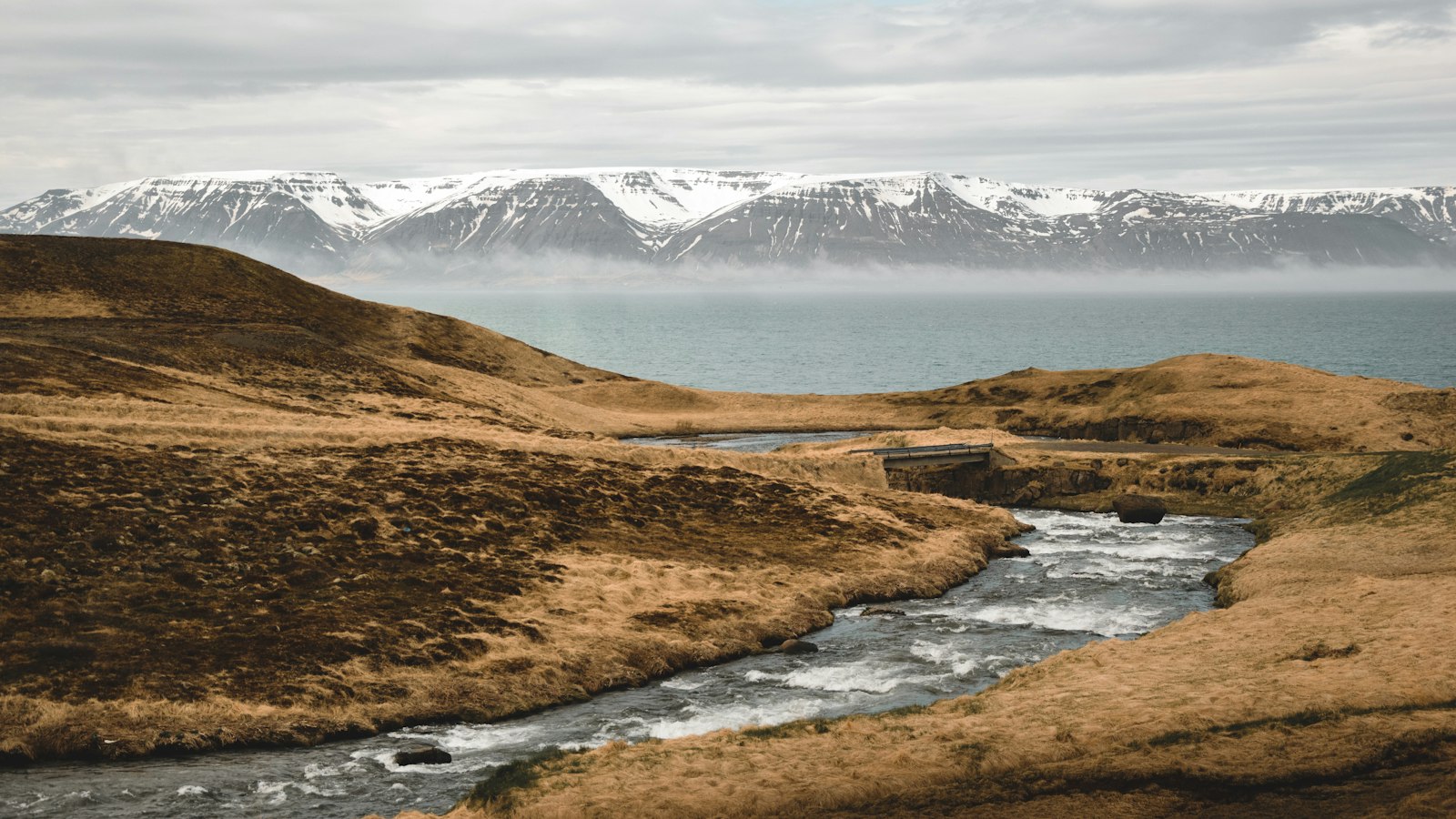
Located in the lowlands of Mýrasýsla within the Borgarbyggð region, Hítardalur is a name that weaves together legend, loss and learning. The farm estate and former church rectory sits in the valley that shares its name, a landscape etched by sagas and real events over more than a thousand years.
Trolls in stone and the valley’s beginnings
Hítardalur’s origins are tied to Icelandic folklore as much as history. According to local tradition, the valley was named after the troll woman Hít, who journeyed here with the half-human, half-ogre Bárður Snæfellsás. They failed to return to their mountain lair before sunrise and transformed into stone, a fate that, legend claims, explains the two distinct rock pillars visible near the farm. These rocky forms are visual reminders of stories passed down through generations.
The estate’s history stretches back to the first wave of Icelandic settlement. The Landnámabók, the medieval record of Iceland’s settlement, names Þórhaddur Steinsson as the original settler after 900 AD. What is today Hítardalur was once called Húsafell, as was the hill above it, now known as Bæjarfell. These changes in place names hint at the valley’s long and shifting role in local life.
Monastic ruins and Iceland’s deadliest house fire
Medieval records suggest that a Benedictine monastery was established at Hítardalur, though details of its life remain sparse. Evidence indicates it operated between 1166 and 1201, and its brief history is overshadowed by a catastrophic fire. On 30 September 1148, more than 70 people perished in what remains the deadliest house fire in Icelandic history. Among the victims was Magnús Einarsson, then bishop of Skálholt, attending a feast with his entourage. The disaster left a mark that lingers in Iceland’s collective memory.
By the 13th century, Hítardalur was home to Ketill Þorláksson, a prominent speaker at the Alþingi (Iceland’s parliament), and later, Loftur, the son of a bishop. In time, the estate became one of the country’s leading parsonages, known for its learned clergy.
The 17th and 18th centuries saw Hítardalur produce some of Iceland’s notable intellectuals. Séra Þórður Jónsson, rector in the 1600s, authored genealogical works later published in 2008. Séra Jón Halldórsson, priest from 1691 to 1736, compiled chronicles of bishops and schoolmasters and wrote local annals. His sons contributed further: Finnur Jónsson became a bishop, while Vigfús Jónsson, another priest and scholar at Hítardalur, wrote the first Icelandic children’s book.
Sources
- Wikipedia
- Wikipedia (Icelandic) in Icelandic


