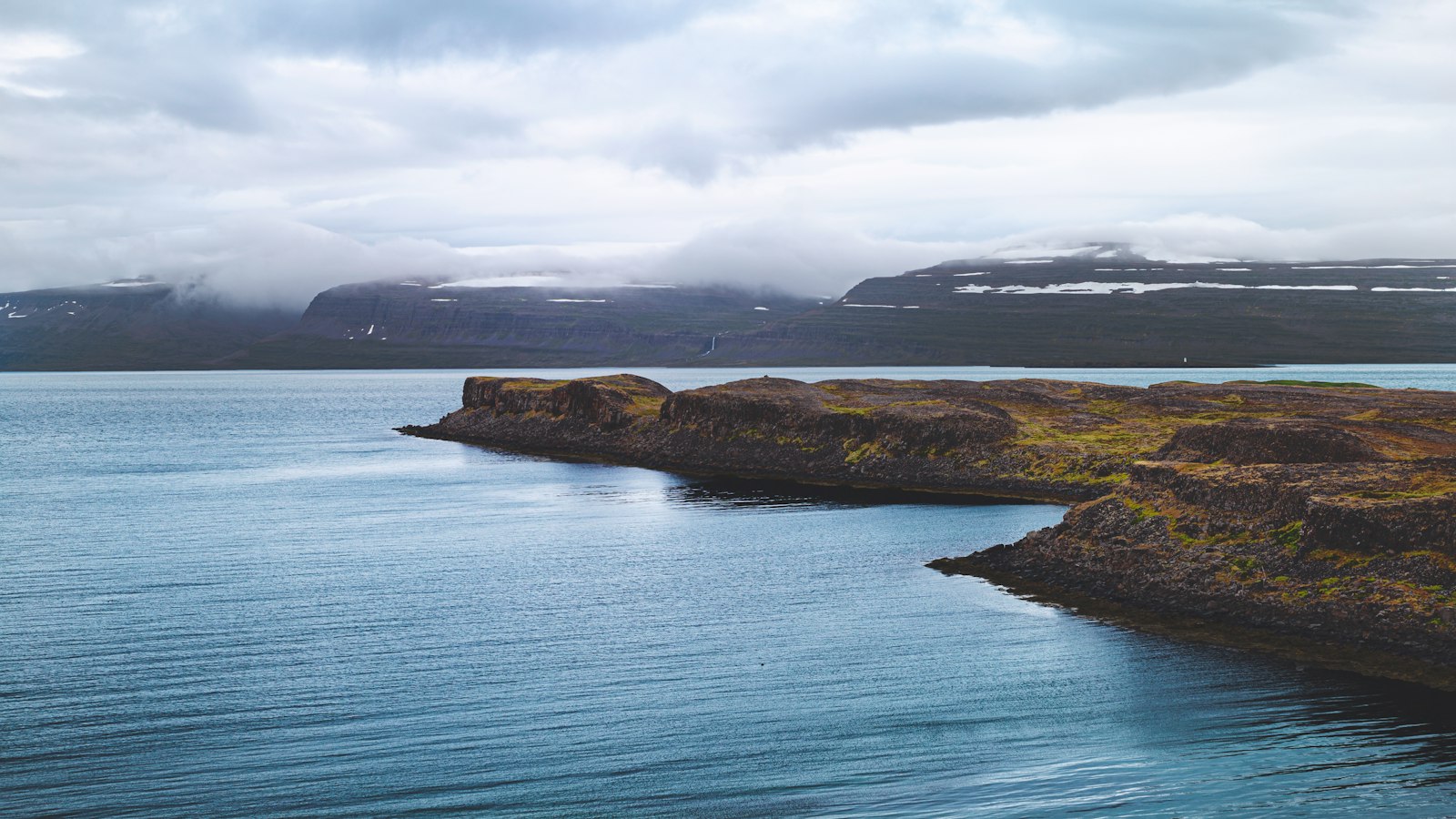
Forty kilometres off northern Iceland, Grímsey is set apart by its geography as the country’s northernmost inhabited island. Despite its remote setting, this small outpost is home to a steady community, distinctive wildlife, and the tangible northward march of the Arctic Circle.
Geography and the Arctic Circle
Measuring just 5.3 square kilometres and reaching a modest height of 105 metres above sea level, Grímsey is girded by dramatic cliffs on all sides except its southwest shore. Its closest neighbour is Flatey, Skjálfandi, just under 40 kilometres to the south, but the island itself is primarily known for the invisible line that slices near its tip: the Arctic Circle.
Since 1750, the Arctic Circle has crossed this island, drawing attention as the only accessible spot in Iceland where this global boundary can be touched. The shifting tilt of Earth’s axis means the line moves northward each year by roughly 14.5 metres. The changing landscape is marked by four historic Arctic Circle markers from 1717, 1817, and 1917, and, since 2017, a movable eight-tonne stone sphere named “Orbis et Globus”. This monument is rolled periodically to adjust to the Circle’s new location and will be nudged into the ocean once the line leaves the island around 2047.
Birds, nature and daily life
Grímsey’s treeless expanse offers marshes, grass and moss. The island has gained international recognition as an Important Bird Area thanks to vast seabird colonies. Black-legged kittiwakes, Atlantic puffins, razorbills, common murres, auks, gulls and Arctic terns all use the island’s cliffs for nesting.
Despite its northern latitude, Grímsey is not frozen year-round. The North Atlantic Current delivers relatively mild weather, placing it in the tundra climate category: no month has a daily mean temperature above 10°C. Still, records have seen temperatures as high as 22.3°C in recent summers.
Grímsey’s 2021 population stood at 57 people. The only village, Sandvík, sits on the southwest shore. Most residents rely on commercial fishing, while agriculture and egg collection supplement livelihoods. Community life includes a small school (up to age 13), shop, swimming pool, library, and community centre. Connection to the mainland is kept by ferry from Dalvík three to five times a week, and by flights from Akureyri using the island’s 1,036-metre runway.
Chess has a special legacy here. In the 19th century, American scholar Willard Fiske became fascinated with Grímsey’s reputation for chess, supporting the community despite never visiting. Another deep-rooted tradition was the driftwood-built Midgard (Miðgarðakirkja) church, lost to fire in 2021 but rebuilt and consecrated in August 2025, marked by the ringing of church bells in Reykjavík.
Although unconnected to Iceland’s main electricity grid, Grímsey increasingly uses renewable power. In 2022, solar panels and a wind turbine began providing energy, reducing the reliance on diesel generators and further linking the island’s daily life with its environment.
From shifting celestial markers to the persistent daily rhythm of its community, Grímsey delivers a perspective shaped by both isolation and connection. Its layered story is one of adaptation and continuity, in step with the slow northward drift of the Arctic itself.
Sources
- Wikipedia
- Wikipedia (Icelandic) in Icelandic