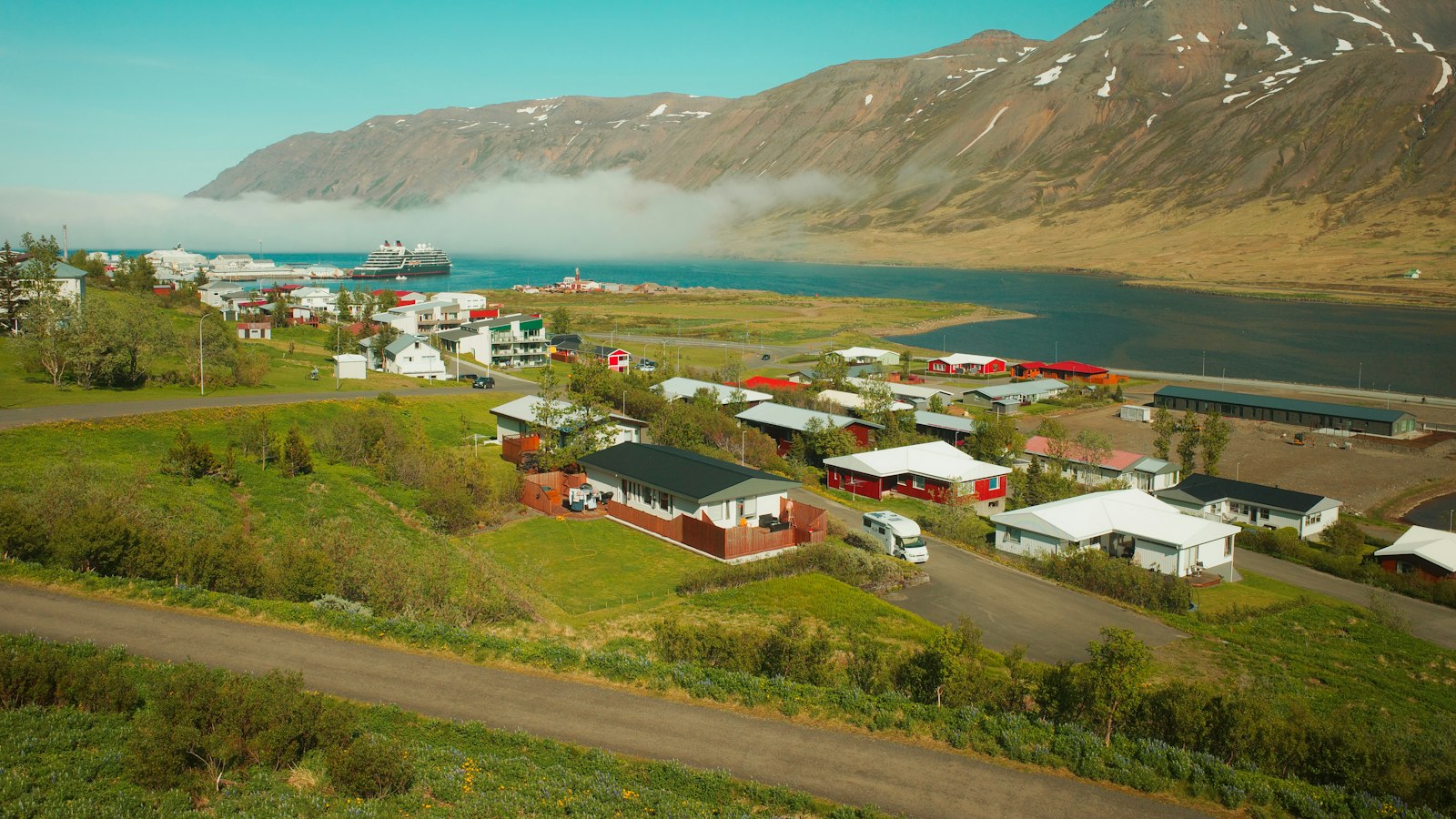
Nestled on a narrow spit by the north side of Önundarfjörður, the village of Flateyri is part of the municipality of Ísafjarðarbær in Iceland’s remote Westfjords. With around 200 inhabitants in 2024, it is the largest community in this scenic fjord region, offering a unique perspective on both Icelandic history and contemporary village life.
A history of commerce, waves and resilience
Flateyri began as a trading post near the end of the 18th century, formally receiving commercial rights in 1823. At the time, the small settlement catered primarily to the fisheries. In the late 1800s, Flateyri attracted more residents after Hans Ellefsen started whaling operations nearby, giving rise to both industry and rapid population growth. From about 100 residents in 1890, the village swelled to 250 by 1900. Its population peaked in 1964 at 550 people, reflecting its prosperity during Iceland’s fisheries boom.
Change has been a constant companion for the town. In the 1990s, Flateyri thrived as a fishing centre. The village would later suffer heavy losses when its largest fishing company, Kambur, closed in 2007 after the financial crisis, prompting many to move away. Despite these setbacks, new ventures continue: a German company now fishes in the area, keeping part of Flateyri’s economy afloat.
Avalanches and adaptation
Life in Flateyri has always been shaped by its environment, most dramatically by avalanches. Above the village rises the mountain Eyrarfjall, its slopes cut by two ravines, Innra-Bæjargil and Skollahvilft, which have historically channelled snow down toward the settlement. On 26 October 1995, an avalanche devastated Flateyri, destroying 29 homes and burying 45 people. Twenty lost their lives, an event still deeply felt among residents. In response, two large deflecting dams were constructed above the town to channel future avalanches away from homes. A memorial for those lost now stands by Flateyrarkirkja, the town church.
The dams have since faced further trials. In January 2020, two avalanches struck: one side of the dam sent a torrent into the sea, generating a wave that damaged the harbour and sank six out of seven boats, while the other slid over and hit a home. In a dramatic episode, three people inside escaped through a window and the remaining occupant, a 15-year-old girl, was found alive almost 40 minutes later by rescue teams.
Despite these challenges, Flateyri endures. In 2018, it saw the opening of a folk high school, only the second of its kind in Iceland. The village also hosts the country’s oldest original family-run shop, the Brothers Eyjolfsson bookstore, founded in 1914 and still open after four generations.
Sources
- Wikipedia
- Wikipedia (Icelandic) in Icelandic


