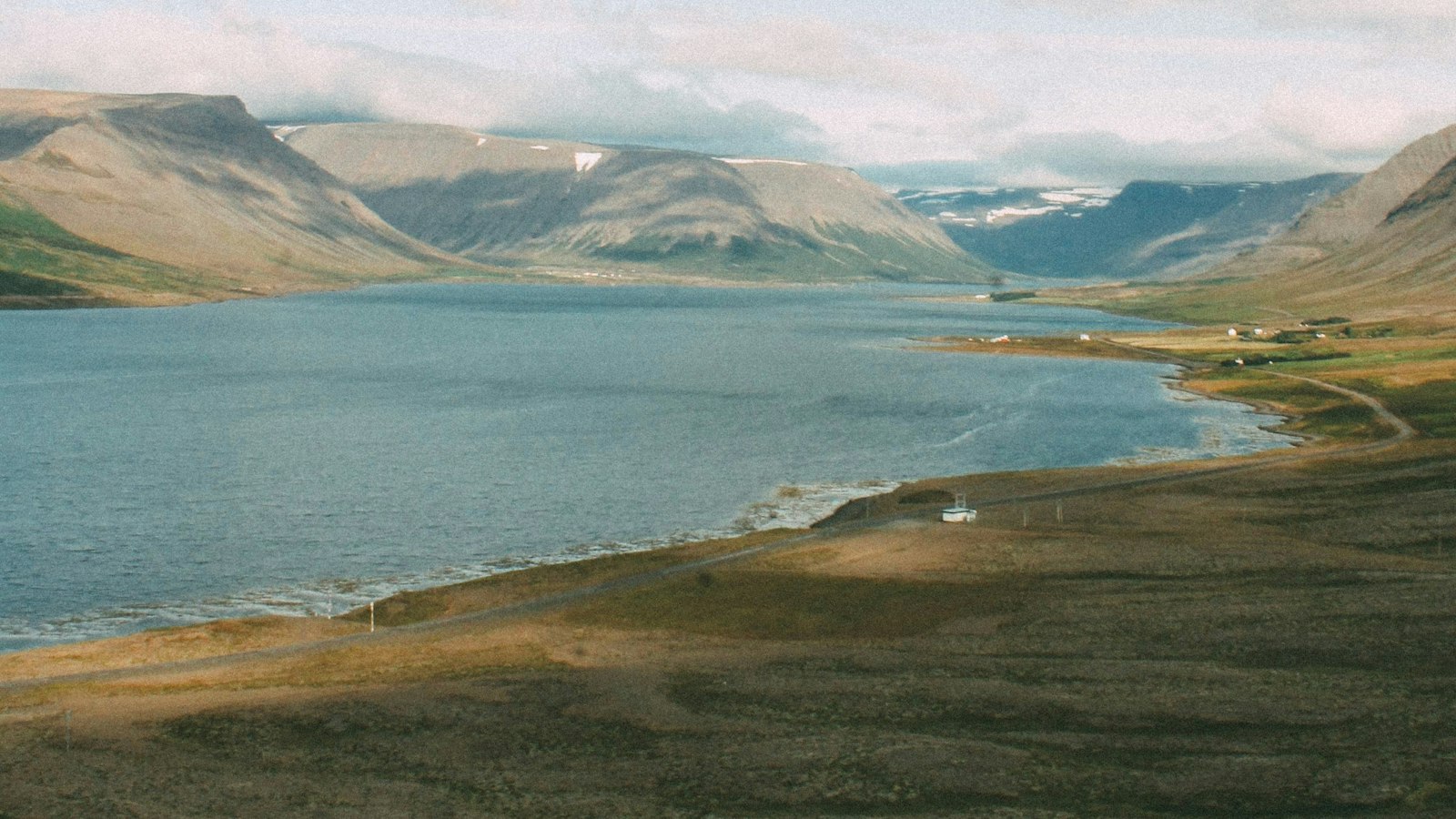
Few natural features shape Iceland’s geography and culture quite like its fjords. These long, narrow inlets flanked by steep terrain are carved into most of Iceland’s coastline, with the notable exception of its southern shore. Here, lagoons are more common than fjords, creating a different kind of shoreline. In the west, north and east, however, the land is dramatically carved into dozens of fjords, each with its own name and history.
Western gateways and the vast Breiðafjörður
The journey around Iceland’s fjords often begins in the southwest, with Faxaflói bay, a broad inlet near the capital, Reykjavík. From there, a chain of fjords such as Stakksfjörður, Hafnarfjörður, and Hvalfjörður (Whale Fjord) mark the western coastline. One of the largest and most notable, Breiðafjörður, stretches along the north of the Snæfellsnes peninsula and reaches into Dalasýsla, known locally as Dalir.
Breiðafjörður is famous for its many small islands and its complex, shallow waters. Surrounding it are fjords like Grundarfjörður and Álftafjörður (Swan Fjord), as well as Hvammsfjörður. The region of Barðaströnd to the northwest introduces further fjords, including Gilsfjörður and Króksfjörður, each distinguished by its winding shape and the communities that hug their shores.
The intricate landscape of the Westfjords and beyond
No region in Iceland embodies the dramatic effect of fjords more than the Westfjords. This peninsula is nearly carved apart by water, with a coastline deeply indented by arms of the sea. Here, fjords such as Patreksfjörður, Tálknafjörður, and Arnarfjörður form the main arteries into the area’s mountainous terrain. Ísafjarðardjúp, one of Iceland’s largest fjords, branches into numerous side fjords, each with evocative names like Skötufjörður, Hestfjörður, and Mjóifjörður (Narrow Fjord).
Farther north and east, the pattern of fjords continues. In the northwest, Hrútafjörður and Húnafjörður reach inland, while in the northeast, Eyjafjörður, the country’s longest fjord, hosts Akureyri, the largest town outside Reykjavík. Fjords like Skjálfandi and Öxarfjörður trace the northern edge, shaping settlement and regional boundaries.
The east coast is renowned for its long maze of narrow inlets. Fjords such as Seyðisfjörður, Reyðarfjörður, and Fáskrúðsfjörður are lined with small villages built around harbours, testifying to the importance of the sea. Here too, names such as Borgarfjörður eystri and Mjóifjörður echo their western counterparts, linking the east and west through shared geography and language.
Wherever they are found, these fjords have a lasting influence, not only on Iceland’s geography and transport, but on the country’s identity. Place names, local economies and storytelling traditions have been shaped by these dramatic arms of the sea.
Sources
- Wikipedia
- Wikipedia (Icelandic) in Icelandic


