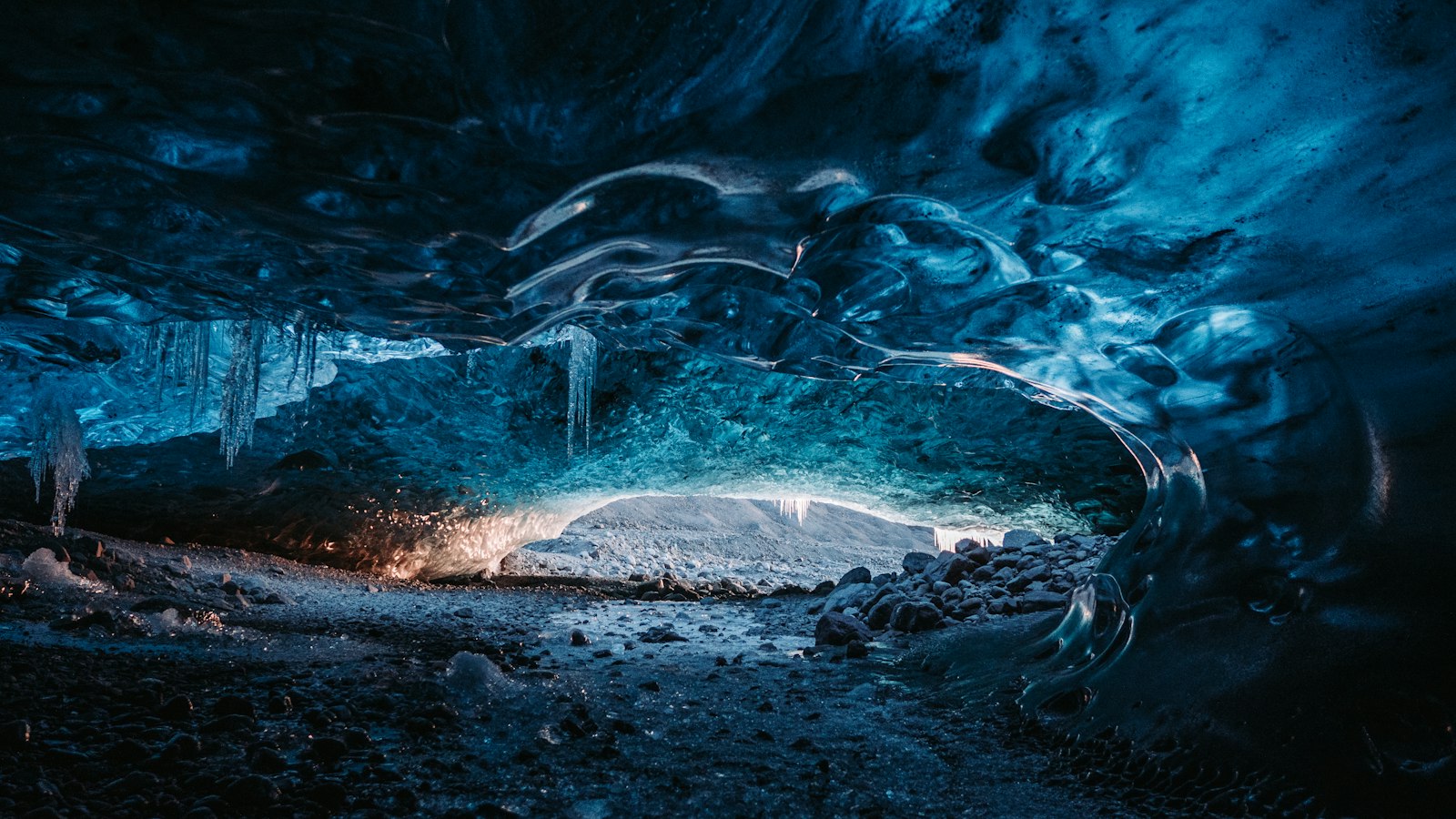
In the south-east part of the immense Vatnajökull icecap lies Esjufjöll, a volcanic system rarely seen by human eyes. Almost entirely hidden beneath thick glacier ice, its influence extends across the Breiðamerkurjökull glacier, reaching towards other landmarks in this remote region.
A landscape sculpted by ice and fire
What sets Esjufjöll apart are the nunataks, rocky mountain peaks emerging through the ice. The highest of these is Snæhetta, an ice-clad ridge that rises to 1,745 metres. To Snæhetta’s south, four massifs, Vesturbjörg, Skálabjörg, Esjubjörg and Austurbjörg, form a jagged line across the glacier. Their summits, once enveloped by ice, became more visible in the latter half of the 20th century as some southern ice thinned. New nunataks such as Bræðrasker and Kárasker have since appeared, revealing geology untouched for many centuries.
The glaciers enveloping these peaks are key tributaries to Breiðamerkurjökull, which was measured at 906 square kilometres in 2010. This sector of Vatnajökull pours into Jökulsárlón, the nearby glacial lake. The area is divided into three main glacial catchments, each fed by different slopes and separated by rocky ridges and nunataks that keep the giant ice mass slowly in motion.
Volcanoes under watch
Esjufjöll is more than a mountain range: it is an active volcanic system, part of Iceland’s Öræfi volcanic belt. The central volcano, Snæhetta, is thought to contain a large caldera, possibly 5 by 3 kilometres across, though the ice has concealed it from direct study. Most exposed rocks are mild alkaline basalts, but some eastern areas display rhyolitic stone, revealing a complex geological history.
Although confirmed eruptions during the Holocene are lacking, local earthquakes have been detected, and there are hints of possible recent activity. In September 1927, a glacial flood, the Icelandic term is jökulhlaup, rushed down the Jökulsá á Breiðamerkursandi river. With it came the odour of sulphur, and on at least one occasion, volcanic ash was thought to have blanketed Breiðamerkurjökull. Earthquake swarms in 2002 and 2010 suggested that magma might still be moving beneath the ice.
This isolation has made Esjufjöll a refuge for living organisms. In 2007, scientists discovered several species previously unrecorded in the area. Over 100 species of higher plants are now known to inhabit these mountains, along with a number of insects and lichens. Protected as a strict nature reserve, Esjufjöll offers a glimpse into life on the edge of Iceland’s habitable world.
Sources
- Wikipedia
- Wikipedia (Icelandic) in Icelandic


