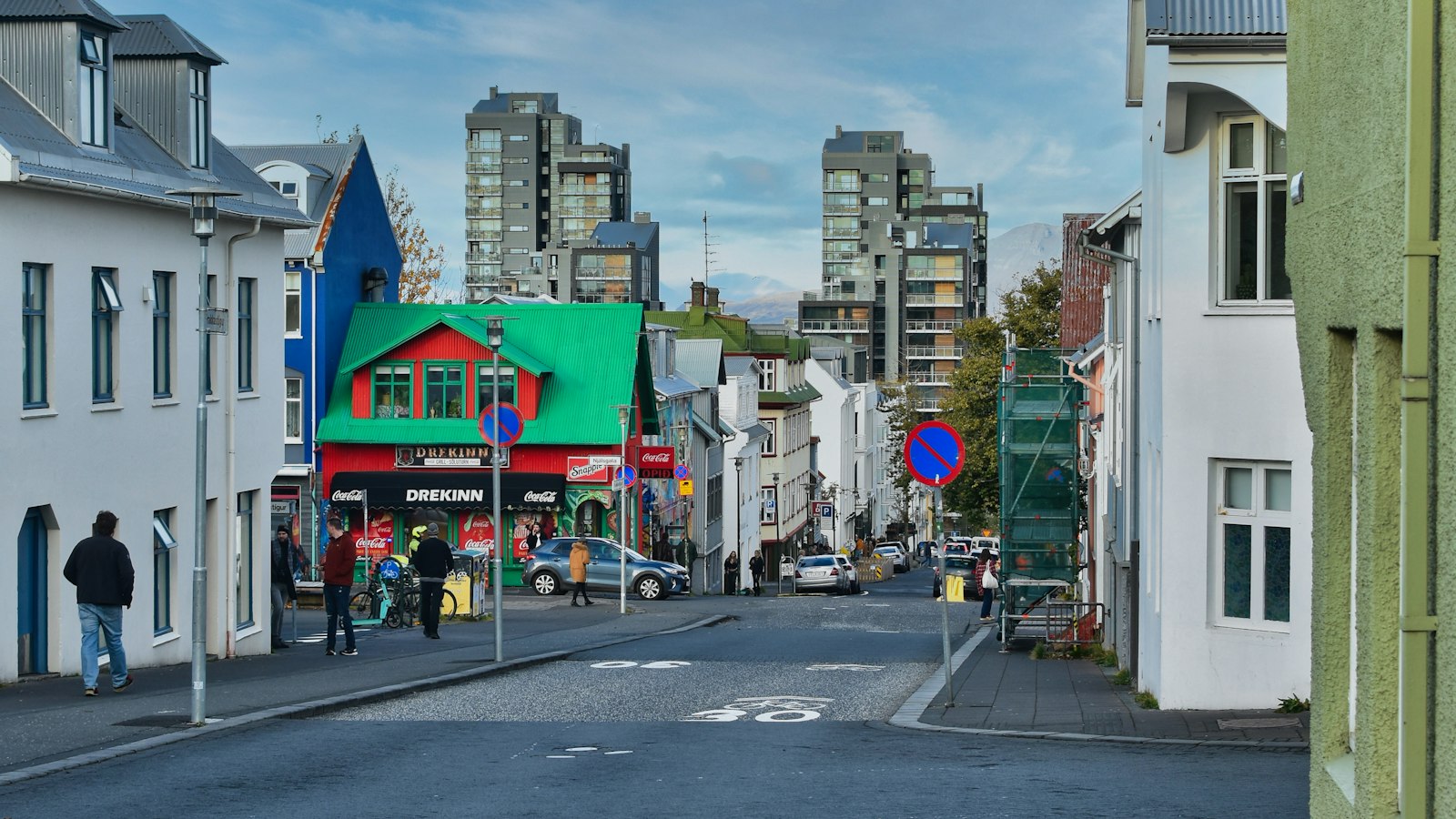
Born in 1859 in Vallanes in eastern Iceland, Einar Hjörleifsson Kvaran stands among the most influential Icelandic writers and thinkers of the late nineteenth and early twentieth centuries. His diverse roles included novelist, poet, playwright, translator, editor and outspoken advocate for spiritualism. Throughout his life, Einar’s work touched literature, journalism, social reform and public debate, leaving a legacy well beyond the printed page.
A new voice for Icelandic letters
Einar’s path led him from rural Iceland to the College of Iceland for classical studies, and then onward to Copenhagen. There, while studying economics at the University, he was among the young Icelandic intellectuals who published the landmark literary magazine Verðandi in 1882. The single issue of that magazine is credited with introducing the Modern Breakthrough, a European movement promoting realism and social critique, to Icelandic literature. Einar’s own fiction, departing from previous generations’ fascination with saga heroes, focused on everyday language and the lives of ordinary people confronting modern problems.
After his time in Denmark, Einar emigrated to Winnipeg in Canada, where a significant Icelandic community was forming. There he co-founded two Icelandic-language weeklies, Heimskringla and Lögberg, which became vital voices for Icelanders abroad. His experiences in Canada inspired his story ‘Vonir’ (‘Hopes’), written in 1890, which explored the challenges faced by emigrants.
Champion of social reform and spiritual ideas
On returning to Iceland, Einar became an important editor in both Reykjavík and Akureyri. He was closely involved with newspapers such as Ísafold and Fjallkonan, and edited Skírnir, the Icelandic Literary Society’s journal. He wrote not just fiction and poetry but also essays on education, the independence movement, theatre and temperance. In recognition of his literary achievements, the Icelandic government awarded him a stipend in 1906 to focus full-time on writing.
Another defining element of Einar’s later life was his deep commitment to spiritualism. He authored the first positive Icelandic book about the subject, presided over the Experimental Society which evolved into the Sálarrannsóknarfélag Íslands (Icelandic Society for Psychical Research), and led investigations into local mediums such as Indriði Indriðason and Hafstein Björnsson. His final novels, combined with public campaigns, encouraged Icelanders to be more compassionate in both religion and child-raising, breaking from strict traditional norms.
Einar adopted the surname Kvaran in 1916, drawing on the ancient sagas for inspiration, after a law briefly allowed such changes. He was also involved in the debates about which types of names would be approved, reflecting his interest in national identity and history.
His advocacy sometimes attracted criticism, including public disagreement with other prominent Icelandic figures over his calls for social tolerance. Nevertheless, his influence is clear in the evolution of Icelandic literature and society, and his work helped lay the foundation for modern Icelandic prose and progressive cultural attitudes.
Sources
- Wikipedia
- Wikipedia (Icelandic) in Icelandic


