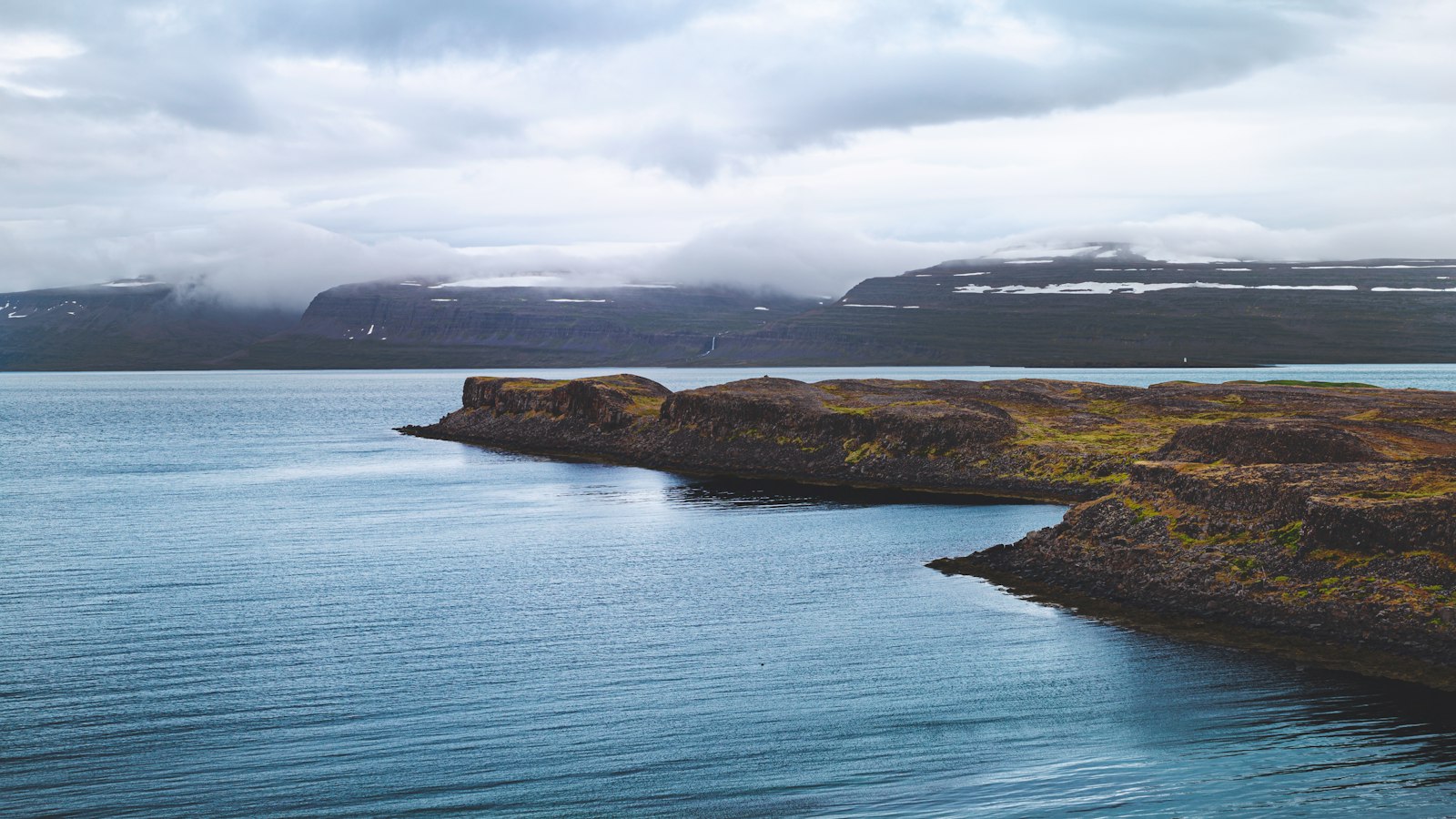
Rising sharply from the waters of Skagafjörður in northern Iceland, Drangey is more than a solitary rock, it is a relic of a 700,000-year-old volcano chiselled by time and legend. With sheer, vertical cliffs protecting its perimeter, Drangey has long served as a fortress both in story and in daily life.
A saga of refuge and resilience
Drangey is inextricably tied to one of Iceland’s best-known sagas. According to Grettis saga, Grettir Ásmundarson, an outlaw, sought shelter on the island during the last years of his life. Accompanied by his brother Illugi and their slave Glaumur, Grettir retreated to Drangey’s high, defensive cliffs when enemies pursued him. Their time on the island is vividly recounted: a flock of 80 sheep roamed the heights, and the cliffs startled with the calls of countless birds.
Grettir’s story ended in late autumn of 1031 when he was killed in his shed by Þorbjörn Öngull and his men. This act on Drangey provided a dramatic conclusion to a saga that continues to resonate in Icelandic memory.
Elements of Drangey’s saga legacy live on today. In 1030, Grettir famously swam from Drangey to the mainland. Since then, a swim called “Grettissund” commemorates this feat.
Legends written in stone and air
The island’s shape and isolation inspired a well-known legend. Local lore maintains that two giants (a man and a woman) and their cow were caught by the rising sun while crossing the fjord, turning all three into stone. Drangey is said to be the cow; to its south stands Kerling (“Old Hag”), the female giant. The male, Karl, once to the north, disappeared after an earthquake in 1755.
Geologically, Drangey is made mostly of palagonite tuff, a volcanic rock that gives the island its distinct fortress-like bulk. Little grows on its steep faces, but in spring and summer, these cliffs become lively with seabirds.
Drangey’s bird life features species that have been important for centuries. The guillemot, auk and puffin each nest in different parts of the cliffs: guillemots on open ledges, auks in deep cracks, and puffins digging holes on the cliff edges. Fulmars and kittiwakes join these colonies, while ravens and falcons also claim the cliffs as sanctuary.
For generations, the arrival of spring in the fjord was marked by journeys to Drangey. Residents gathered eggs and birds, using ropes to descend the cliffs for eggs and specially constructed rafts, covered in horsehair snares, to catch birds from the sea. At times, up to 200 men would work here, with annual catches at their peak once exceeding 200,000 birds. Bird catching with snares finally ended in 1966, but the memory of these gatherings remains.
Drangey continues to stand, its steep faces and saga echoes connecting nature and narrative, season by season, in the north of Iceland.
Sources
- Wikipedia
- Wikipedia (Icelandic) in Icelandic


