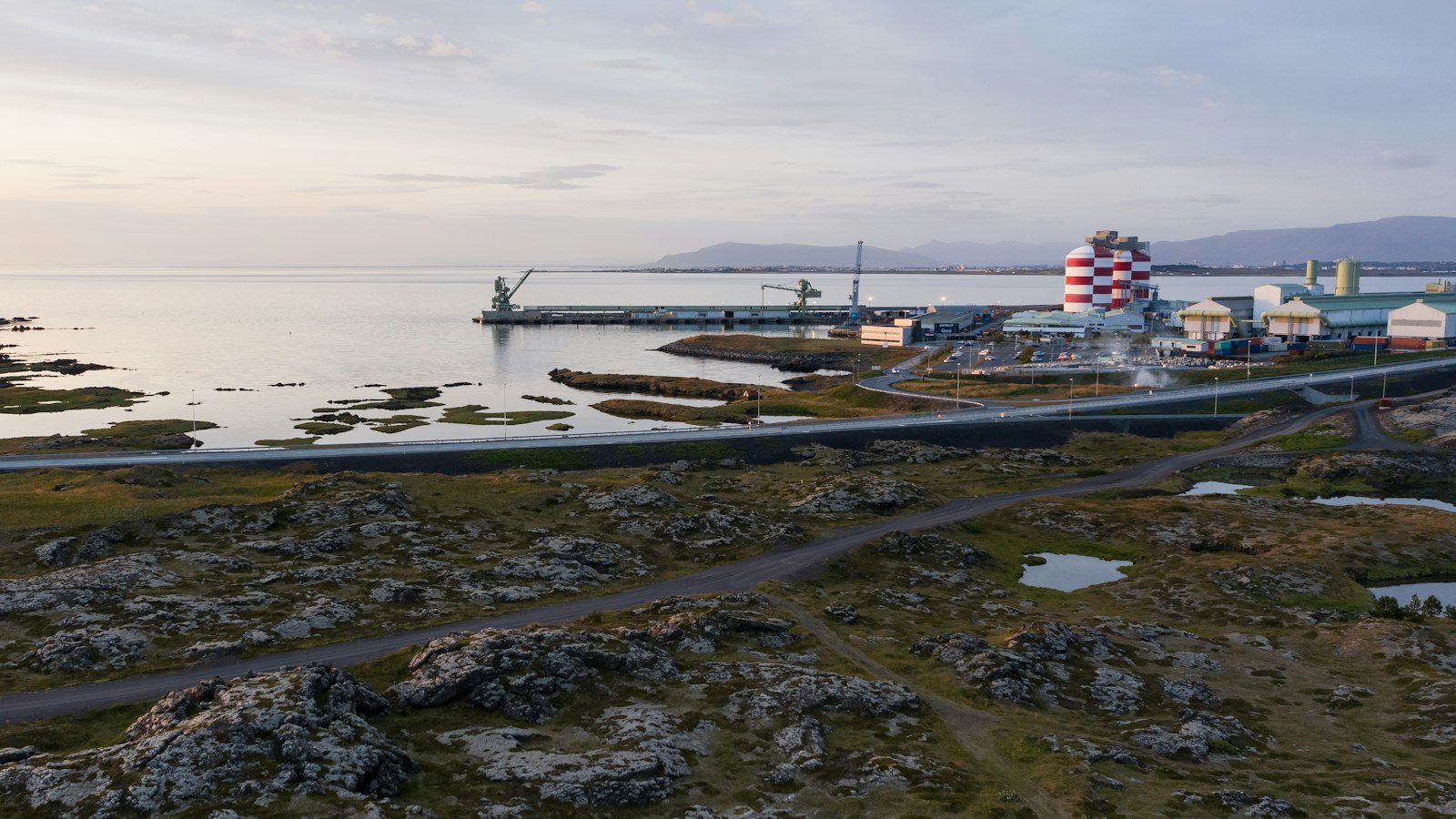
Búðardalur is a small village at the head of Hvammsfjörður in Iceland’s northwest, holding just over 240 residents as of 2024. Despite its modest size, Búðardalur carries a weighty presence in the country’s stories and as a lifeline for the region. Its name, derived from the Icelandic búðir (meaning booths or shops), reflects a legacy as a hub for the exchange of goods that stretches from Viking times to today’s rural services.
The village stands at the northeastern end of the Snæfellsnes peninsula and falls within the municipality of Dalabyggð. For centuries, this secluded spot has anchored the lives of people living across Dalir, the valleys surrounding the fjord.
From saga-era landings to commerce
Búðardalur appears in the Laxdæla saga, which recounts how the chieftain Höskuldur Dala-Kollsson landed his ship in the nearby river mouth, setting up makeshift shelters in the valley. These early shelters, or búðir, eventually lent their name to the site. The stories of the saga linger not only in the village itself but also at places close by: Höskuldsstaðir, once home to Höskuldur; Hjarðarholt, residence of Ólafur pái; and Eiríksstaðir, the farm of Eiríkur rauði (Erik the Red). Eiríksstaðir in particular holds a special place, being the birth site of Leifur Eiríksson (Leif Erikson), the first European known to reach North America, and the departure point for Erik’s voyage to Greenland.
Trade has long shaped Búðardalur’s identity. In 1899, the settlement was formally granted rights of commerce, cementing its importance for the surrounding rural communities. The first shop and residence built by merchant Bogi Sigurðsson around this time was later moved to Selfoss, where it still stands. Throughout the 20th century, shops, a dairy plant and co-operative ventures, such as Kaupfélag Hvammsfjarðar, played key roles in the local economy.
A village at the heart of local life
Búðardalur functions as a service centre for the region, hosting essential facilities ranging from a swimming pool, post office and school to a health-care centre and supermarket. Local businesses include a dairy processing plant and craft shops. While the area has felt the pressures of rural depopulation, the population has remained stable at around 245 residents in recent years. Newer projects, like the development of an indoor sports centre and a refurbished swimming pool, reflect the village’s ongoing place in community life.
Cultural life is reflected in venues such as the Vínlandssetrið, a museum near the harbour that explores Icelanders’ journeys to Vínland in North America, and in its connection to major saga figures. While today Búðardalur has no church of its own, the nearby Hjarðarholtskirkja serves as the parish church.
Búðardalur’s climate is rare for Iceland: it falls on the border between a dry-summer subarctic and a cold-summer Mediterranean climate, with winters that are cold but not harsh and cool summers. This setting, together with its historic roots, shapes a daily life both familiar and distinctive within Iceland.
Sources
- Wikipedia
- Wikipedia (Icelandic) in Icelandic


