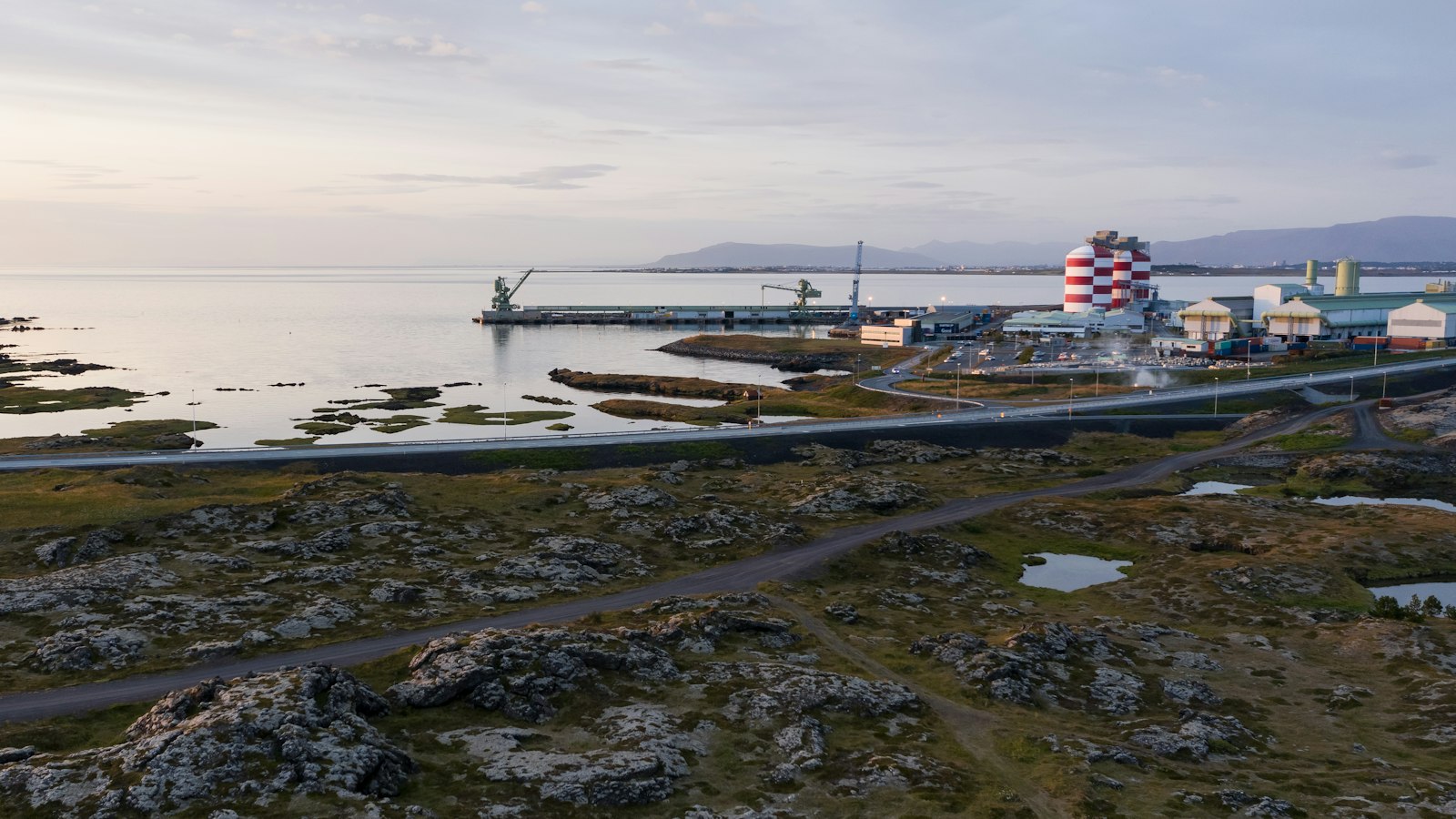
Tucked along the western edge of Hrútafjörður in northwest Iceland sits Borðeyri, a settlement whose presence belies its size. With a population of only 16 as of July 2018, it ranks among the smallest communities in the country. Despite its modest scale, Borðeyri has played notable roles in Icelandic history, economy and culture.
From seaport to small hamlet
Borðeyri became a licensed trading site in 1846, at a time when such official recognition carried great significance in Iceland. Throughout the latter half of the 19th century, it grew to be an important seaport. The mainstay of its economy was the export of sheep to Britain, especially as transatlantic migration drew many locals westward to North America. These maritime activities helped the village leave a distinct mark on the region.
The story of Borðeyri’s name goes back even further. It derives from an episode recounted in the medieval “Vatnsdæla saga,” where Ingimundur gamli, one of the early settlers, found a washed-up wooden plank on the spit when scouting land. The find inspired the name Borðeyri, which references the plank itself.
A centre for community and culture
In more recent times, Borðeyri served as a local commercial centre for surrounding farms. For many years, it hosted the Kaupfélag Hrútfirðinga cooperative shop and, later, a branch from the larger co-op in Hvammstangi. While these shops have closed, some services remain today: a garage, a guesthouse and a summer campground operate in the area. The hamlet maintains a pre-school and an elementary school, keeping its educational tradition alive even with a small population.
Several notable Icelanders were born here. Sigurður Eggerz, who would later serve as Prime Minister, as well as painters Þorvaldur Skúlason and Karl Kvaran, all have roots in Borðeyri. The village also made history in labour relations: the 1934 “Borðeyrardeilan” concerned workers’ rights to organize in the Hrútafjörður area.
Today, efforts to safeguard its heritage focus on Borðeyri’s historical architecture. Among the oldest buildings is the Riis house, built in 1862 by Pétur Eggert, considered the father of Borðeyri. Exterior renovations have brought renewed attention to this building, which is among the oldest in the bay area. The townscape as a whole bears marks of age and weather, but ongoing preservation reflects the residents’ connection to their past. In April 2019, a proposal was confirmed to consider Borðeyri as a protected area.
Life in Borðeyri unfolds at a gentle pace, tied closely to the surrounding landscape and the memory of a busier era. For those drawn to the quieter corners of Iceland, Borðeyri offers a glimpse into the enduring fabric of rural life, shaped by both local tradition and far-reaching historical currents.
Sources
- Wikipedia
- Wikipedia (Icelandic) in Icelandic


