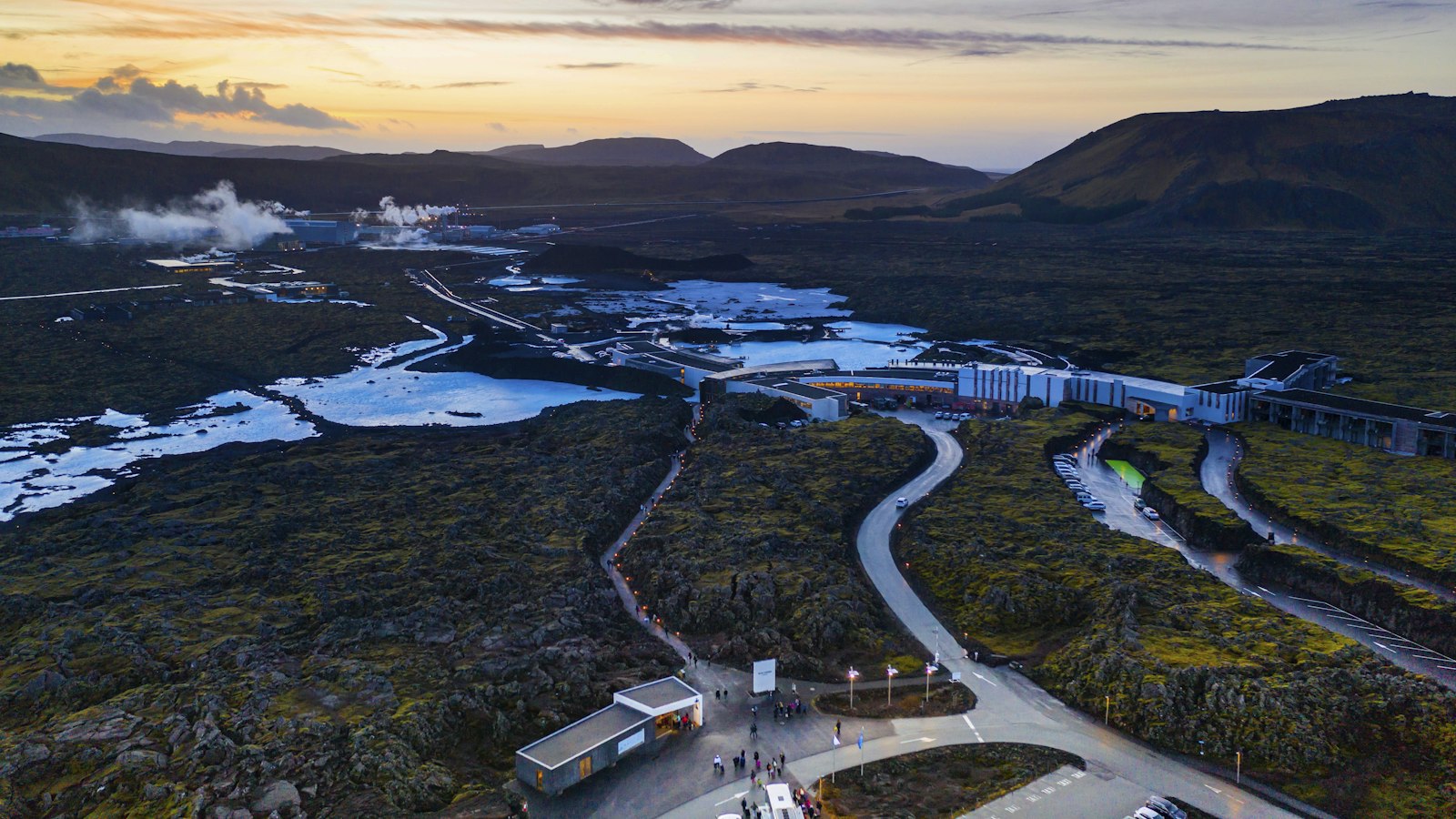
The Blue Lagoon (Icelandic: Bláa lónið) stands on the Reykjanes Peninsula, set within a lava field just 5 kilometres from the fishing town of Grindavík and close to Mount Þorbjörn. Its distinct milky blue hue is visible from afar, a result of the lagoon’s rich silica content that forms white clay on the bottom. The spa sits in an area long valued for geothermal activity, and its water comes directly from processes tied to Iceland’s quest for sustainable energy.
Origins in power and chemistry
The history of the Blue Lagoon is tightly linked to the Svartsengi geothermal power station, which started operations in 1976. Here, steam and superheated water are tapped from underground, primarily to run the turbines that supply electricity and hot water for nearby towns. Once this water has served its industrial purpose, it is channelled as a byproduct into the adjacent lava field, creating the lagoon itself. Over decades, minerals from deep within the earth have transformed the water, resulting in high concentrations of silica, salts, and algae. This chemical mix, particularly at an average temperature of 37–39 °C (99–102 °F), forms an environment in which only a few blue-green algae and salt-loving microbes can survive.
Bathing began unofficially in the early 1980s, when those with skin conditions noticed the effects of these minerals. Later studies confirmed the positive impact of the lagoon’s water on psoriasis. By the 1990s, the Blue Lagoon had become an established health spa and even created its own line of skincare products incorporating silica and algae. The site is now recognised as one of Iceland’s top attractions, recording over a million visits annually.
Shifting earth and ongoing adaptation
The Blue Lagoon’s location on the geologically restless Reykjanes Peninsula means it is regularly shaped by volcanic and seismic events. The ecosystem is unusual. Minerals sediment out as the superheated runoff cools, and over time, these deposits build up on the lava, eventually making the ground impermeable and prompting engineers to create new ponds as needed. The entire body of water refreshes itself every two days, maintaining an average pH of around 7.5 and a salt content of 2.5 percent.
Recent years have brought particular challenges: beginning in October 2023, swarms of earthquakes and the threat of eruptions prompted repeated closures of the lagoon and the hotels on site. In November 2024, a volcanic eruption even sent lava as far as the car park, which was destroyed; the lagoon remained intact thanks to protective barriers. Each such event sees temporary closures, with reopenings following close behind as the site adapts to the realities of living beside a dynamic volcanic system.
Despite the drama, the Blue Lagoon endures, embodying Iceland’s unique partnership with its geothermal riches and restless geology.
Sources
- Wikipedia
- Wikipedia (Icelandic) in Icelandic


