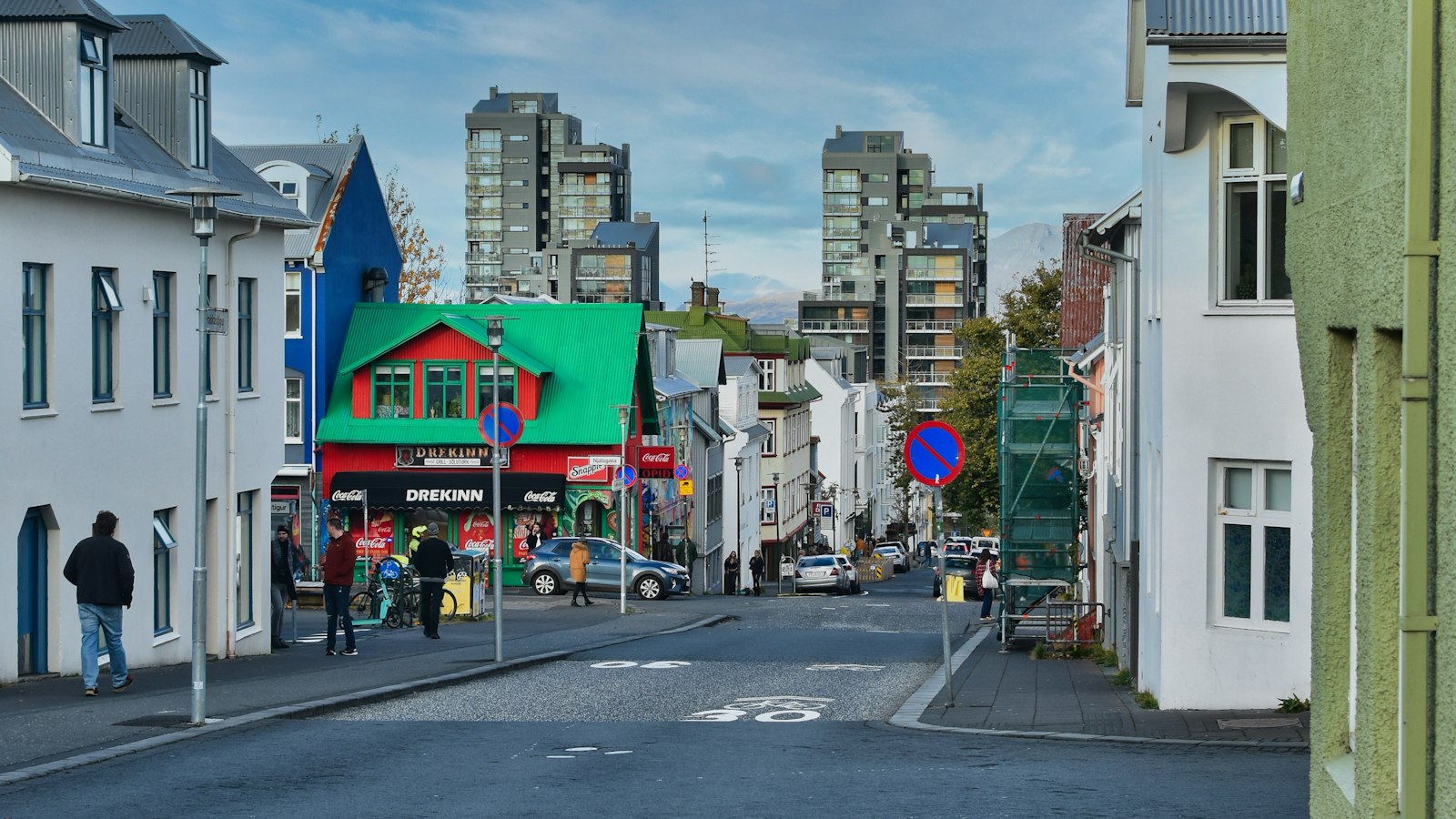
One of the central streets winding through Reykjavík is Bankastræti, whose past mirrors the development and quirks of the city itself. The street links some of the capital’s best-known thoroughfares, running from Laugavegur and Skólavörðustígur until it meets Lækjartorg, a busy junction near the lakeside.
Layers of history in Reykjavík’s heart
Bankastræti’s significance dates to the nineteenth century following the construction of a stone bridge across what was once an open stream called Lækinn. This bridge connected the main streets and transformed trade and movement across Reykjavík. Not long after, Bankastræti saw the city’s first attempt at public lighting: an oil lamp placed near Lækjabrúin, which shone over the street in the evenings.
The street’s current name, meaning ‘Bank Street,’ stems from 1886, when Landsbanki Íslands (Iceland’s National Bank) began operating from number 3 Bankastræti. Previously, the street was known as Bakarabrekka, or ‘bakery hill.’ This earlier name traced back to Bernhöftsbakarí, a bakery that opened in 1834 in one of the street’s earliest houses at number 2. Today, while Bankastræti is no longer referred to as Bakarabrekka, the grassy slope beneath Bernhöftstorfan, at the Bankastræti and Lækjargata corner, carries on the old title.
Art, tradition and city rhythms
Public art makes this area more than just a shopping destination. On the Bakarabrekka slope stands Vatnsberinn (‘the water-carrier’), a sculpture by Ásmundur Sveinsson, alongside a large outdoor chessboard with its pieces crafted by sculptor Jón Gunnar Árnason. Such features have quietly become familiar parts of the city’s fabric, used for play, gathering or contemplation.
Commercial life along Bankastræti is varied and enduring. Longstanding shops such as the undergarment store Stella, the tobacco shop Björk, and the café Prikið signal how small businesses remain woven into daily routines. Films and television, like the movie “Dís” and Friðrik Þór Friðriksson’s “Bíódagar,” have even made use of the street’s character, reconstructing historic facades for period scenes.
Road regulations have changed as well. The street has been one-way since the early twentieth century. In 2012, Bankastræti joined Reykjavík’s ‘sumar götur eru sumargötur’ scheme (‘some streets are summerstreets’), pedestrianised for the warmer months together with neighbouring Laugavegur and Skólavörðustígur, altering the pace for residents and visitors alike.
Curiously, Bankastræti’s identity extends beneath the pavement. The underground public toilets, known as Almenningssalernið Núllið or “Bankastræti núll,” are located at the lower end of the street. Built so that only the entrances were visible from above, these facilities separated men and women on opposite sides. The toilets closed in 2006, but their legend continued, finding a place in Einar Már Guðmundsson’s 2009 book and local memory, evoking nostalgia, stories and city life’s less-public moments.
Sources
- Wikipedia
- Wikipedia (Icelandic) in Icelandic


