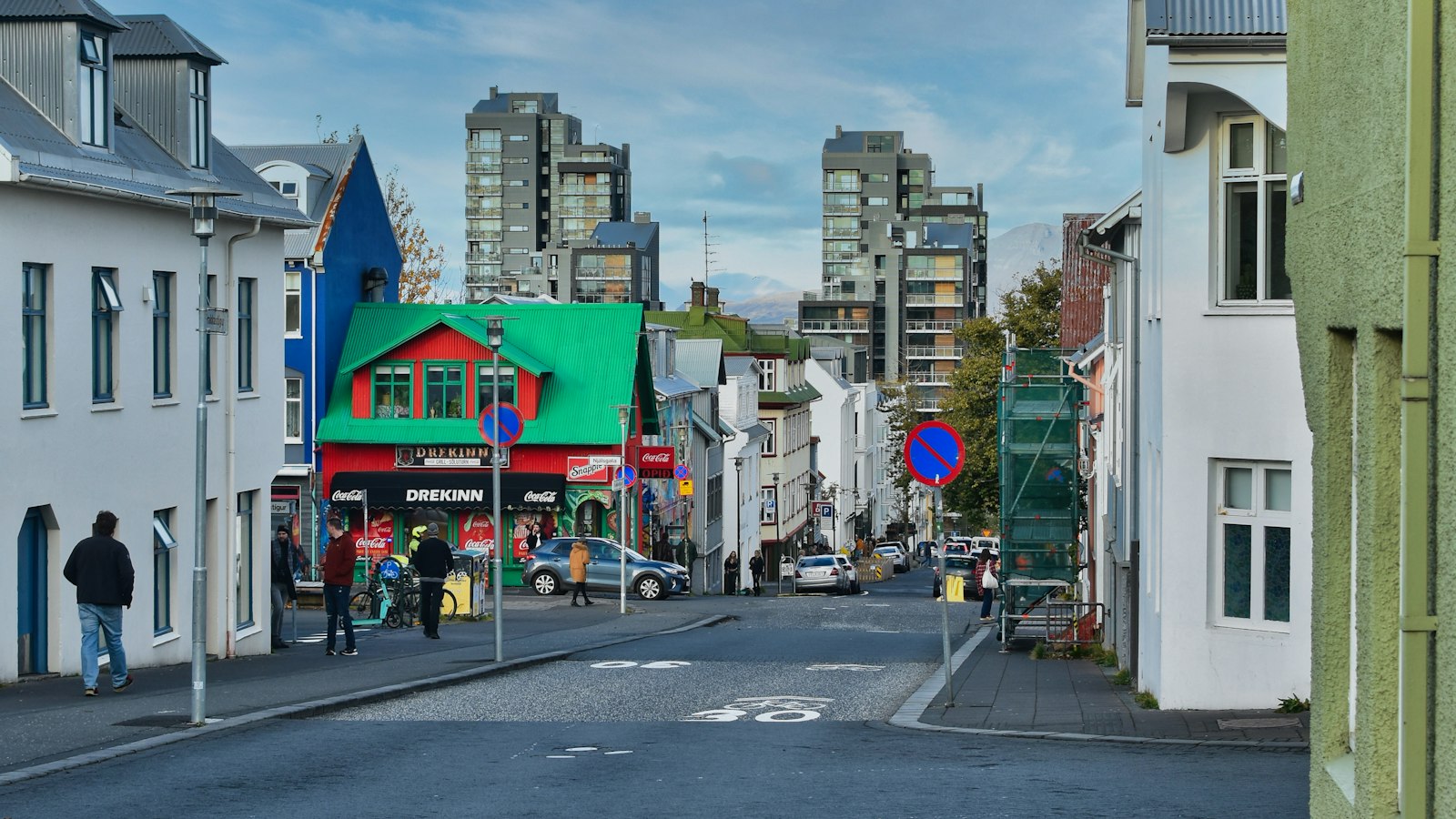
In the heart of Reykjavík lies Austurstræti, meaning ‘East Street’ in Icelandic. This street stretches from Veltusund to Lækjargata, seamlessly connecting with Bankastræti and, further on, Laugavegur. Over time, Austurstræti has evolved into one of the city centre’s most recognisable thoroughfares.
Austurstræti’s origins are closely linked to the practical challenges of Reykjavík’s weather. It was first known as Langafortov or Langastétt (which translates as ‘Long pavement’). The naming came about because a row of stones was laid along the south side, offering a reliable walkway when rain left the rest of the street muddy and difficult to cross. For a period, the street was once called Tværgaden, before gaining its current name.
A street for business and gathering
Over the years, Austurstræti has hosted many well-known buildings and institutions. Former residents include the Búnaðarbanki and Landsbanki bank buildings, the Stólpahúsið, and the Reykjavíkurapótek at number 16. At one time, the street was home to the National Museum of Iceland as well as the Hressingarskálinn café. Syndikatið, a notable building at Austurstræti 14, was destroyed by fire in 1915. In recent decades, businesses like Karnabær and even a McDonald’s operated here before closing or relocating. Although no longer the location of some of these landmarks, the street’s mix of old and new has kept its reputation as a key Reykjavík destination.
A significant event in recent history occurred on 18 April 2007, when a fire destroyed two of Austurstræti’s historic houses. Thankfully, no injuries were reported, but the loss served as a reminder of the street’s sensitive connection to Reykjavík’s architectural heritage.
Inspiration for songs and poetry
Austurstræti has inspired popular songs and literature in Iceland. One well-known tribute is by comedian Laddi, who recorded a widely recognised song dedicated to the street. The cheerful lyrics describe strolling along Austurstræti in sneakers, smiling and chewing gum. Another is the pop song ‘Fröken Reykjavík’, which opens with an image of someone walking along Austurstræti with a bold spirit and red shoes, likened to spring’s flowers.
Poet Tómas Guðmundsson offered his own memories of the street in his poem ‘Austurstræti’. In his verses, the street is described as a refuge of childhood, invoking nostalgia and the revival of old joys for those who pass through. Through these creative works, Austurstræti has become more than just a street; it is established as a symbol of Reykjavík’s collective memories and changing city life.
Sources
- Wikipedia
- Wikipedia (Icelandic) in Icelandic


