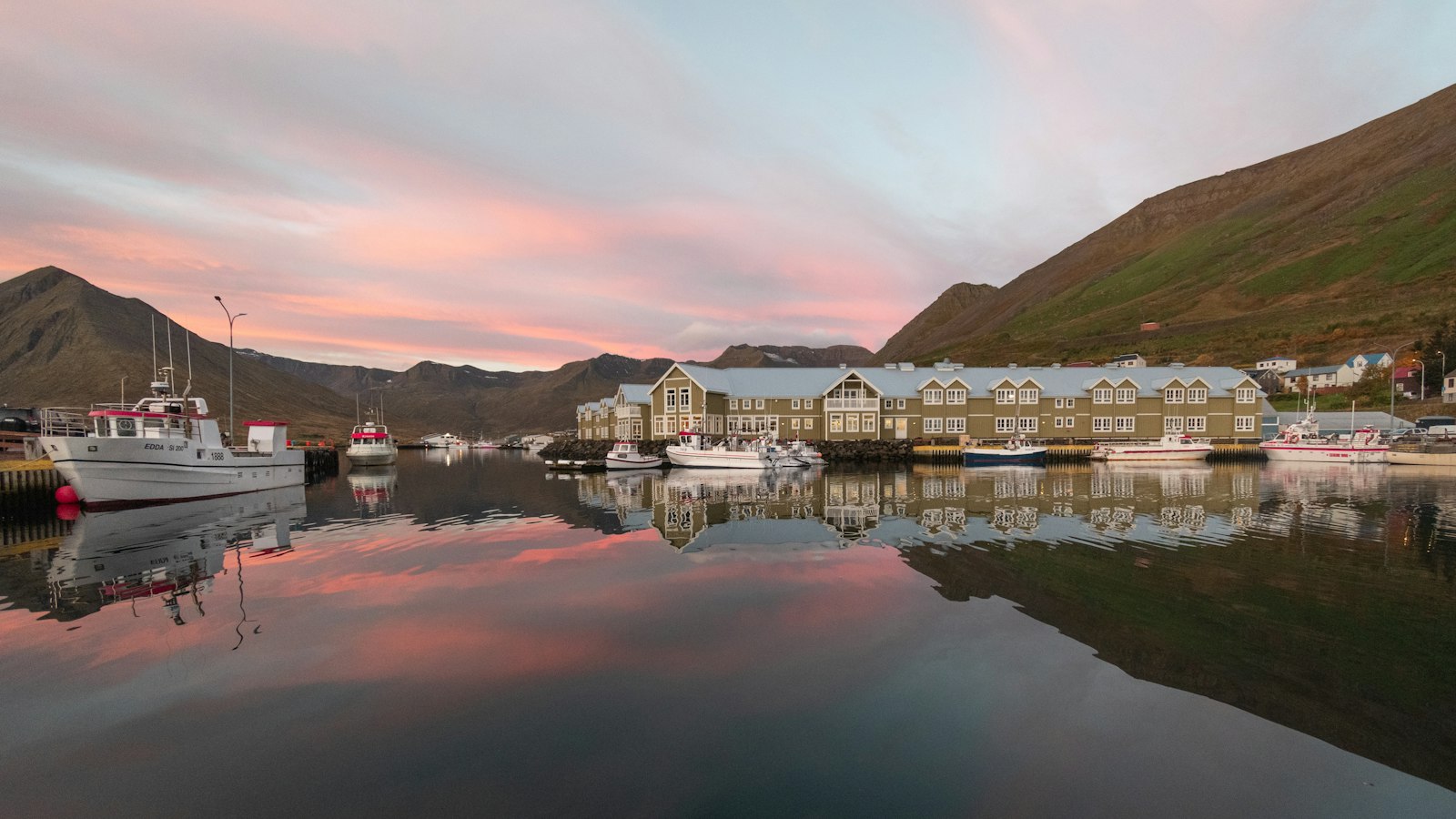
Siglufjörður, a town on Iceland’s north coast, once saw its quiet fjord transformed by crowds, ships and industry during the so-called herring adventure. Here, the Herring Era Museum (Síldarminjasafnið á Siglufirði) stands as a reminder of a time when these fish shaped the lives and fortunes of not only this community but the entire country.
A fish that changed a nation
In 1903, the arrival of Norwegian fishermen in Siglufjörður sparked a herring rush that would last more than sixty years. Over time, the small settlement grew into a town of over three thousand, supported by bustling salting stations and reducing factories. At its peak, herring exports from Siglufjörður alone sometimes made up over 20 percent of Iceland’s total national exports. In some years, herring provided up to 44 percent of the country’s export income, driving rapid industrial growth.
Work brought tens of thousands to the region each summer: herring girls who salted fish, sailors, and labourers. The waters of the fjord would shelter hundreds of boats from storms, and the town’s streets came alive with workers, traders, and speculators. This economic frenzy earned Siglufjörður the nickname “Atlantic Klondike,” evoking the gold rush towns of North America.
But marine resources are naturally unstable. Advances in fishing technology after 1950 led to ever greater harvests, not only in Iceland but across Norway and the Soviet Union. As catches soared and stocks dwindled, disaster struck. By 1969, the once-plentiful herring were gone, devastated by overfishing. For Siglufjörður, whose industry and spirit had revolved around herring, this collapse brought economic decline and left fish factories and salting stations abandoned.
Preserving the herring era
The Herring Era Museum arose from local efforts to protect Siglufjörður’s unique history. In 1989, volunteers began restoring Róaldsbrakki, a Norwegian-built salting station from 1907. Opened officially as a museum in 1994, the site now features three main buildings: Róaldsbrakki, Grána, and The Boathouse. Together, they tell the full arc of Iceland’s herring industry, from the fever of the boom years to the aftermath of loss.
Each museum building preserves a piece of this era. Róaldsbrakki houses objects and stories from the height of herring processing and the lives of workers, including the famous herring girls. Grána, built as a reconstruction of a 1930s herring factory, showcases the heavy machinery that turned fish into valuable oil and meal. The Boathouse, opened in 2004 by Norway’s Crown Prince Håkon, recreates the energetic harbour scene, complete with vessels moored alongside piers and the sounds of seagulls and waves.
The museum also maintains the Old Slipway, a boat-building garage from the 1930s that blends exhibition with an active workshop, where traditional Icelandic boatbuilding skills continue to be practiced.
Recognized for its achievements, the museum has received several awards, including the prestigious European Museum Award in 2004. It remains the only Icelandic museum to do so, marking its role in safeguarding a chapter of Icelandic and maritime history that shaped the nation’s journey to modernity.
Sources
- Wikipedia
- Wikipedia (Icelandic) in Icelandic


