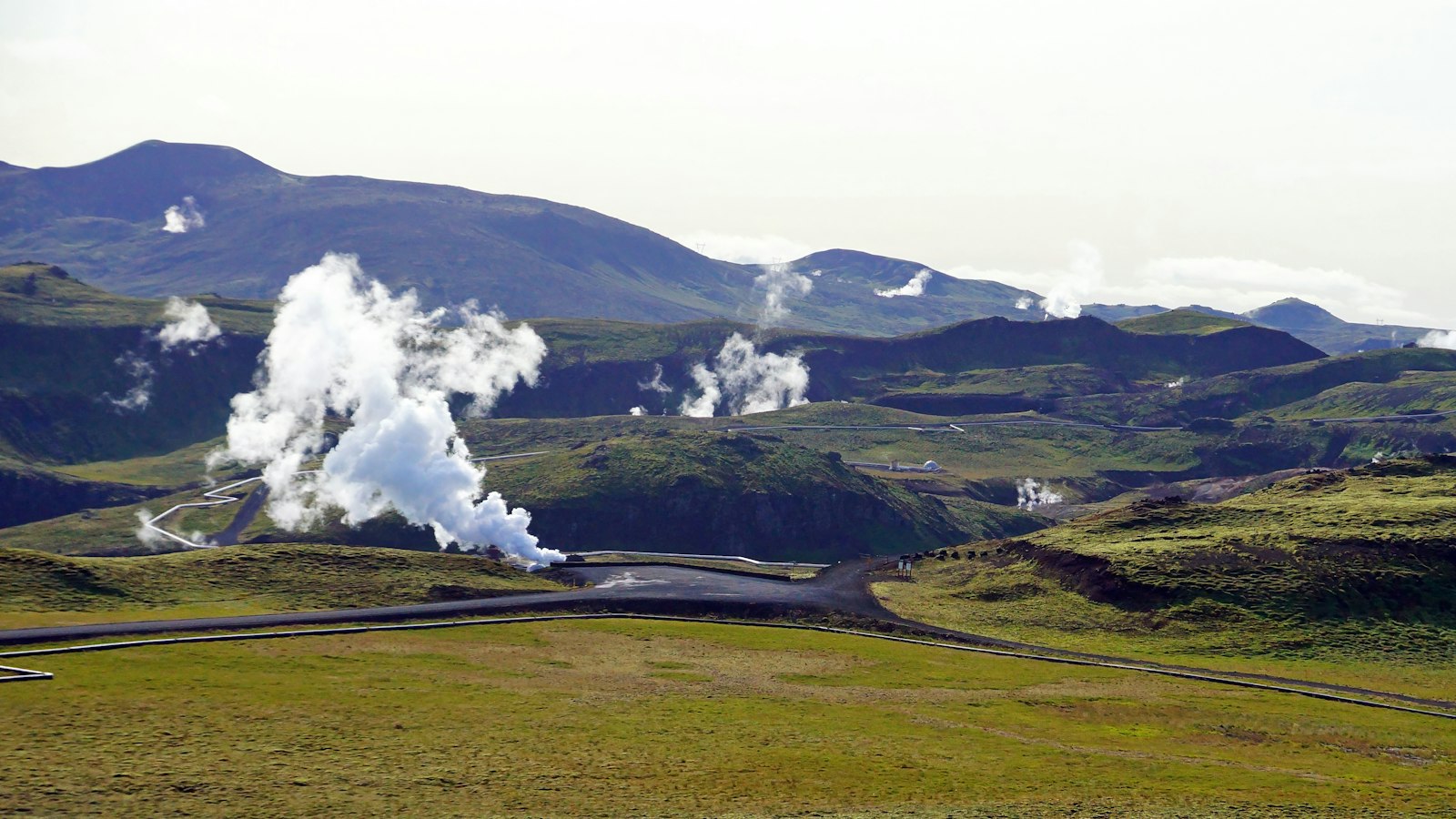
Southwest Iceland’s volcanic landscape is home to Hellisheiði Power Station, known in Icelandic as Hellisheiðarvirkjun. Among geothermal plants worldwide, it ranks as the eighth largest, and it leads in both scale and impact within Iceland itself. Set in the Hengill region, the station exemplifies how Iceland channels its geothermal wealth into both power generation and urban heating.
Tapping into volcanic heat
Hellisheiði Power Station sits just 11 kilometres from the Nesjavellir Geothermal Power Station, drawing on the tremendous geothermal resources beneath the ground. About 30 boreholes, with an average depth of two kilometres, tap into reservoirs of volcanic heat. The wells bring up a mix of steam and water, which is then processed so that steam and liquid travel separately to different parts of the plant. The site houses both a power plant for electricity and a thermal station to provide hot water.
The facility’s electrical capacity stands at 303 megawatts. The process begins as the gathered steam runs turbines to generate power, which is distributed through Iceland’s national grid. Much of this output originally helped supply a metalworks in Grundartangi after an energy purchase agreement.
Urban heat, climate action
In addition to electricity, Hellisheiði supplies 200 megawatts of heat, channelled to Reykjavík and surrounding municipalities through underground pipes. Hot water from the plant is mixed with cold freshwater in a separate section of the station before being sent to the urban area, a contribution that increased in 2020 as the capital region expanded.
Operations began in 2006 with two turbines, with further expansions in the years that followed. Extra turbines and new sources of steam, including from Skarðsmýrarfjall Mountain, have been added to maintain output. When falling steam levels became clear in 2013, the operators launched renewed drilling in 2016 to sustain production, with a significant investment to keep energy supplies steady.
Hellisheiði has faced local challenges, such as emissions of hydrogen sulphide that have at times exceeded health guidelines in the capital region. In response, technology was introduced in 2014 to inject non-condensable gases, including hydrogen sulphide, back underground to help reduce air pollution.
Beyond supplying energy and heat, the site is a base for experiments in climate mitigation. A pilot facility operated by Climeworks captures up to 4,000 metric tonnes of carbon dioxide annually from the air, using on-site geothermal energy to power the process. The captured gas is stored underground, turning it into minerals.
Owned and operated by ON Power, a Reykjavík Energy subsidiary, the Hellisheiði Power Station symbolises Iceland’s approach to harnessing the energy beneath its feet and combining it with environmental technology.
Sources
- Wikipedia
- Wikipedia (Icelandic) in Icelandic


