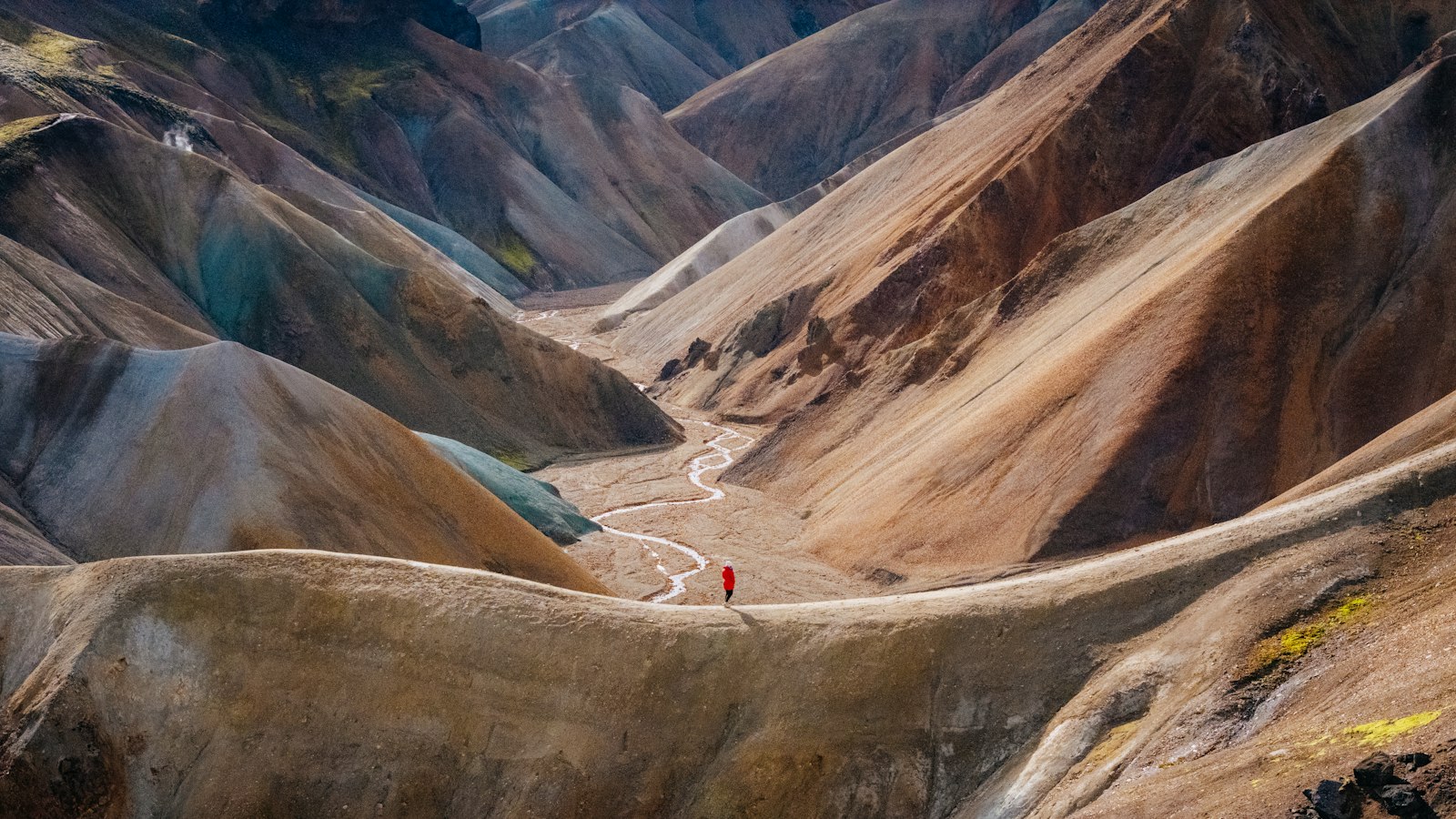
Steinar Bragi’s 2011 novel Hálendið, meaning ‘the Highlands’, draws its readers into the desolate expanse of Iceland’s interior and the shadows lurking within both the landscape and the mind. The story takes place during the years of the 2008–11 Icelandic financial crisis, a period marked by profound uncertainty and upheaval. The book earned high praise and has since been published in numerous languages, including English as “The Ice Lands.”
Characters lost between civilisation and the highlands
Hálendið tells the story of four friends, Hrafn, Vigdís, Egill, and Anna, whose holiday trip into Iceland’s remote highlands quickly turns from an adventure into a descent toward the uncanny. Their backgrounds reflect the heights and cracks of contemporary Icelandic society: Hrafn is a successful but troubled entrepreneur from an elite family; Vigdís, his girlfriend, is a psychiatrist shaped by personal loss; Egill, his childhood friend, is a lawyer hardened by excess; and Anna, Egill’s partner, is an acclaimed journalist accompanied by her dog, Tryggur.
When their jeep crashes into a mysterious house lurking in the southern desert near Askja, the group find themselves stranded. The inhospitable wilderness is compounded by the house’s odd elderly inhabitants: Ása, a cryptic woman, and an old man apparently lost to Alzheimer’s disease. As the group struggles to find help, reality itself begins to unravel. Their initial efforts to reach civilisation, by vehicle or on foot, are continually thwarted by accidents, sandstorms, and the unnerving disappearance of Tryggur.
Folklore, horror, and uncertainty
Steinar Bragi’s novel emerges as an Icelandic take on the American horror tradition, drawing deeply from the country’s own folklore. The sometimes ambiguous border between hallucination and reality, the landscape’s hidden dangers, and the house in the wilderness that may, in the story’s final pages, be nothing more than a large rock, all evoke the homes of trolls and elves from Icelandic tales. Even character names, like Ása, nod to mythic echoes.
As the days pass, the book’s narrative splits between the different characters’ perspectives, exploring the strains, suspicions, and deep-seated drives that surface under pressure. The psychological horror intensifies: mutilation, inexplicable disappearances, and a mounting sense of menace. In a particularly surreal turn, after Vigdís is found wandering and barely clothed, it is no longer clear whether their harrowing ordeal was physical or merely a hallucination, a question left unresolved, mirroring the uncertain world outside the book.
Hálendið’s structure is striking, divided into four parts, ‘the desert’, ‘it has no soul’, ‘the house’, and ‘nature’, each exploring phases of isolation and transformation in the highlands. A map at the novel’s beginning emphasises the vastness and mystery of Iceland’s interior, and the novel repeatedly addresses the characters’ limited understanding and arrogance toward the natural world.
Firmly rooted in its time, the novel offers a critical eye on Iceland’s early 21st-century boom, where confidence in progress existed alongside deep anxieties. The highlands amplify these contrasts, becoming a place where outward prosperity and inner turmoil collide, and where modern Icelanders face old, unnamed dangers.


