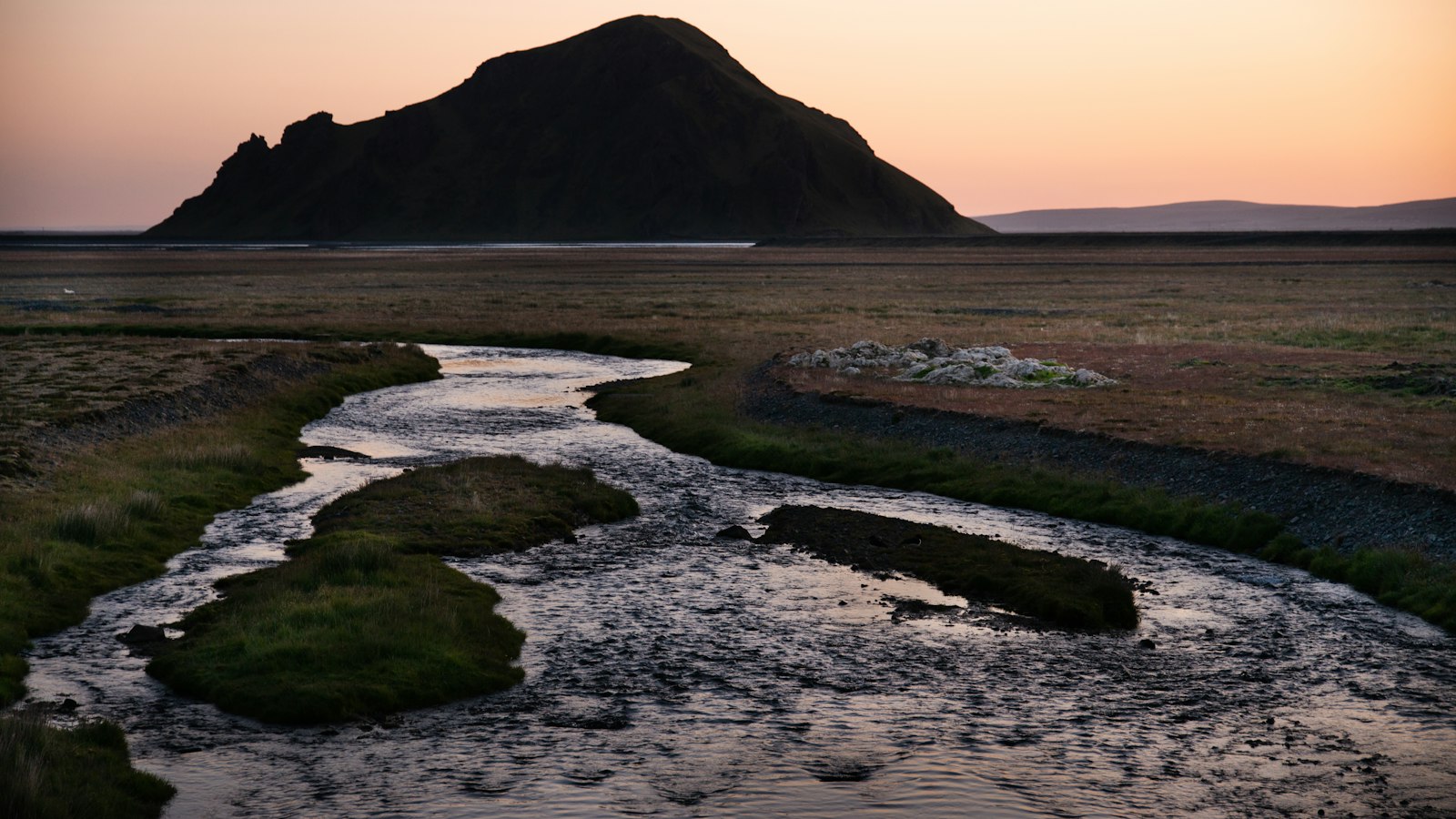
When Búrfellsstöð, the Búrfell hydroelectric power station, began operation in the valley of the Þjórsá river in 1969, it marked a new chapter for Iceland. This was the country’s first major run-of-river hydroelectric project and, at the time, its largest engineering undertaking. Developed and operated by Landsvirkjun, the state electricity company founded specifically for such ambitions, the station stood as a symbol of a growing partnership between Iceland’s natural forces and modern industry.
Birth of a landmark project
Ideas to harness rivers for power in Iceland can be traced back to the early 1900s, echoing similar efforts seen in Norway and Sweden. The turning point came after World War II as Iceland sought ways to drive economic growth and attract investment. Making full use of the country’s reliable and abundant waterfalls, leaders aimed to fuel energy-hungry heavy industry.
Though proposals were raised as early as 1917 by Norwegian engineer Gotfred Sætersmoen, it was not until the 1960s that the vision became practical. At that time, domestic electricity consumption was too low to justify such a huge plant. The answer lay in providing energy to the aluminium industry, and in 1966, an agreement was reached with Swiss company Alusuisse to build an aluminium smelter at Straumsvík near Hafnarfjörður. Financing came with an international loan, underscoring the project’s scale and ambition.
Engineering Iceland’s rivers
By 1969, Búrfell was operational, initially delivering power via three turbines. Its capacity increased gradually, reaching 270 megawatts by 1999 and finally 370 megawatts after expansions in 2018. The plant’s operation led to the creation of Lake Bjarnalón, a small reservoir formed by a dam stretching 370 metres, diverting the mighty Þjórsá as it skirted Mount Búrfell. Water travels from Bjarnalón through a tunnel over 1.5 kilometres long, dropping 115 metres to drive six Francis turbines before being returned to the river downstream.
The same period saw more than 800 people, including many from abroad, come together to build the station, a first for Icelandic infrastructure. Further evidence of the project’s scale lies in its influence, as for decades it remained the largest power station in the country, later surpassed only by Kárahnjúkar.
In the 2010s, as melting glaciers boosted river flows, work began on a second underground station known as Búrfell II. Opened in 2018, it contributes an extra 100 megawatts and can be expanded further. Both stations draw from the same reservoir, and Búrfell II now channels water back to the Þjórsá via a canal nearly 2.2 kilometres long.
Today, Búrfell stands not only as a key piece of the national power grid, but also as a cornerstone of Iceland’s strategy to link its natural resources, rivers, mountains and volcanic landscapes, with its industry and economy.
Sources
- Wikipedia
- Wikipedia (Icelandic) in Icelandic


