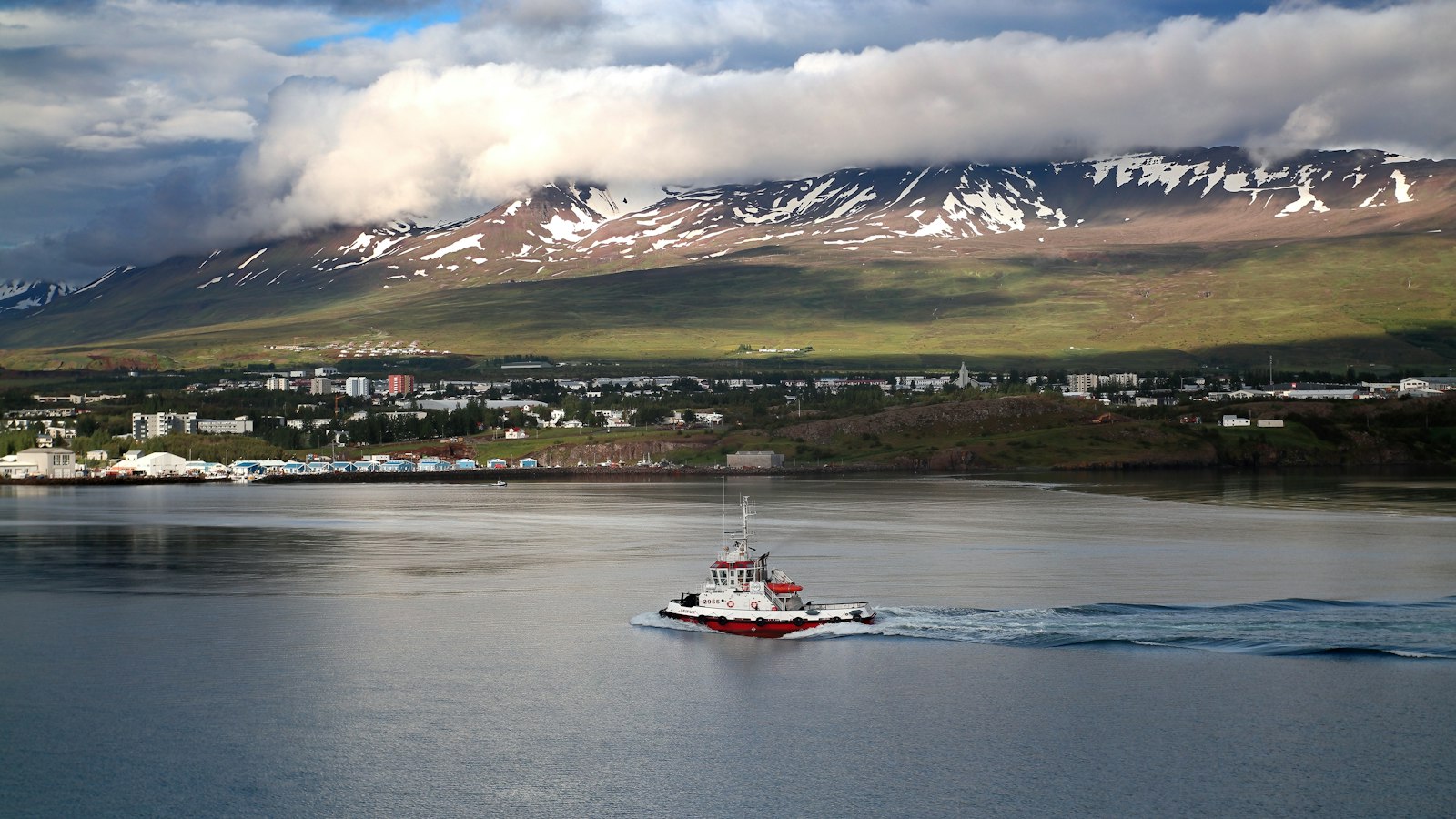
Hydrothermal vents are often associated with the distant, inky depths of the ocean, but Iceland’s Strýtan vent field is an exception. Located in the northern fjord of Eyjafjörður near Akureyri, Strýtan lies in water between just 16 and 70 metres deep. This puts it among the shallowest known hydrothermal vent systems anywhere in the world.
A unique geological setting
Strýtan sits near the Dalvík Lineament, which links to the Eyjafjarðaráll Rift and the Kolbeinsey Ridge, features that shape the tectonic landscape of northern Iceland. It is the only recorded site (as of 2024) where alkaline hydrothermal vents form on basalt rock. Most other known examples sit atop different geological formations, making Strýtan a rare window into interactions between Icelandic bedrock and hydrothermal fluids.
The vent field is made up of three main areas: Big Strýtan, Arnarnesstrýtur (also called Little Strýtan), and Hrisey. The Big Strýtan structure is particularly prominent, composed largely of minerals like anhydrite and saponite. Some of the mineral chimneys there reach up to 55 metres in height. These porous, crystalline formations enable warm, mineral-rich fluids to escape from deep within the earth.
Warm, alkaline fluids and unusual chemistry
Unlike many deep-sea vent systems, the fluids at Strýtan are moderately hot at around 76 °C and highly alkaline, with a pH of approximately 10.2. The water that emerges here is mostly of terrestrial origin, as indicated by isotope and radiocarbon analysis, it is recharged primarily by fresh, rather than salty, sources. This is notably different from other vent systems such as the Lost City further south in the Atlantic.
This chemistry leads to extremely high concentrations of silica and the unique precipitation of saponite, forming the distinctive towers. Brucite, a mineral not often observed in such settings, was identified in the chimneys in a 2024 study, raising intriguing questions about prebiotic chemistry possibly taking place there.
A habitat rich in life
The mineral mounds of Strýtan teem with ocean life. Mussels, sponges, bryozoans, hydroids, and brittlestars create vivid underwater communities. More elusive inhabitants such as Metridium anemones, nudibranchs, and sea spiders have been recorded as well. The vent’s unique environment encourages specialised microbes, too. Mixing of hydrothermal fluids and oxygen-rich seawater in the chimneys gives rise to diverse microbial populations, including species that thrive on hydrogen and sulfur chemistry.
Though local fishermen knew of unusual underwater features for centuries, it was not until 1997 that divers Erlendur Bogason and Árni Halldósson officially identified Strýtan. Previous investigations by the Icelandic Coast Guard had failed to detect these structures, but scientific attention soon followed. Research expeditions, including the German submersible HOV JAGO, quickly confirmed its exceptional nature. In 2001, the area was granted protected status, preserving this rare marine and geological phenomenon.


