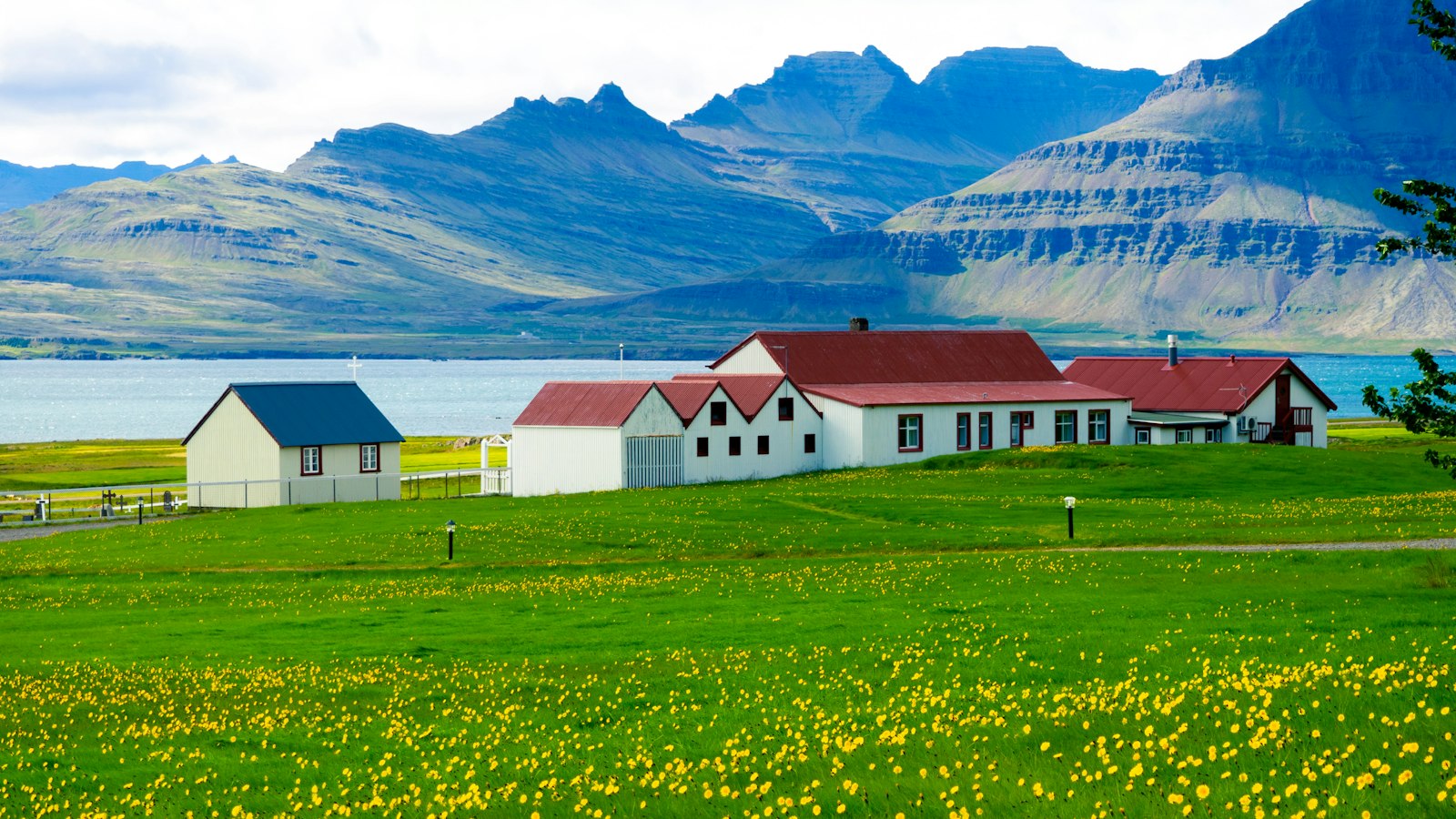
Bakkagerði sits quietly on the coast of Borgarfjörður eystri in eastern Iceland. Though small, the hamlet is known throughout Iceland for its links to painting, folklore, and rural traditions. It is now part of Múlaþing, Iceland’s largest municipality, formed in 2020 by merging Borgarfjarðarhreppur with neighbouring communities.
History and harbour life
Bakkagerði was designated as an official trading station in 1894 during Iceland’s union with Denmark. The hamlet’s development depended on both the work of local fishing boats and the gradual improvement of its harbour. The current harbour was first constructed in 1943, then expanded in 1974, and further upgraded in 2001. Though the sea here has always presented challenges, the harbour now supports both local boats and the area’s fish processing industry.
Art, churches and stories
Jóhannes Sveinsson Kjarval, among Iceland’s most significant painters, was raised in Bakkagerði. He left a lasting mark on the community, contributing a now-famous altarpiece to Bakkagerðiskirkja, the village’s wooden church. Painted in 1914, it imagines Jesus delivering the Sermon on the Mount from Álfaborg, a distinctive local rock, with the Dyrfjöll mountains in the background. The church itself was built originally on a farm at Desjarmýri, moved and reconstructed in the village in 1901, a practice reflecting the high value of timber in Iceland. It was renovated a century later, in 2001.
Another architectural relic is Lindarbakki, a small turf house built in 1899. Its basement and interior recall life in past centuries. While only 30 square meters in size, it offers insight into local building traditions and domestic routines before modern amenities.
Álfaborg, the rock that dominates the local landscape, is deeply woven into Icelandic folk beliefs. Many Icelanders refer to it as the dwelling place of the queen of the elves. Such stories are far from rare in this region, where rock formations and isolated farms each seem to inspire tales handed down through generations.
Bakkagerði is surrounded by historical sites. The wooden church at Hjaltastaður, from 1881, and Kirkjubaejarkirkja, built in 1851 and home to Iceland’s reputedly oldest pulpit, reflect centuries of settlement and craftsmanship. Each site speaks to the resourcefulness required to build, and maintain, churches in remote eastern fjords.
Daily life and nature
Contemporary Bakkagerði still offers traces of its fishing heritage, but farming, particularly eiderduck farming for the prized down, has become another focus. Production of eiderdown bedding continues in the village. Tourism now adds to traditional livelihoods with its draw of walkers and bird enthusiasts.
Despite a population under 100, Bakkagerði supports a primary school, library, and health care centre. Local services include a bank, post office, petrol station and general store. The hamlet is linked by daily bus to Egilsstaðir, the nearest town and airport. Just beyond the village, hiking trails cross Víknaslóðir, a rugged expanse between the fjords. Near the harbour, Hafnarhólmi Rock supports a large puffin colony, earning Bakkagerði its reputation as Iceland’s “puffins’ capital.”
Sources
- Wikipedia
- Wikipedia (Icelandic) in Icelandic


