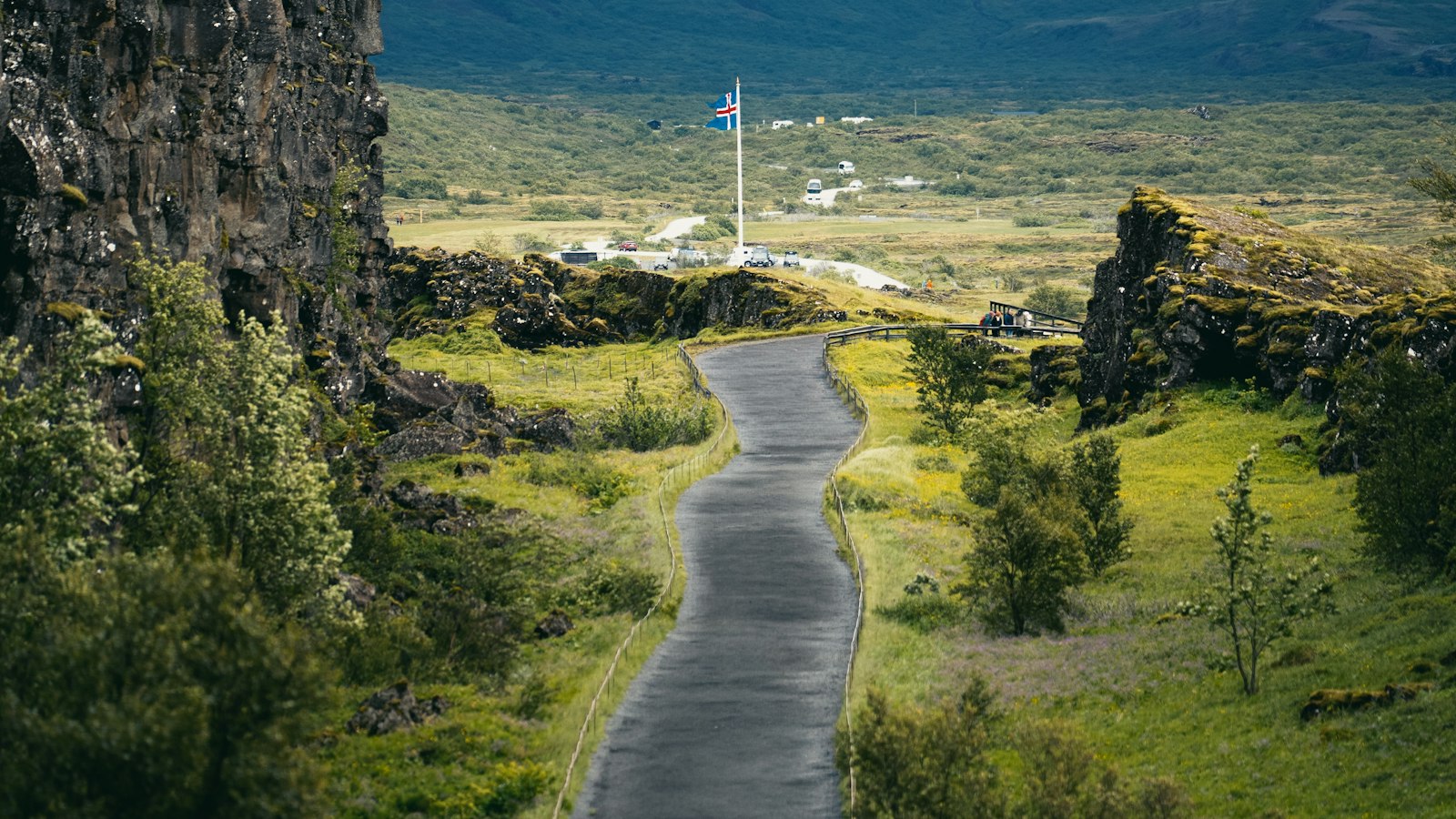
Iceland stands apart as one of the world’s last inhabited large islands. Its recorded history is relatively recent compared to the rest of Europe, with human settlement beginning in the late ninth century. Set adrift between the North American and Eurasian tectonic plates, Iceland was forged by volcanic forces and remained unpopulated until well after most parts of Europe.
A land of new beginnings
Stories suggest that Irish monks may have established simple hermitages on the island before the arrival of Norse explorers. These monks, known in Icelandic sagas as ‘papar’, left little direct evidence besides possible place names and the mention of religious artefacts. However, the main wave of settlement began when Norwegians and people from the British Isles, including both settlers and enslaved individuals, arrived in the late 800s, drawn by the chance to farm or by upheaval in Scandinavia.
Naddodd, a Norwegian, is credited in traditional accounts as the first to set eyes on Iceland, accidentally arriving while sailing from Norway to the Faroe Islands. After Naddodd named it Snæland (Snowland), other seafarers followed, including the Swede Garðar Svavarsson, who determined it was an island. Hrafna-Flóki Vilgerðarson spent a difficult winter there, giving the island the name we know today: Ísland, or Iceland.
Building a society at the edge of Europe
Ingólfur Arnarson is recognised as the first permanent Norse settler, founding a homestead in what would later become Reykjavík in 874. Within a few decades, settlers claimed large tracts of land, and by around 930, local chieftains established the Althing at Þingvellir. This governing assembly is often considered one of the world’s oldest parliaments and was vital in managing disputes and maintaining order across scattered settlements.
In the decades that followed, Christianity came to Iceland, influenced by Norway’s Olaf Tryggvason. Storytelling flourished in the form of sagas, chronicling settlement and family conflicts. Internal strife during the Age of the Sturlungs in the 13th century weakened Icelandic autonomy, ushering in the end of the Commonwealth era. Over the subsequent centuries, Iceland came under the control of Norway, then was ruled as a part of Denmark. Economic hardships mounted during the strict Danish–Icelandic Trade Monopoly, and natural disasters, such as the Móðuharðindin (Mist Hardships), placed strain on the population.
Waves of European nationalism in the 19th century encouraged a movement for Icelandic independence. The Althing was re-established in 1844 after decades of suspension. Iceland became a sovereign kingdom associated with Denmark in 1918 and finally declared itself a republic in June 1944, with the end of World War II as a backdrop.
In more recent times, Iceland has played a role in international affairs. The island joined NATO and the UN after the war and underwent rapid economic change, particularly through fishing. In 1980, Vigdís Finnbogadóttir became the world’s first democratically elected female head of state. Economic turbulence, such as the financial crisis of 2008–2011, also marked Iceland’s recent history. Today, the island continues to develop its identity, distinctly separate from its European neighbours as it remains outside the European Union.
Sources
- Wikipedia
- Wikipedia (Icelandic) in Icelandic


