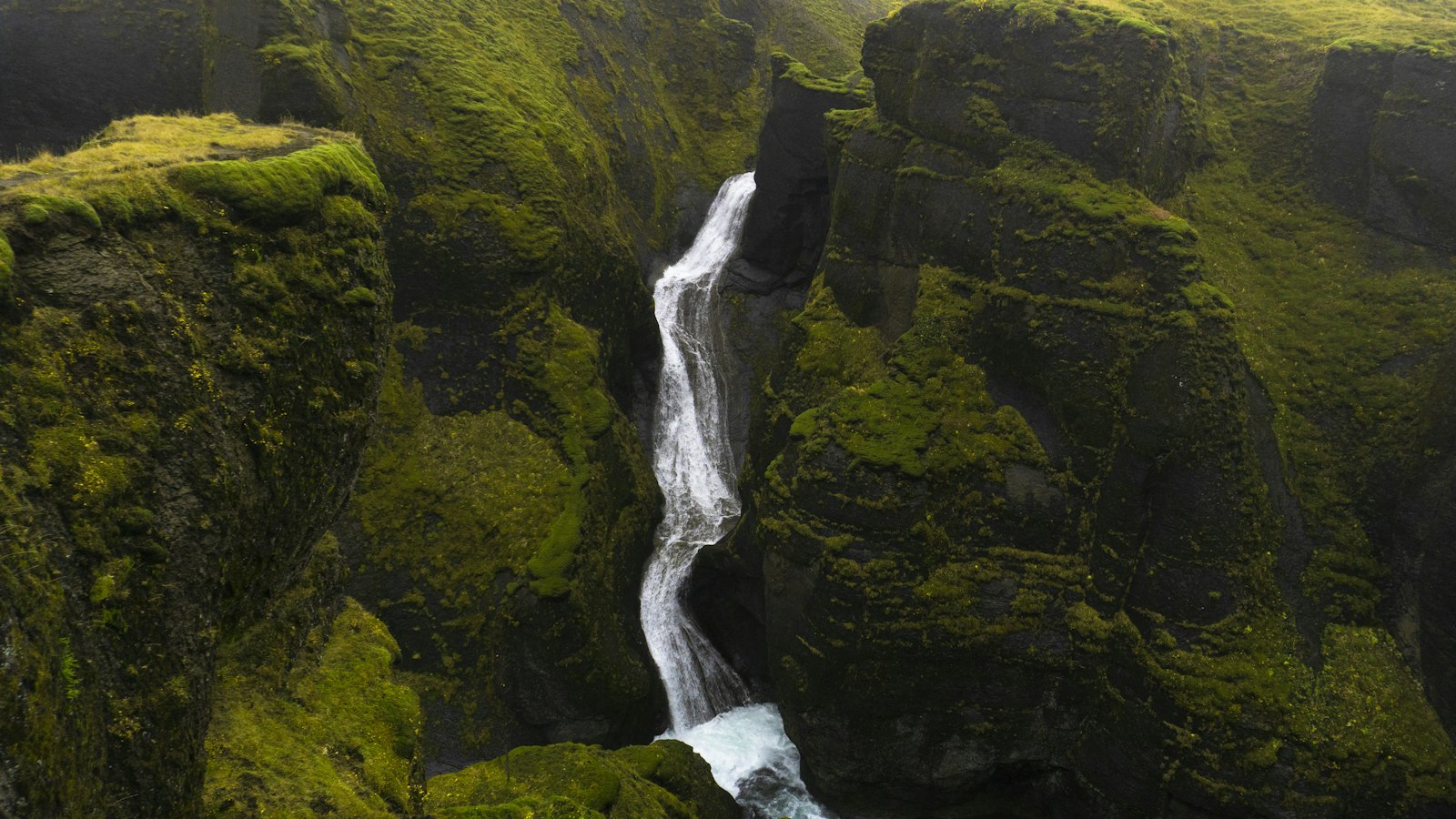
Western Iceland is home to Barnafoss, a waterfall where rumour and geology meet on the river Hvítá in Borgarfjörður. Only about 100 kilometres from Reykjavík, Barnafoss sits just upstream from Hraunfossar, both carved from the Hallmundarhraun lava field, a landscape of solidified lava, rushing water and persistent myth.
The name Barnafoss means ‘Children’s Falls.’ According to one of the most enduring Icelandic folk tales, two young boys from the nearby farm Hraunsás once attempted to follow their parents, who had walked to a church service. They crossed the river by way of a natural stone bridge arching above the waterfall. The legend holds that the boys became dizzy, lost their balance and tragically fell into the torrents below. Their mother, overtaken by grief, is said to have laid a curse on the bridge so that none would safely cross again. Some accounts say the bridge was later destroyed by an earthquake; others recall that it was knocked down at her command. In any form, the story echoes across generations in the region.
A real stone arch did once span the river here. While it was always a site that drew the brave, the area’s shifting waters and geology have changed the falls over time. As recently as the mid-20th century, a visitor attempted a daring leap across the arch, giving rise to more tales, one such attempt led to a fatality in 1984, underscoring the dangers of the site.
Below the main cascade, a footbridge crosses the river. Originally constructed in 1891 and rebuilt in the 1950s, this bridge enabled local farmers from Hálsasveit and Reykholtsdal to drive flocks of sheep to summer pastures on Arnarvatnsheiði. Prior to the bridge, farmers faced perilous fords of several rivers in the region, including Geitá, Kaldá and Norðlingafljót. Today, these practical details survive alongside the darker folklore, woven into the story of Barnafoss.
The waterfall does not exist in isolation. It is part of a cluster of natural sites: Hraunfossar’s own flowing rivulets, the geothermal spring Deildartunguhver, nearby caves such as Surtshellir and Víðgelmir, and the nearby glacier Langjökull. Each represents a chapter in the geological and human history of Borgarfjörður, continuing to intrigue those who live in and travel through this part of Iceland.
Barnafoss in Icelandic tradition and nature
While Barnafoss is known for its blue-green water weaving through narrow rock channels, its role in local storytelling is equally prominent. As part of the protected landscape since 1987, the area is testimony to the connection between people, place and legend in Iceland. Whether viewed from the safety of the modern bridge or remembered in the tales of stone arches and spells, Barnafoss endures as both a landmark on the land and in Icelandic memory.
Sources
- Wikipedia
- Wikipedia (Icelandic) in Icelandic


