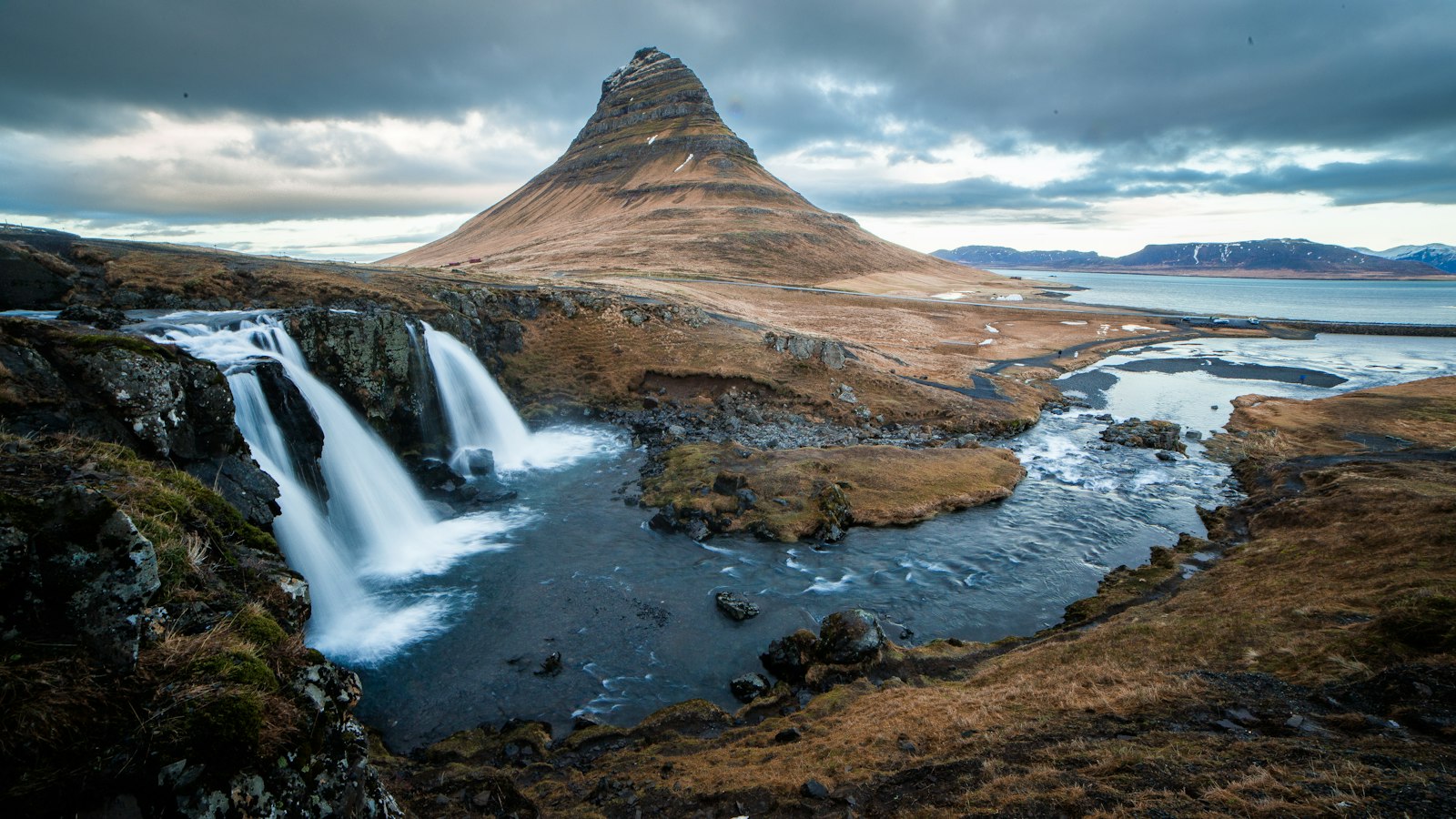
Kirkjufell is a prominent peak on the north coast of the Snæfellsnes peninsula in western Iceland. Reaching 463 metres (1,519 feet) above sea level, the mountain stands near the fishing village of Grundarfjörður. Its symmetrical form and location near the coast make it a well-known landmark and a frequent subject for photographs.
The mountain’s name, Kirkjufell, means ‘Church Mountain’ in Icelandic. Its reputation is widespread, in part due to appearances in popular culture, such as its role as the “Arrow Head Mountain” in the television series Game of Thrones. Danish sailors once referred to the peak as “Sukkertoppen,” or “the Sugar Top,” inspired by its shape.
Geological features and formation
Kirkjufell’s present form results from millions of years of glacial and volcanic activity. The visible layers in the rock trace back to numerous eruptions. The mountain sits between two glaciers that further shaped its slopes. Its steep sides are characteristic of a phenomenon called “nunatak”, a term for a peak that rises above a surrounding glacier without being covered by ice, sometimes called a “glacial island.”
Visiting Kirkjufell and Kirkjufellsfoss
The best views of Kirkjufell are from three directions on land. The north side faces the sea, which can be seen by kayak for those interested in a different perspective. To visit from Reykjavík, follow Road 1 north and take Road 54 at Borgarnes, continuing until reaching Grundarfjörður.
Close to Kirkjufell is Kirkjufellsfoss, a waterfall with three separate drops, each emptying into a river that flows toward the sea. The falls descend over rocky ground for approximately 16.4 metres (54 feet) and are visible from the road. In the warmer months, the area attracts locals and visitors, though swimming is not advised in winter.
A typical visit to Kirkjufell and the waterfall lasts about thirty minutes unless visitors are waiting for particular lighting conditions. For those wishing to climb the mountain, the ascent takes roughly ninety minutes, and a hiking route around its base can be completed in about three to four hours. Climbing to the summit is not recommended without a local guide.