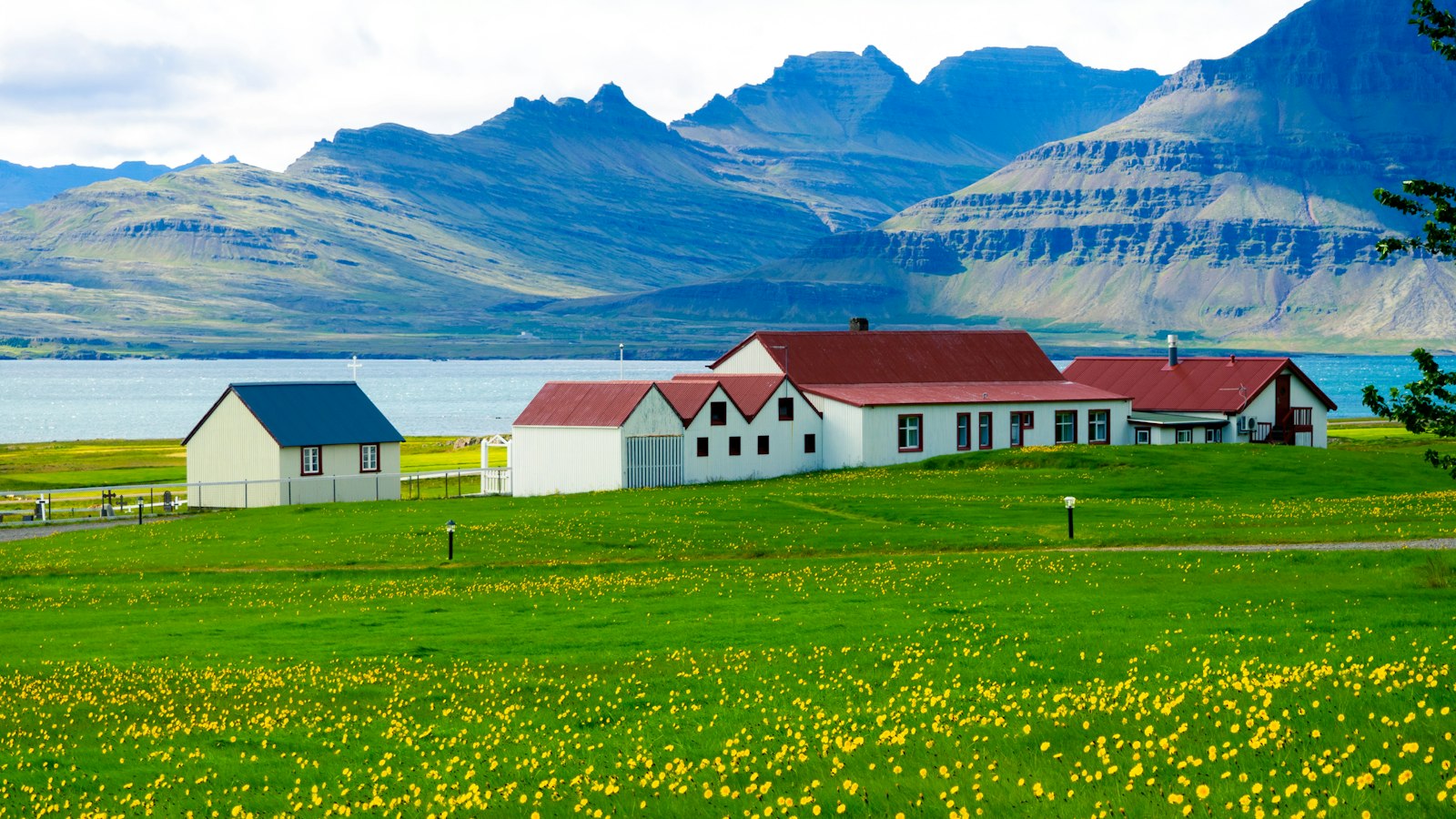
Tucked between the fjords of Reyðarfjörður and Stöðvarfjörður in eastern Iceland, the village of Fáskrúðsfjörður blends Icelandic traditions with a notable French legacy. With around 735 inhabitants in 2024, this is one of several settlements that form the municipality of Fjarðabyggð, neighbours with Eskifjörður, Mjóifjörður, Neskaupstaður, Reyðarfjörður and Stöðvarfjörður.
Lasting French connections
From the late nineteenth century until 1935, Fáskrúðsfjörður was a centre for French sailing vessels fishing off the Icelandic east coast. During these decades, the town, then sometimes called Búðir, hosted not only a French consul but also a hospital, a chapel and a community linked to northern France, particularly the town of Gravelines from which many sailors originated. The old hospital, built in 1903, still stands as a landmark, having been preserved and restored for new use.
Reminders of this period endure. Street name signs appear both in French and Icelandic, a feature unique among Icelandic villages, reflecting the warmth of historical ties. On the outskirts of the village lies a cemetery dedicated to French and Belgian fishermen who lost their lives at sea. This graveyard contains 49 marked graves and a memorial cross placed in 2009.
Seaside life and heritage
Fáskrúðsfjörður’s connection to the sea is not only historical but still visible. The region’s geography, a fjord hemmed in by high coasts, once made for excellent fishing grounds and a safe haven in stormy weather. Ferry connections or tunnels now link Fáskrúðsfjörður to its neighbours, with route 955 offering a particularly scenic journey along the coastline.
Out at sea, the island of Skrúður sits close to the fjord’s mouth. Adorned with steep cliffs and a large cave once used by fishermen seeking shelter, the island is known for its diverse birdlife, notably puffins and gannets. Old stories and folklore further surround Skrúður, adding to local lore.
A short distance east, at the farm of Kolfreyjustaður, stands a church built from driftwood in 1878. Kolfreyjustaðakirkja is still noted today for its painted wall decorations and an altar panel created by Danish artist Niels Anker Lund. Meanwhile, on the Vattarnes peninsula is the Vattarnesviti lighthouse, an orange beacon constructed in 1957.
Over time, Fáskrúðsfjörður’s maritime heritage and small size have fostered a strong sense of identity. Even as it has become known as a base for viewing the Northern Lights, traces of its seaborne history and Franco-Icelandic friendship remain woven into daily life.
Sources
- Wikipedia
- Wikipedia (Icelandic) in Icelandic


