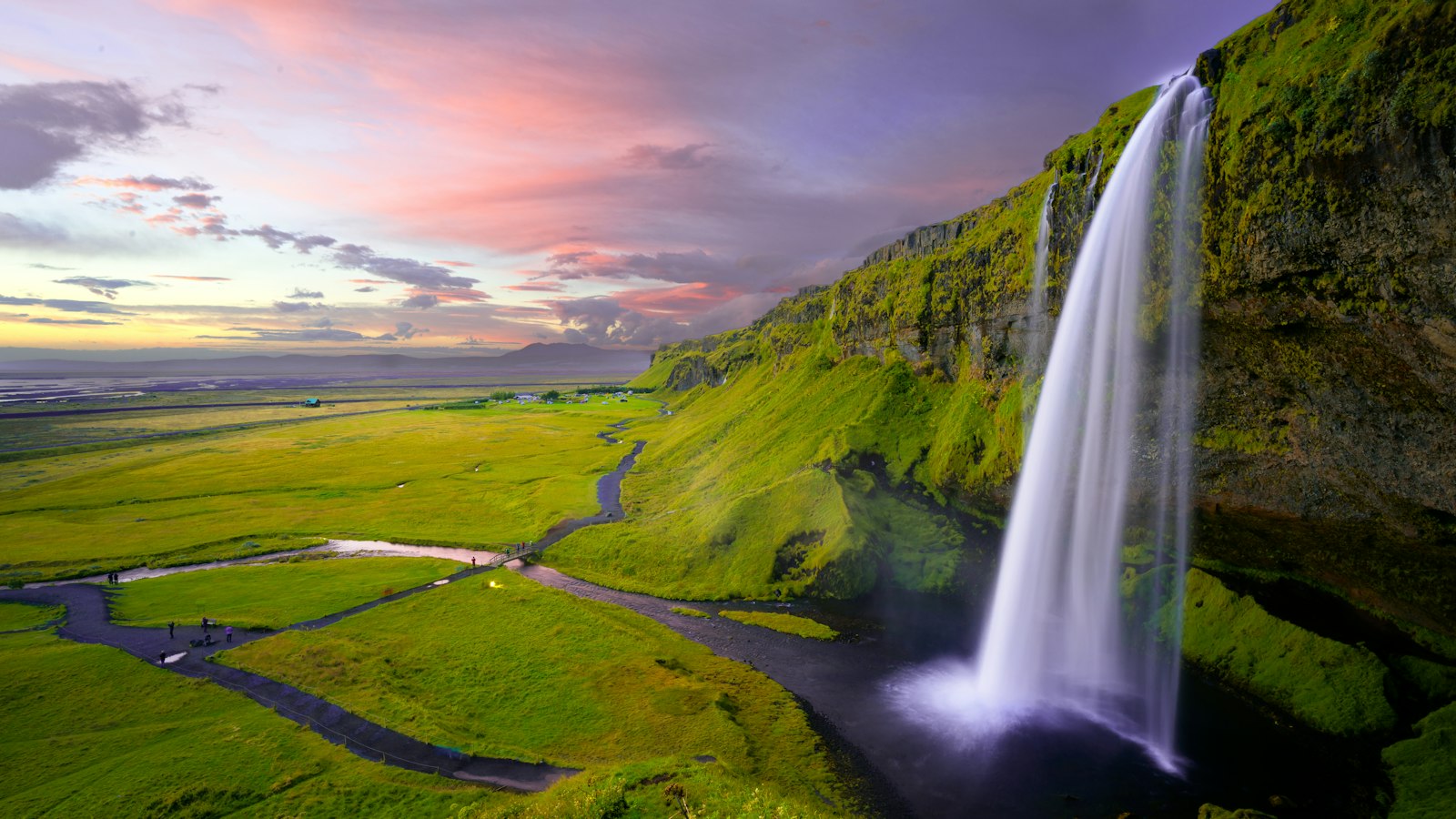
Iceland is home to a remarkable collection of waterfalls, but few can match the sheer force and drama of Dettifoss, located deep within Vatnajökull National Park in Northeast Iceland. The waterfall is celebrated as the second most powerful in Europe, behind only the Rhine Falls, thanks to a combination of width, height and an immense volume of water.
A force of nature on the Jökulsá á Fjöllum river
Dettifoss is set in a remote canyon known as Jökulsárgljúfur. The river feeding the falls, Jökulsá á Fjöllum, begins its journey high on Vatnajökull, Iceland’s largest glacier, and carries meltwater for many kilometres through kilometres of volcanic terrain. Along this route, the river collects extensive sediment, and by the time it reaches Dettifoss, its water carries a distinct greyish white hue. This clouded torrent makes for an unusual visual spectacle as it tumbles over the cliff.
The waterfall measures about 100 metres in width and plunges 44 metres straight down into the canyon. In terms of the volume of water pouring over its edge on an average day, Dettifoss is the second largest in Iceland, exceeded only by Urriðafoss. The calculation of its “power” involves multiplying the force of this continual flow (averaging 193 cubic metres per second) by the vertical drop, resulting in a display of energy that has few equals among Europe’s waterfalls.
Name, landscape and cultural reach
The Icelandic name Dettifoss fuses the words detta, meaning ‘fall’ or ‘collapse’, and foss, meaning ‘waterfall’. This is a literal description of the action witnessed daily, as thousands of tonnes of glacial water pound the ancient volcanic bedrock.
Geographically, Dettifoss sits within the county boundaries of Norður- and Suður-Þingeyjarsýsla, and it is recognised as a nature monument by Iceland’s Environment Agency. Nearby are other powerful falls, Hafragilsfoss downstream and Selfoss upstream, all part of the same glacial river system.
Though remote, Dettifoss is accessible from both east and west. Established roads and walking trails bring people close enough to witness the waterfall’s roar and the ever-changing mist that fills the canyon. The west bank is reachable by Route 862, paved since 2011 and open most of the year, while the older Route 864 on the east side is passable during summer and includes facilities managed by Vatnajökulsþjóðgarður, the national park authority.
Dettifoss has captured the imagination of more than geologists. Icelandic composer Jón Leifs created a musical work inspired by the falls, and the site found a place in the opening sequence of the film Prometheus, representing a primordial Earth. As part of the famous Diamond Circle route of North Iceland, Dettifoss anchors a landscape shaped by fire, ice and water over thousands of years.
Sources
- Wikipedia
- Wikipedia (Icelandic) in Icelandic


