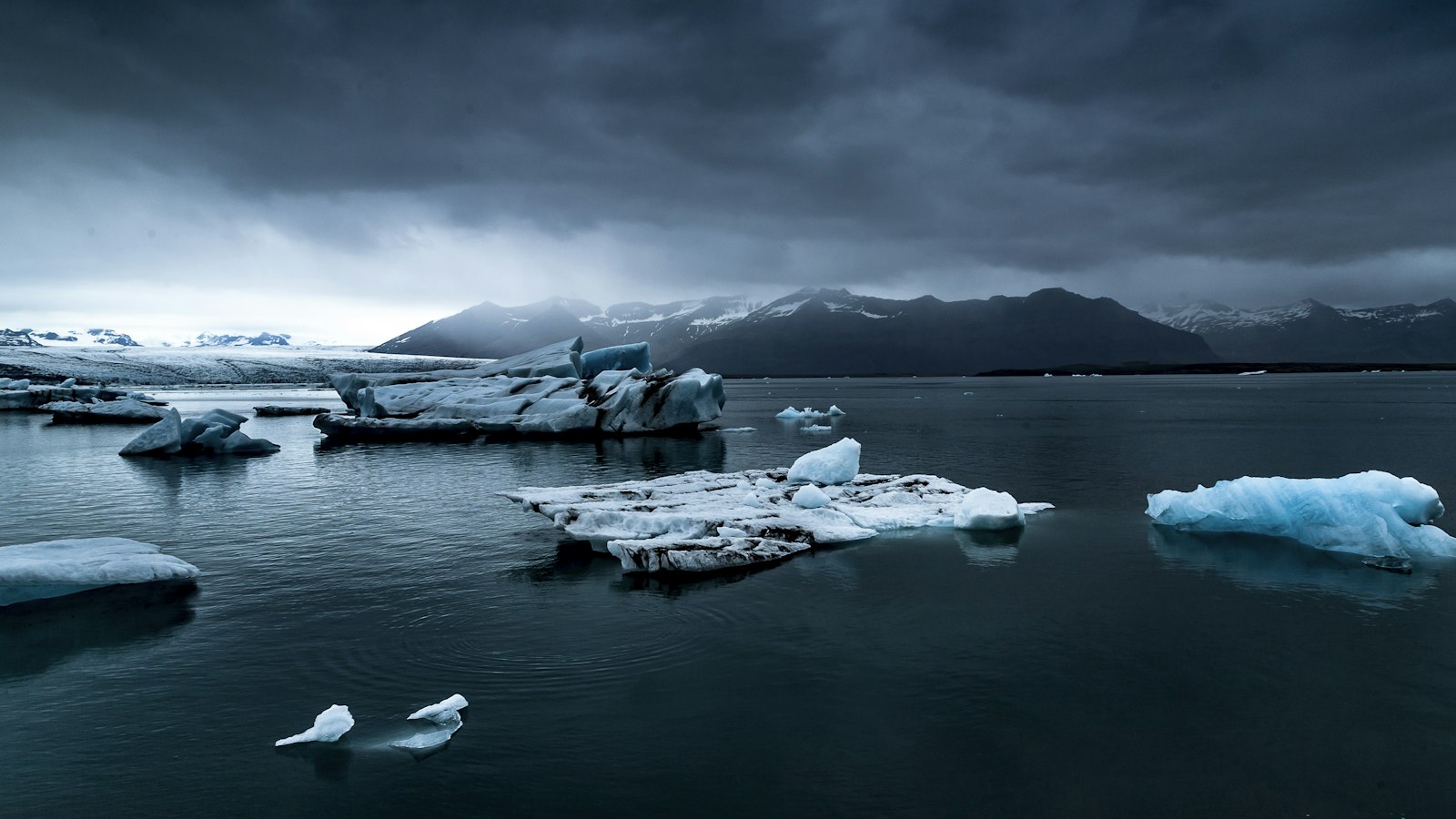
On the coastal fringe of south Iceland, Holtsós is a tidal lagoon defined by its changing water and proximity to the Atlantic. South of the glacier-capped Eyjafjallajökull, its position has long linked natural processes with human activity. Measuring around 4 kilometres in length and 2 kilometres wide, with a maximum depth of just 2 metres, Holtsós is shaped by both the Holtsá river and the tides that press in from the open sea beyond a narrow sand barrier.
This sand strip, fragile and shifting, separates the brackish waters of the lagoon from the full salinity of the Atlantic Ocean. Over time, the lagoon accumulates sediments from upstream, creating a silty bottom. Unlike some coastal lagoons, Holtsós does not have a pronounced salt gradient, making its water conditions relatively uniform throughout.
Within this environment, small crustaceans such as Gammarus zaddachi and Gammarus duebeni thrive. Eurasian oystercatchers, with their distinctive calls and long orange beaks, are among the bird species frequently seen at the lagoon’s edge.
A meeting point for communities and birds
Above the tidal basin, the highland of Hellisvatn holds a deeper freshwater pool. Overlooked by the storied cave Steinahellir, the area was historically significant: from 1818 to 1905 it hosted the district assembly for the Eyjafjöll region. Hellisvatn’s waters never freeze, drawing flocks of birds in the coldest months when other wetlands are locked in ice.
The behaviour of Holtsós reflects its geography. Seasonal floods can challenge the sandbank, and maintaining an open flow to the sea is sometimes necessary to prevent water from spilling over and flooding fields and settlements nearby.
Linked to sagas and folk memory
Through different periods, the lagoon has been known by several names: Holtárós, Holtavatn and Holtavatnsós. Early accounts, including those from the 12th century, describe it as a refuge for ships, benefiting from its rare sheltered waters along this shoreline.
Holtsós is woven into the country’s literature. In the Old Norse bishop saga, Jarteinabók Þorláks saga byskups önnur, the site’s tendency to flood is singled out. Close by is the medieval farmstead Holt, an influential hub in past centuries. Scholars believe Holtsós also corresponds to Arnarbælisóss, a key site in Njáls saga, one of Iceland’s most important literary works.
Traditions linger, too, in the form of folklore. Collector Jón Árnason retold a story involving Holtsós, where a fisherman, warned in a dream of approaching danger on the water, fails to escape fate despite his best efforts. Storms, whether at sea or ashore, have regularly tested those living near the lagoon.


