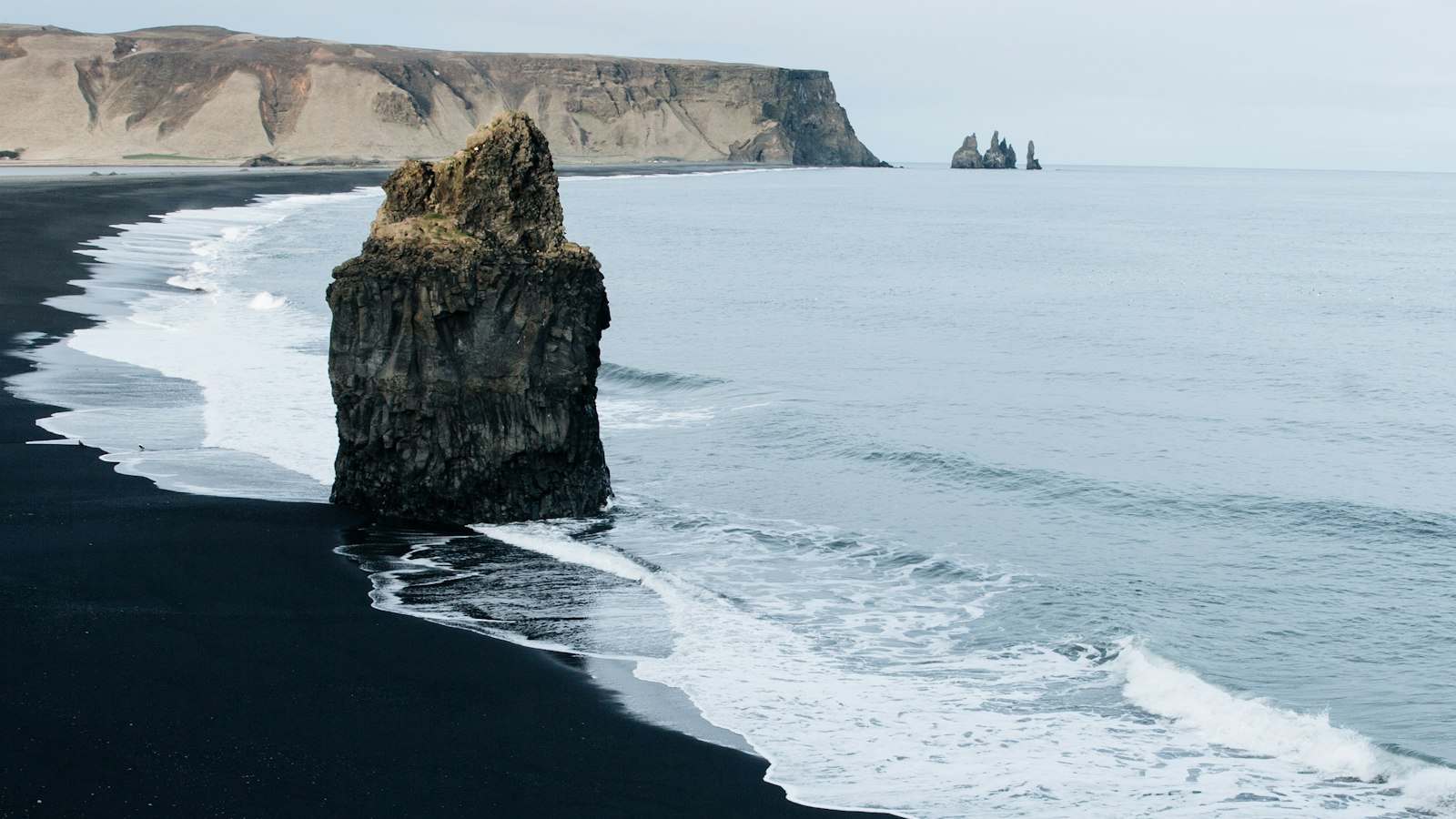
On the southern coast of Iceland, close to the village of Vík í Mýrdal, Reynisfjara has become known for its striking black sands and distinctive basalt columns. This landscape is recognised internationally as part of the Katla UNESCO Global Geopark, and the site sits within privately owned land. Reynisfjara has fascinated geologists, photographers and travellers alike with its dark volcanic beach and dramatic sea stacks called Reynisdrangar, rising just offshore.
At the eastern boundary of the beach, the Hálsanefshellir Cave is framed by geometric basalt columns, while to the west lies the prominent Dyrhólaey promontory. The nearby Eyjafjallajökull volcano is visible from the shore, adding to an already powerful geological setting. Basalt formations here echo the volcanic tumult that has shaped Iceland’s coastline over millennia.
Changeable seas and the risk beneath the beauty
The North Atlantic environment at Reynisfjara is rarely still. Changing winds and wave patterns can quickly transform safe-looking conditions into hazards. In February 2026, after a series of easterly winds and heavy surf, parts of the famous columns collapsed and the landscape suffered significant erosion. Meteorologists predicted the beach would regain its familiar contours with the return of westerly winds by March. Such cycles highlight the dynamic processes sculpting Reynisfjara’s shoreline.
Those same natural forces underpin a persistent risk. Reynisfjara’s waves are exceptional for their unpredictability; powerful “sneaker waves” can surge far up the beach with little warning. These waves result from the combined energy of swell systems converging over a submerged offshore ledge. While the beach draws large numbers of visitors throughout the year due to its dramatic scenery, the sneaker waves have led to multiple emergencies. Between 2007 and 2024, twelve serious rescues and five fatalities were reported. Another fatality occurred in August 2025, after a visitor near the Hálsanefshellir Cave was caught by a wave and could not be reached in time.
Most of these incidents occurred when conditions were already considered hazardous and often involved visitors focused on photography who missed or underestimated warning signs. Such tragedies led to calls for better hazard management, including the closure of the cave and basalt columns during severe weather warnings and proposals to revise the warning criteria themselves.
Responding to natural and human pressures
Icelandic authorities have acted to address these challenges. A condition-based warning system, including visible multilingual signs with pictograms, real-time wave monitoring linked to warning lights and plans for possible daily visitor limits, has been deployed. Coordinated efforts involve national rescue teams, the Road and Coastal Administration and local tourism groups sharing updated safety information through digital channels and on-site staff. These initiatives are shaped by ongoing incidents, such as the August 2025 tragedy, which prompted a renewed commitment to close the cave and columns during the most dangerous red warning periods.
In early 2026, the government indicated new legislation was being prepared to strengthen safety standards at natural tourist sites across Iceland, including Reynisfjara. Such measures aim not only to protect lives but to encourage a more mindful relationship with the untamed power of Iceland’s coasts.
Sources
- Wikipedia
- Wikipedia (Icelandic) in Icelandic


