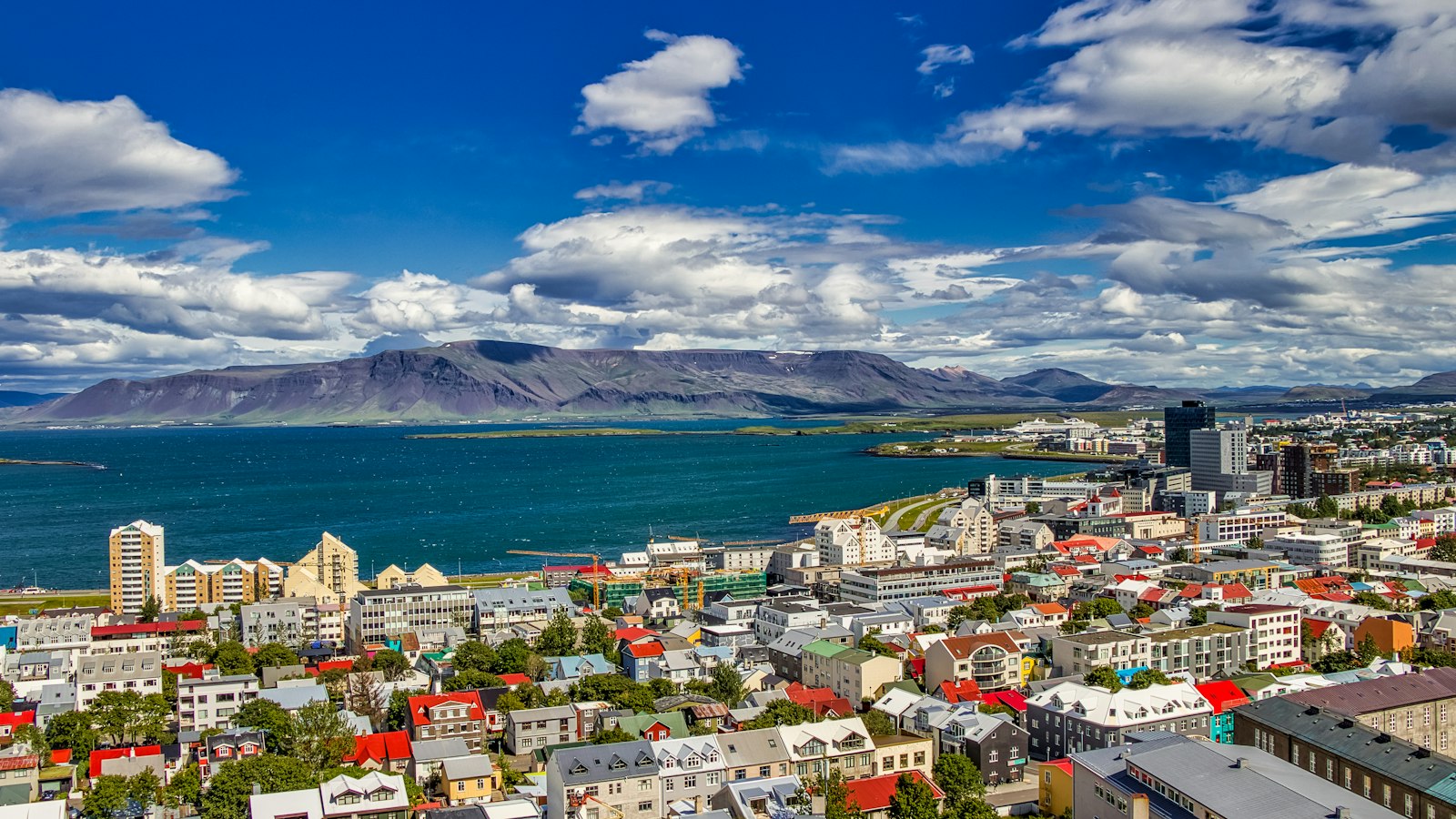
The mountain that dominates the northern horizon of Reykjavík is more than a single peak. Known as Esja (or Esjan with the feminine article), this volcanic range rises to 914 metres and stands about ten kilometres from the heart of Iceland’s capital. Its distinctive silhouette has become closely associated with the city, offering a point of orientation and a rich subject for local lore.
A geology shaped by fire and ice
Esja formed at the close of the Pleistocene epoch, at the onset of Iceland’s last Ice Age. Its layers tell a story of dramatic shifts between warm and cold eras: lava flows built up during warmer periods, while ridges of tuff formed under glaciers in colder times. The range’s western side is oldest, dating back some 3.2 million years, while the youngest rocks on the eastern side are about 1.8 million years old.
Plate boundaries that cut diagonally through Iceland are still slowly pushing Esja’s strata westward, away from today’s most volcanically active zones. Great intrusions of magma rose from long-extinct central volcanoes at Kjalarnes and Stardalur, creating stacked lava fields that were ground down by glaciers, leaving behind only the range’s highest summits, Esja among them.
Layers of colour and legend
Esja displays striking geological variety. The easternmost summits, Móskarðshnúkar, catch the eye with their pale hue. In the 19th century, a local writer imagined glimpsing the sun on these mountaintops after days of rain, only to discover their brightness came from rhyolite, a light volcanic stone found throughout Iceland, often signalling old or active volcano centres.
The Icelandic word ‘esja’ likely stems from a term for ‘rock flake’ or ‘carving stone’. Saga literature further intertwines name and place: in the medieval Kjalnesinga saga, an Irish woman named Esja appears among early settlers, but the tale likely took its cue from the existing local landmark. Today, Esja is also used as a given name in Iceland, keeping its heritage alive in daily life.
Walking up Esja is an integral part of the outdoor culture around Reykjavík, attracting residents as well as visitors along marked routes. The path to Þverfellshorn, a 780 metre summit, is the most frequented. From there, reaching the range’s highest point, Hábunga, at 914 metres, requires a walk across a rugged, signless plateau. The journey to Steinn, a prominent boulder at 597 metres, is a classic local challenge. Kerhólakambur, an 851 metre ridge visible from the city, adds another dimension to the mountain’s familiar outline.
Though popular, Esja’s slopes are not without danger. There is a history of avalanches, and fatalities have occurred as recently as 2020. The last recorded accident on Esja took place in 2025, reminding climbers of the mountain’s unpredictable nature.
Sources
- Wikipedia
- Wikipedia (Icelandic) in Icelandic


