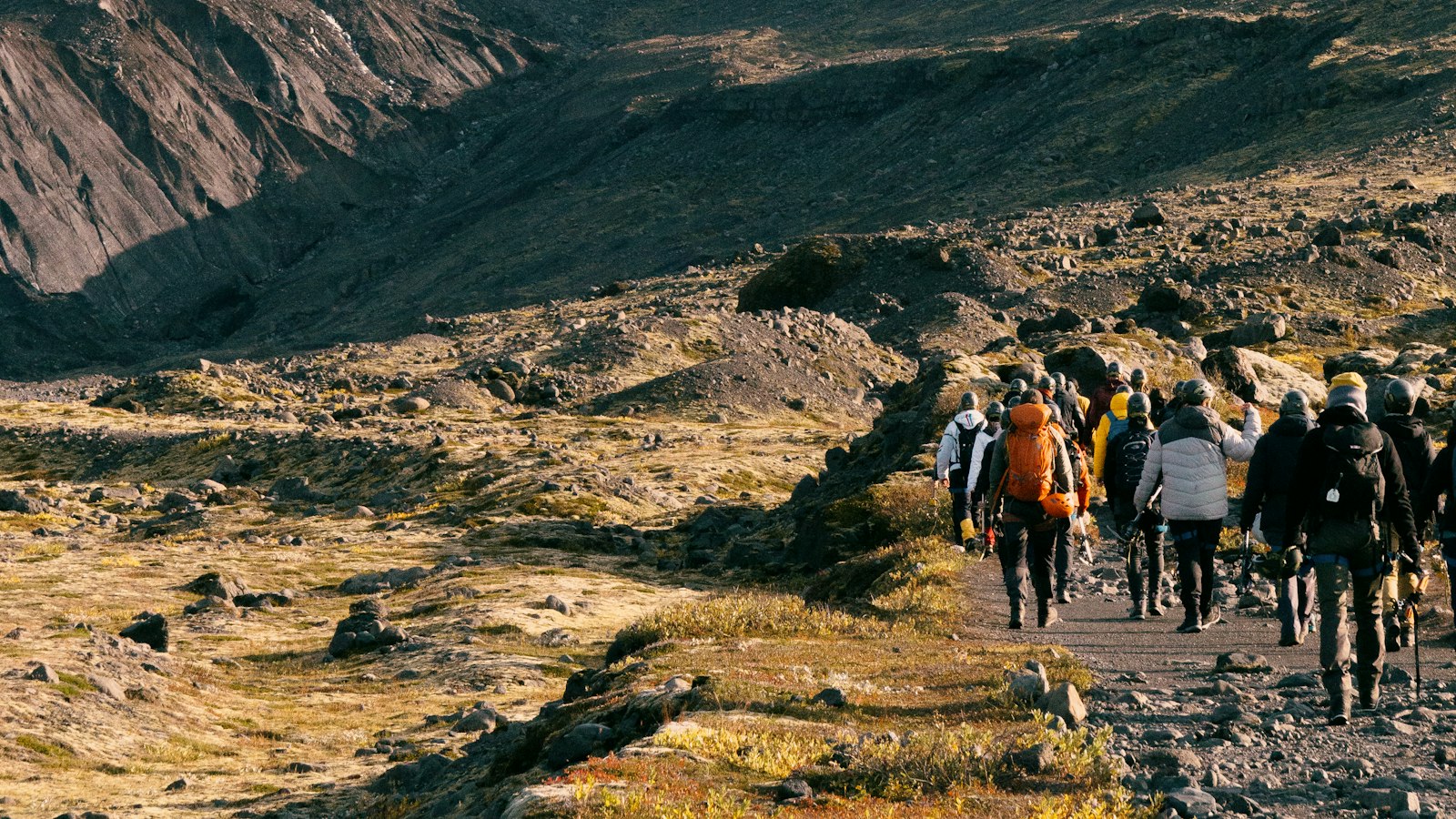
Nowhere in Europe outside the polar regions are glaciers as dominant in the landscape as they are in Iceland. Up until around 2008, ice sheets and glaciers spread over 11 percent of Iceland’s land area. This figure had declined to roughly 10 percent by 2019, a visible result of warming climate and complex natural forces at work.
Ancient glaciers and volcanic foundations
The glaciers seen today are relatively young in geological terms. After the last Ice Age ended about 10,000 years ago, Iceland was nearly free of ice, remaining so for thousands of years during warmer periods. The present glaciers began forming around 2,500 years ago as the climate cooled once again. Glacial extent peaked around 1900, receding quickly ever since, with significant loss observed from 1995 onwards, Vatnajökull, the largest, now thins on average by half a metre each year.
Glaciers in Iceland are not static, nor uniform. While some shrink steadily, others may briefly advance due to surges in ice flow. For example, the outlet glacier Brúarjökull experienced a significant surge in the early 1960s. In the north, the Tröllaskagi peninsula alone contains over 170 small glaciers and glacier remnants, primarily shaped by precipitation patterns.
Ice, fire and dynamic geography
Many of Iceland’s notable ice caps lie above active volcanoes. Under the immense weight of Vatnajökull, which alone covers eight percent of the country, are volcanic systems like Grímsvötn and Bárðarbunga. When volcanic heat melts glacial ice from below, large volumes of water sometimes build up. This can lead to dramatic glacial outburst floods, known in Icelandic as jökulhlaup, which can in turn trigger eruptions through a sudden change in underground pressure.
Ash from these subglacial eruptions and the action of moving ice help sculpt the island’s distinctive terrain, including the dramatic table mountains (móbergsstapar) formed where lava erupts beneath thick glaciers. Eiríksjökull, the largest such table mountain, testifies to this interplay of fire and ice.
Glaciers remain a defining element of Iceland’s geography and even its daily life, influencing the country’s economy and hydrology. About 20 percent of Iceland’s precipitation falls on the glaciers, and their meltwater accounts for roughly one fifth of the annual river flow today. As glaciers melt and thin, the loss of their weight can cause the land beneath to rise, especially in the southeast, altering both natural and human systems in subtle but important ways.
The future of Iceland’s glaciers is uncertain. As average temperatures rise, official monitoring records that tens of smaller glaciers have disappeared in recent decades. The case of Okjökull, formerly a glacier with the revered “jökull” title, is now cited as a milestone: it has become simply “Ok,” as what remains can no longer slide under its own weight, marking its official loss of glacier status.
Sources
- Wikipedia
- Wikipedia (Icelandic) in Icelandic


