Life in Iceland has evolved in the shadow of volcanoes, glaciers and wind-swept plateaus. The island’s wildlife has adapted to survive in a landscape shaped by ice, fire and an often unforgiving subarctic climate.
Land carved by forces of nature
Iceland sits in the North Atlantic, just beneath the Arctic Circle. Its rugged terrain includes highland plateaus, volcanic deserts and glacier-capped peaks. About 40 percent of the island’s landmass is made up of these highlands, reaching some 500 metres above sea level. The rest features hills rising out of coastal plains, with narrow river valleys and dramatic fjords indented along the west, north and east.
The island’s climate brings cold and frequent storms, but the North Atlantic Current keeps the coastline largely free of sea ice. Vegetation covers just a quarter of the country, with much of the landscape classified as tundra, marshy ground, or sparsely vegetated volcanic soil. The environment supports only a modest range of plant and animal species.
A cast of resilient species
Among land mammals, only the Arctic fox is considered native to Iceland. Other animals, like reindeer and American mink, arrived later, some deliberately released, others escaping captivity. Reindeer, now numbering in the thousands in the northeast, once ranged also in the southeast where their herd has vanished. Walruses lived around Iceland before disappearing after people settled the island.
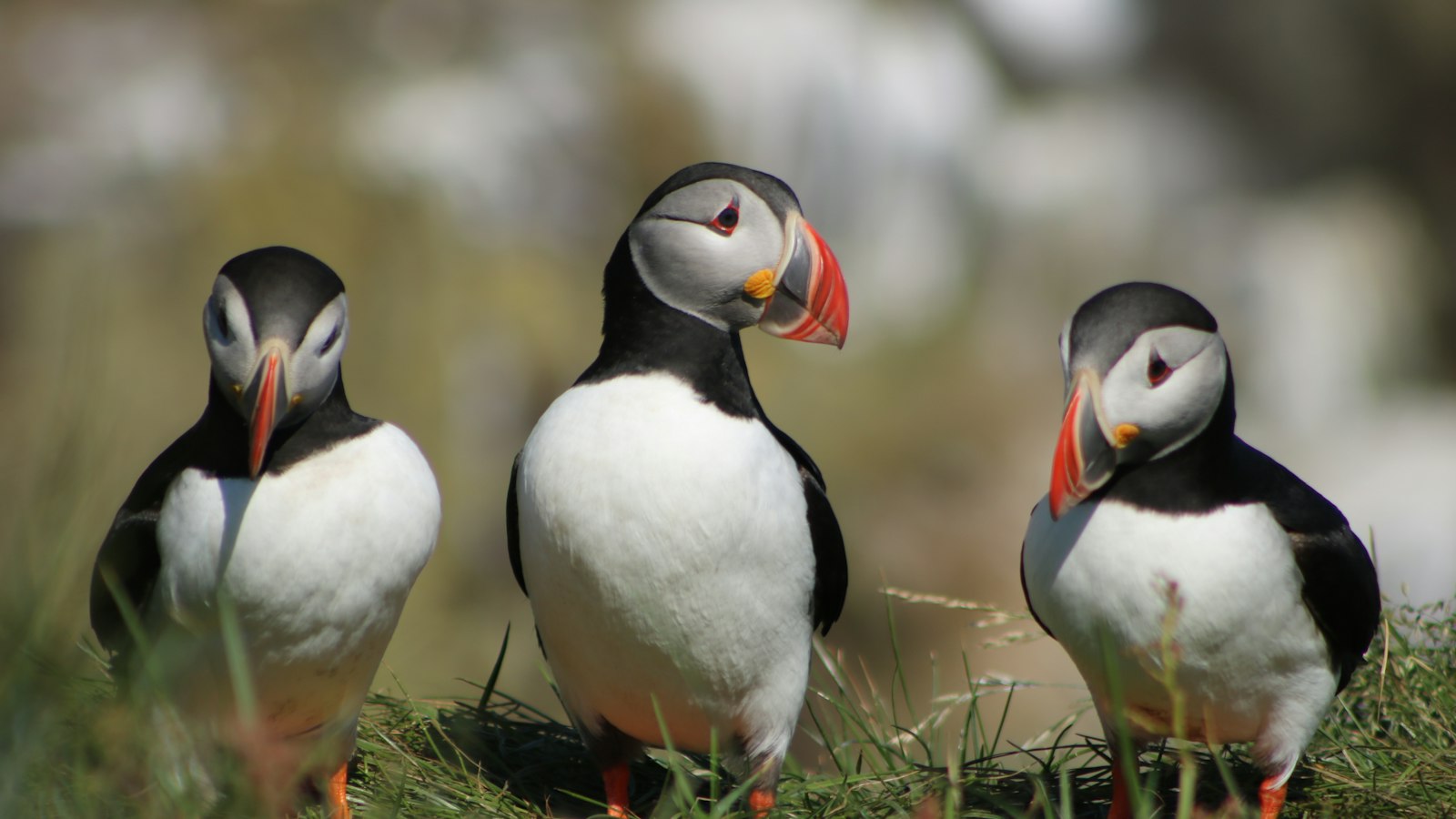
Birdlife is one of Iceland’s strongest ties to the greater Arctic region. Around 72 species are known to nest here, including birds of prey such as gyrfalcons and white-tailed eagles, as well as owls like the snowy owl and short-eared owl. Seabirds thrive along the coastline, among them gulls, skuas and ducks. The island accounts for nearly half the global numbers of the great skua, a striking seabird.
The freshwater habitats are home to fish such as Atlantic salmon, Arctic char, brown trout and stickleback. Marine life is abundant, over 270 species of fish dwell in Icelandic waters, with cod and herring among vital commercial stocks. Seals, several whale species and porpoises frequent Iceland’s coastal shallows.
Iceland lacks both reptiles and amphibians. Some bats have been spotted in recent years, but these are thought to be incidental visitors or introduced populations. Of small mammals, species like the wood mouse now inhabit the countryside, and rats are found mainly in towns.
Plant life, too, is marked by adaptation. About 540 vascular plants grow on the island, with mosses and lichens forming dense carpets in the north and highlands. The remaining trees, chiefly in northern and eastern valleys, rarely exceed two metres in height. The flora includes heather, bilberry, crowberry and the distinctive Iceland moss, a lichen sometimes used as emergency food.
Sources
- Wikipedia
- Wikipedia (Icelandic) in Icelandic


