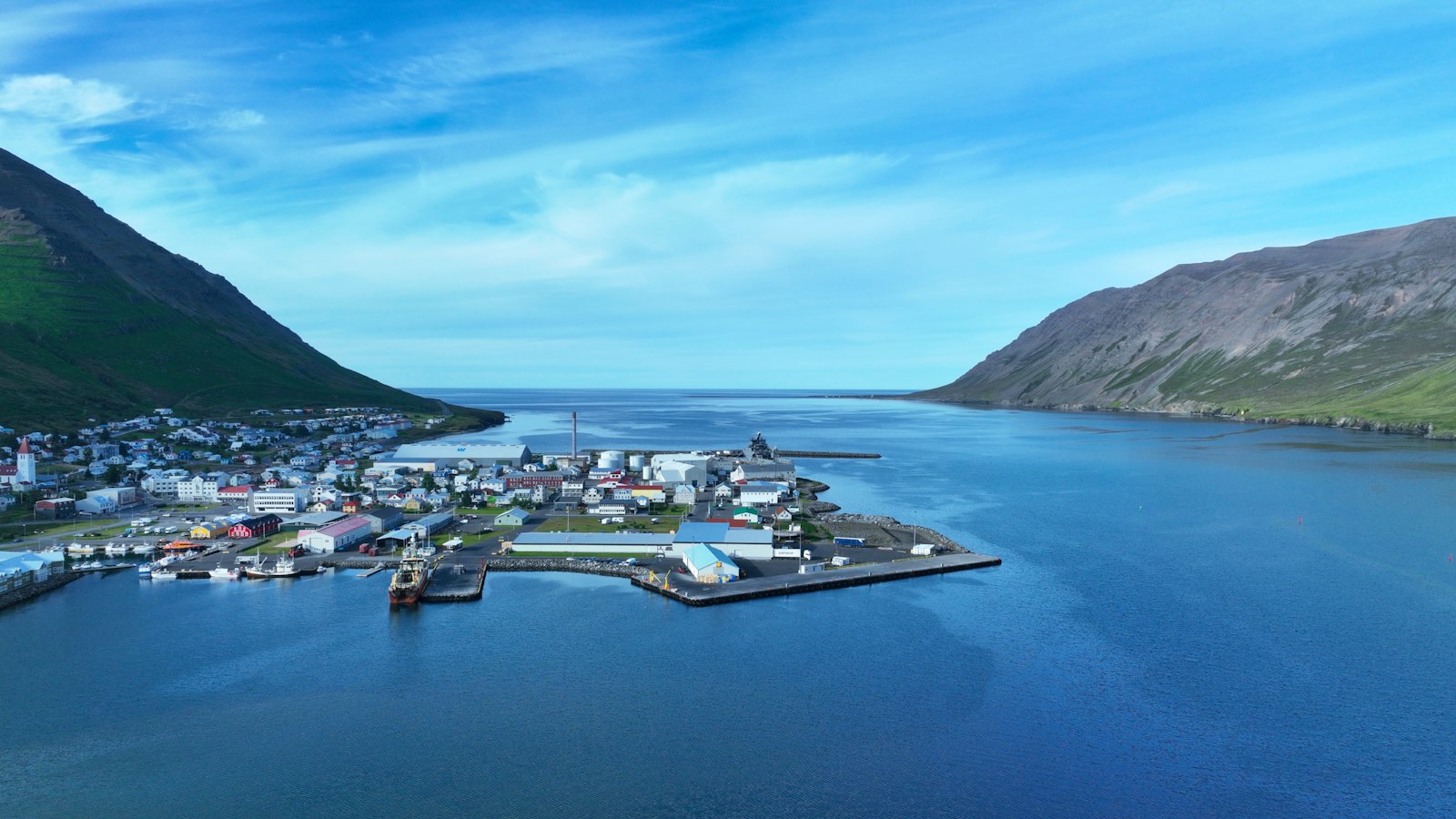
Siglufjörður sits cradled at the mouth of a narrow fjord along Iceland’s northern coast. Surrounded by steep mountains, the town’s isolated geography shaped its history and daily life, earning it both hardship and remarkable chapters of prosperity. With a population just over a thousand, Siglufjörður today is a far quieter place than during the first half of the twentieth century, when it was considered the leading herring port in Iceland and at its peak housed around 3,000 residents as well as a throng of migrant workers each fishing season.
A quiet settlement for centuries, Siglufjörður reached new heights after large-scale herring fishing began in 1903. The Norwegians first started exploiting the rich herring stocks, but local Icelandic enterprises quickly took over. The town’s superb harbour and close proximity to fishing grounds made it the natural hub for this new industry. At the peak of the so-called ‘herring years’, Siglufjörður hosted over 20 salting stations and the largest processing plant in the country. Some years, the value of herring exports from this single town accounted for more than 20 percent of Iceland’s total exports.
This gold rush atmosphere led to Siglufjörður being dubbed the ‘Klondike of Iceland’. Large numbers of temporary workers arrived to process the catch, and when the weather turned poor for fishing, dozens or even hundreds of boats could be packed into the harbor. Before the advent of herring, the region was known for hunting Greenland sharks, a reminder that Siglufjörður’s fortunes have always been shaped by the surrounding sea.
Legacy of the herring era and community changes
Yet, like many boomtowns, prosperity proved fleeting. After an extraordinary run through the 1940s and 1950s, herring stocks crashed in the 1960s. The main processing plants closed and people began to leave. By 2024, only about a third the town’s 1950s peak population remained. Fishing industries, now focused on other catches, still underpin the local economy, but the era of herring lords is remembered chiefly at the Herring Era Museum (Síldarminjasafn), established in 1994. This institution, located in historic harbour buildings, preserves the complex history and culture of the herring years.
The town is also known for Rev. Bjarni Þorsteinsson, a priest and composer who served here from 1888 for nearly half a century and is celebrated for rescuing Icelandic folk songs from oblivion. Today, his legacy continues at a museum in the town’s oldest house (built in 1884) and in an annual folk music festival.
Siglufjörður’s cultural landscape includes its large Protestant church, Siglufjarðarkirkja, noted for its early 18th-century altar painting depicting the Last Supper and striking stained glass windows designed by German artist Maria Katzgrau in 1974.
Isolation, connection and modern life
For most of its history, Siglufjörður was accessible only by sea or challenging mountain passes. The coast is notorious for avalanches, as in 1919, when multiple slides in the area claimed 18 lives and destroyed important structures. Permanent road access did not arrive until 1940, and until the completion of the 800-metre Strákagöng tunnel in 1967, the region could be wholly isolated in winter. The 2010 opening of the 11-kilometre Héðinsfjörður Tunnels linked Siglufjörður year-round to neighbouring Ólafsfjörður and the wider road network, giving a new sense of connection after long decades of remoteness.
With winter sports facilities, an annual herring festival each August, vibrant historical memory and scenery marked by high mountains and short days in December, Siglufjörður remains shaped by dramatic cycles of nature, commerce and community resilience.
Sources
- Wikipedia
- Wikipedia (Icelandic) in Icelandic


