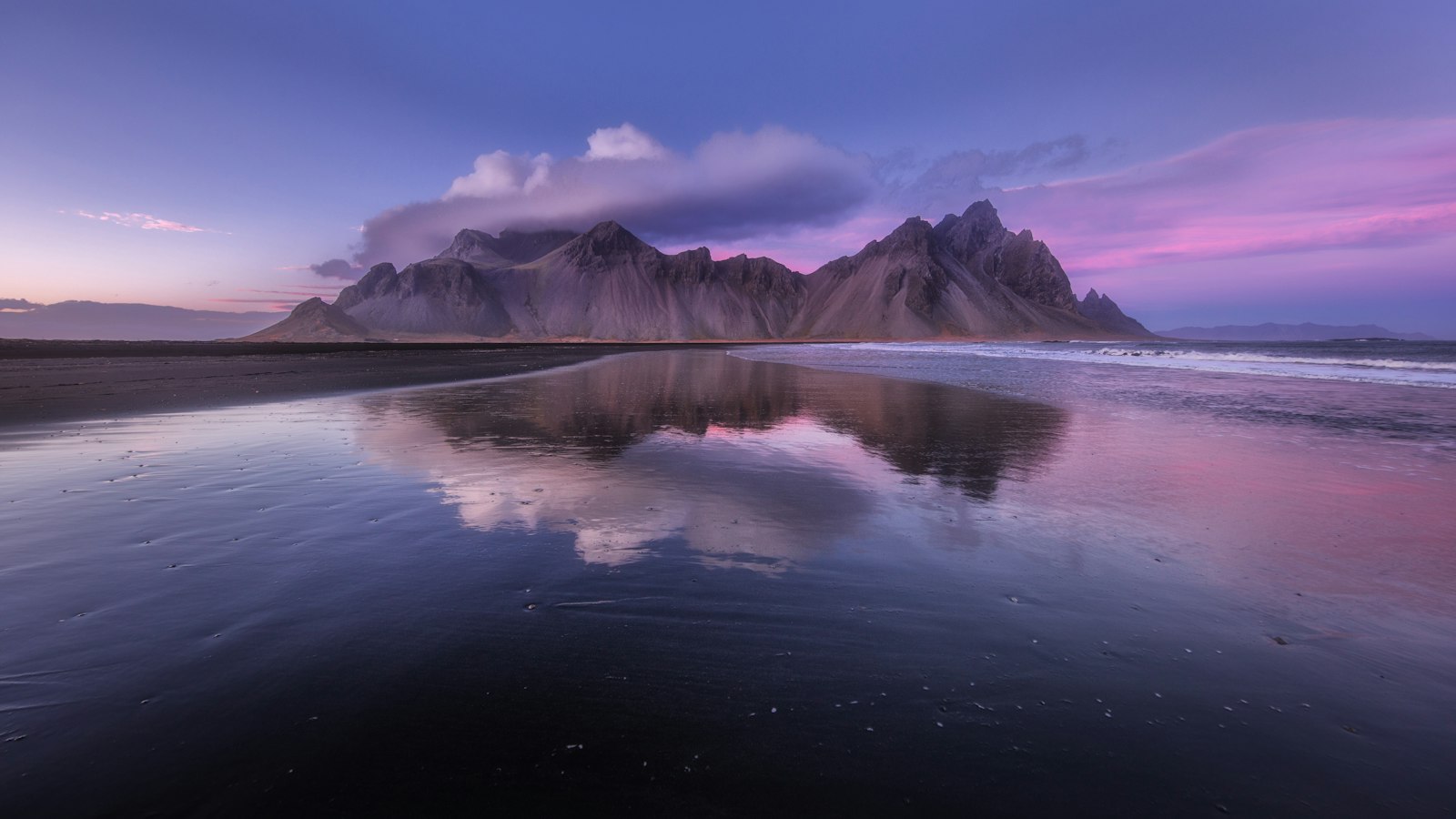
In the far southeast of Iceland, the fishing town of Höfn sits where land and water meet, surrounded on three sides by the North Atlantic. Its name, meaning “harbour,” neatly sums up its long-standing maritime character. Small islands and sand reefs stretch around this natural port, with the nearby Hornafjörður fjord shaping both the land and local livelihoods.
The foundations of modern Höfn can be traced to 1897, when merchant Ottó Tuliníus chose this site for a new trading post. He moved the commercial centre from Papós, then 15 kilometres away, starting a period of slow but steady growth. By 1946, just 300 people lived here, clustered around the harbour and newly established businesses. The town’s fortunes shifted dramatically after 1961 with the construction of Hornafjarðarbrú, a bridge that connected Höfn to wider Iceland. This sparked a period of expansion that saw the population and economy rise.
Today, Höfn stands as the second largest settlement in southeast Iceland and serves as a gateway to some of the country’s most dramatic natural features. On clear days, the town offers impressive views of Vatnajökull, Europe’s largest ice cap by volume, lying to the northwest. The landscape here is dynamic: glacial rivers, shifting lagoons and shoals make navigation a challenge, and regular dredging is needed to keep the harbour open.
Economy rooted in sea and land
Fishing has been at the heart of Höfn’s economy from its earliest days. The town operates one of the few harbours in southern Iceland deep enough to handle large vessels, supporting both sea fishing and land-based processing. Factories such as Skinney-Þinganes are among the region’s largest, providing employment through the production of saltfish and lobster, as well as processing herring and capelin. Ten major boats and numerous smaller vessels operate from the port.
Beyond fishing, Höfn’s surroundings have attracted film crews, with big-budget productions like “Die Another Day” and “Batman Begins” using local scenery as a stand-in for distant locales. The area has also provided the backdrop for a Bollywood musical number, connecting this small Icelandic community to audiences around the world.
Community life and changing times
The town’s cultural life pulses around local traditions, such as the annual Humarhátíð, Höfn’s lobster festival, held each July. Cultural venues range from art museums to Gamlabúð (the “Old Shop”), a historic building that has served as a trading post, store, and now operates as a visitor centre for Vatnajökull National Park.
Höfn’s educational system has evolved, combining schools into Grunnskóli Hornafjarðar, while secondary students attend the regional Framhaldsskólinn í Austur-Skaftafellssýslu. The town has maintained modern facilities, including a health centre and a geothermal district heating system inaugurated in 2021, which replaced electric heating with geothermal energy from nearby Hoffell.
The climate in Höfn is shaped by its subarctic location. Summers average a mild 12°C, while winters hover just above freezing. Rain falls on nearly half the days each year, and temperatures have ranged from 24.4°C in summer to –21.6°C during extreme winter cold.
As the heart of the Hornafjörður municipality, with a population of just under 1,800 as of 2024, Höfn endures through change. The shifting sands and icy vistas around the town remain a testament to both the natural forces at work and the resilience of those who have made their lives at Iceland’s edge.
Sources
- Wikipedia
- Wikipedia (Icelandic) in Icelandic


