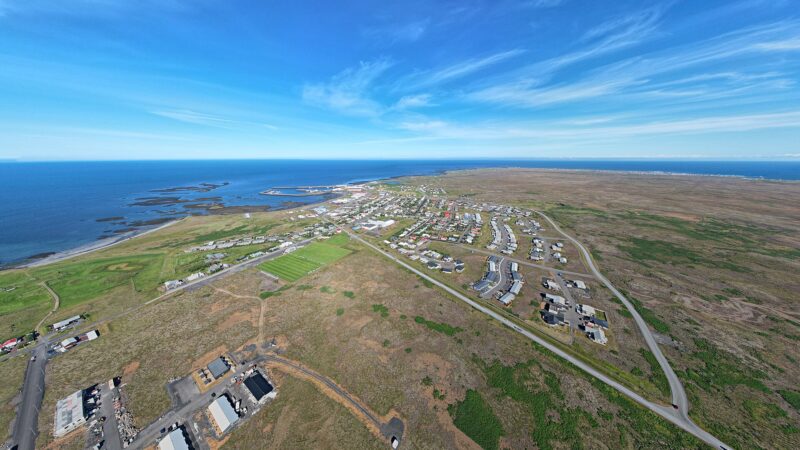
On the northernmost tip of the Reykjanes Peninsula lies Garður, a town that borders the broad expanse of Faxaflói Bay. Its position has shaped its history and daily life, from its early days as noted in the medieval Book of Settlement, to its sustained connection with the sea. Now incorporated in the municipality called Suðurnesjabær since the 2018 merger with Sandgerði, Garður’s population has grown in the 21st century, counted at 1,595 in 2018 and rising in recent years.
A place rooted in centuries-old traditions
Garður occupies land first given to Steinunn Gamla, a cousin of Ingólfur Arnarson, Iceland’s first permanent settler. Agriculture and fishing have dominated its past, thanks to its favorable coastal location and the fertile fishing grounds just offshore, especially in Garðsjó. The town’s development is reflected in two distinct neighbourhoods, Útskálahverfi (also called Útgarð) and Gerðar (also known as Inngarð), which are separated by Garðshöfn harbour.
Beside its economic activities, Garður is known for its historical structures. Central among these is the Skagagarður earthwork, a medieval boundary wall stretching roughly 1,500 metres from Útskálakirkja church to the area of Kirkjubóli. Standing about one and a half metres tall and thickly built, Skagagarður is thought to date back to at least the 10th century, based on geological findings. Its primary function was likely to keep grazing sheep away from northern croplands during a time when cereal cultivation was more common on Suðurnes than later generations recalled. Place names and remnants of old fields support accounts of wider farming activity in the area’s past.
Maritime signals and community life
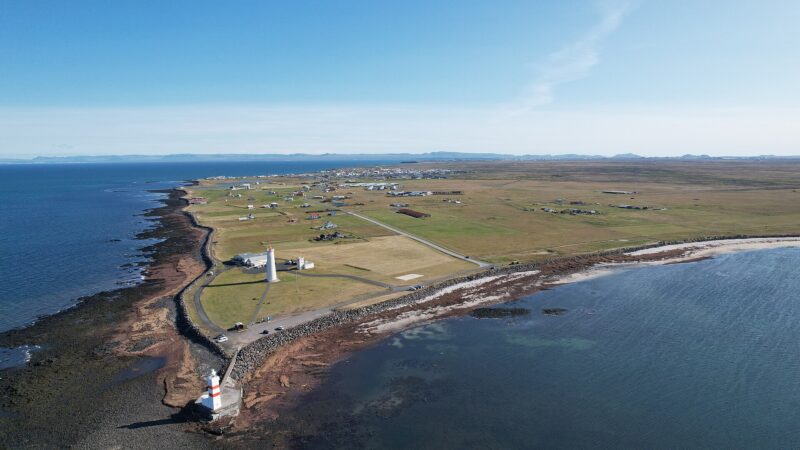
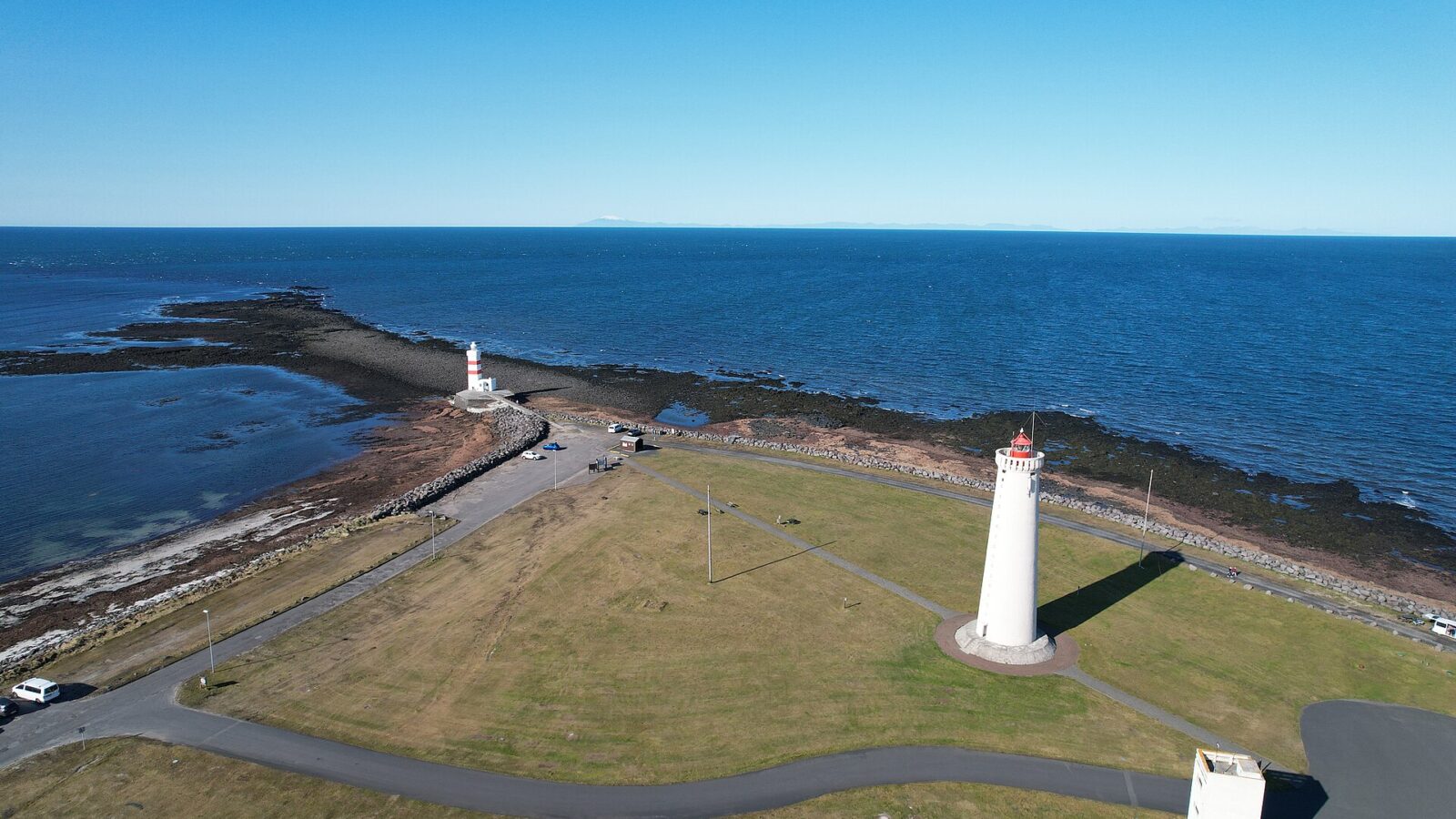
Garður’s relationship with the sea is marked by its two prominent lighthouses on Garðskagi, the headland. The older lighthouse was completed in 1897, while a newer structure followed in 1944. Near the lighthouses is The Old Lighthouse Cafe/Rostin Restaurant, a destination for visitors seeking a meal in a historic setting. The headland has seen tragedy as well, frequent shipwrecks have occurred off Garðskagaflös, a reminder of the hazards local mariners faced.
The area also played a role in aviation history. In 1941, the British military constructed Skagavöllur, the first airfield on Reykjanes, at Garðskagi. Today, the region’s maritime and aviation memories are preserved in a regional museum, which houses an assortment of engines among other artifacts.
Schools, sports, and living heritage
Social life in Garður is shaped by its institutions. One of Iceland’s oldest elementary schools, Gerðaskóli, opened in 1872, founded by Reverend Sigurður B. Sívertsen of Útskálakirkja. He also oversaw the building of the current Útskálakirkja church in 1861 and compiled a significant chronicle of the Suðurnes area. Modern amenities include a swimming pool and sports centre located between the two neighbourhoods, with hot tubs for relaxation.
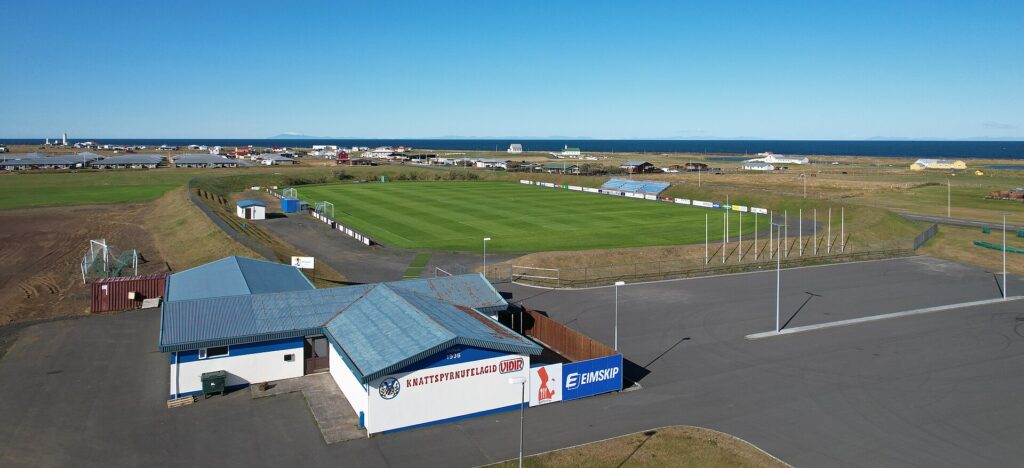
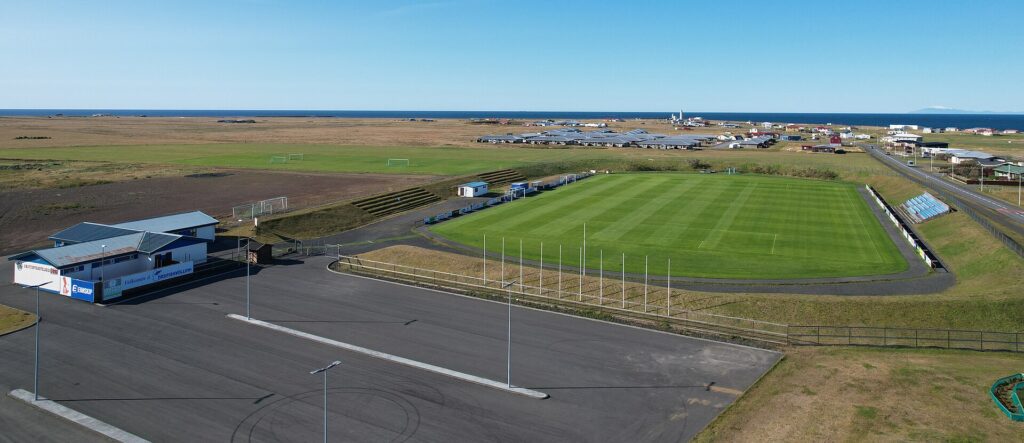
Sports are represented by the local club Víðir, established in 1936, whose football team has moved between divisions over the decades. The town’s volunteer rescue team, Ægir, was formed in 1935, underlining the enduring importance of sea safety in the Garður community.
Wildlife, famous names, and the landscape today
Garður’s coastal environment draws birdwatchers and those interested in marine life, with visitors sometimes spotting dolphins and whales near the shoreline. There is a campsite on Garðskagi, providing facilities for travellers with tents or caravans. For more details about current conditions and services, the municipality’s website shares up-to-date information.
Notably, Garður is also the birthplace of Nanna Bryndís Hilmarsdóttir, vocalist and guitarist for the internationally known band Of Monsters and Men. She credits her upbringing in Garður for fostering her creativity.
Sources
- Wikidata
- Wikipedia (English)
- Wikipedia (Icelandic) in Icelandic
- Suðurnesjabær (municipality website)
- Visit Reykjanes
Image: Eysteinn Guðni Guðnason / Wikimedia Commons (CC BY-SA 4.0) · licence, original (resized) Illustrative image.
Facts last reviewed 27 October 2026. Published 27 October 2026.