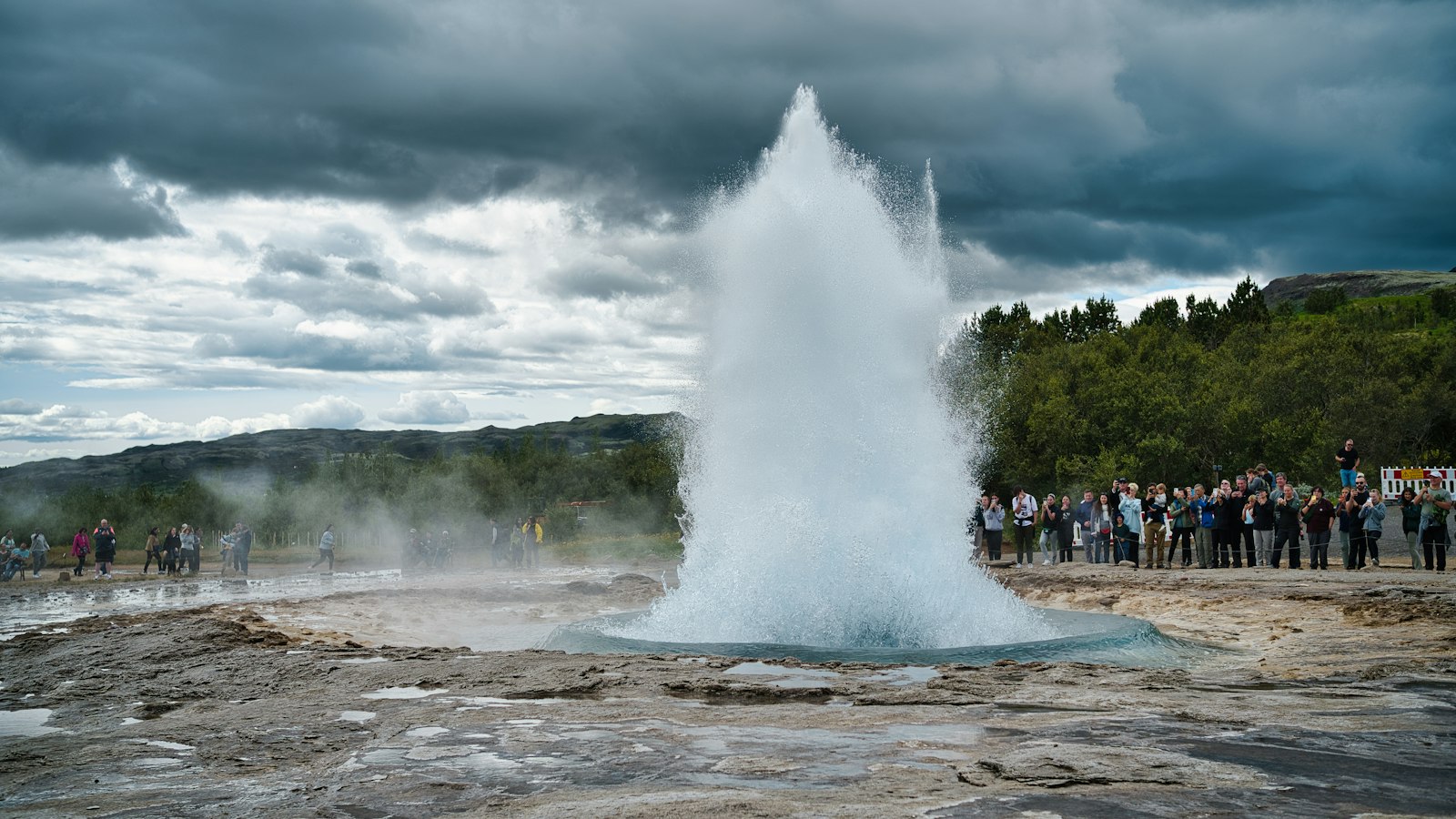
Geysir sits quietly in the Haukadalur valley in southwest Iceland, yet it holds a lasting influence far beyond its intermittent activity. The Icelandic word “geysa,” meaning to gush, gave rise to the English term “geyser,” a tribute to Geysir’s remarkable presence. While Strokkur, its energetic neighbour, erupts frequently nearby, Geysir remains the iconic reference point for geysers globally.
Eruptions through the centuries
Evidence suggests that hot water has surged from this area for about 10,000 years, but Geysir itself formed as a true geyser around 1150 CE. Historical chronicles describe the transformation of the region after dramatic earthquakes, when new hot springs appeared and the ground itself sometimes trembled from violent eruptions.
With time, Geysir gained a reputation that travelled far and wide. It made its way into written accounts during the 1600s, and by the 1800s it became a subject of scientific curiosity. Early surveys and later studies revealed that its eruptions could be signalled by a deep, booming sound and sometimes reached heights of 60–80 metres, occasionally even more. The geyser’s behaviour has always been linked to the shifting ground beneath it: major earthquakes have both revived and subdued its activity for years at a stretch.
By the late 19th century, Geysir had gone quiet until seismic events awakened it again. Eruptions grew frequent for a few years, and could spray boiling water as high as 70–80 metres. Over the 20th century, eruptions became a rarity once more. Efforts to encourage eruptions, digging channels, even adding soap to lower the boiling point, were occasional measures that met with limited success.
Geology, legacy and the changing landscape
The layout below Geysir is a network of branching, constricted conduits up to 23 metres deep. The temperature in these passages ranges from around 85 to 120 degrees Celsius. The water’s heat likely originates from the volcanic system beneath Haukadalur, although no eruptions have occurred in the area for thousands of years. Unique mineral crusts called siliceous sinter have built up around the geyser, dating its regular activity to around the 12th century.
Strokkur, only 50 metres to the south, has its own distinctive routine, erupting every few minutes to impressive but slightly lower heights. The entire Haukadalur field, home to dozens of hot springs and small geysers, covers around three square kilometres. The periodic fountaining of water in this valley is due to intricate rock fractures that were highlighted by seismic changes, especially after the 2000 earthquakes.
The site also has a human story. Control over the land changed hands many times, from local farmers to foreign owners, before its return as a gift to the Icelandic people. Today, the area is officially protected, and Geysir endures as a symbol of both Iceland’s dynamic geology and its influence on science and culture worldwide.
Sources
- Wikipedia
- Wikipedia (Icelandic) in Icelandic


