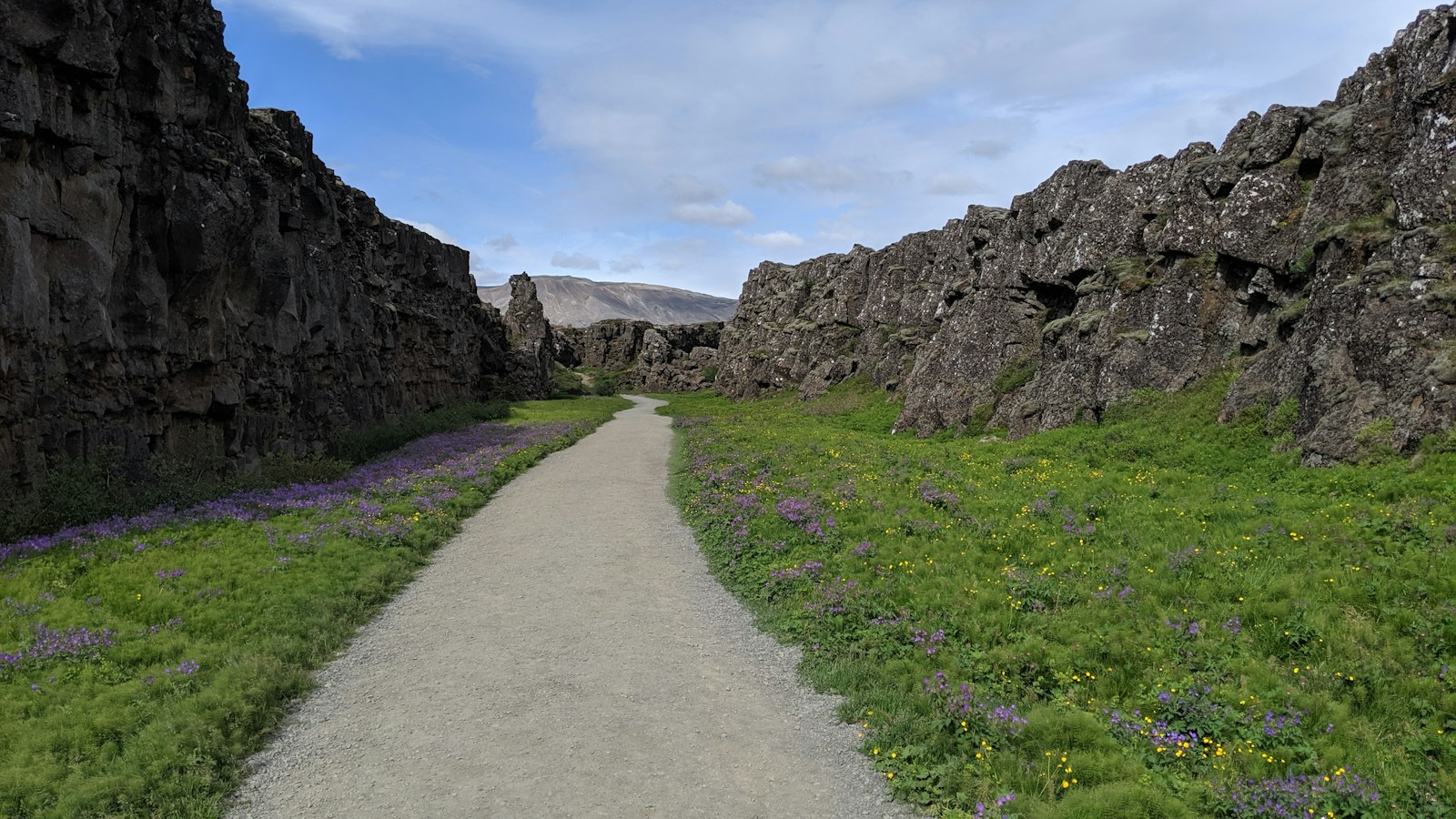
Long before Iceland appeared on maps, the ground beneath it was already in motion. The Iceland Plateau, also known as the Icelandic Plateau, is not just the island that bears its name. It includes much of the surrounding continental shelf and the underwater slopes that descend into the depths of the North Atlantic Ocean. This plateau is a prime example of the ongoing interaction between volcanic hotspots and shifting tectonic plates.
An elevated island in the North Atlantic
The Iceland Plateau stands significantly higher than much of the North Atlantic seafloor, with an average elevation of 1,700 metres above sea level. Its boundaries are formed by submarine ridges, including the Reykjanes Ridge to the south, the Kolbeinsey Ridge to the north, the Greenland-Iceland Ridge to the west, and the Iceland-Faeroe Ridge to the east. These features only hint at the complex history underneath.
This region is classified as a large igneous province, meaning it is primarily built from repeated volcanic eruptions. Volcanic activity here has been more or less continuous since at least the Miocene epoch, which began over 20 million years ago. The very birth of the plateau dates back further, to around 56 million years ago, when the opening of the North Atlantic helped trigger massive outpourings of lava. As continents drifted apart and the plates diverged, these volcanic flows began shaping both the visible island and the submerged parts of the plateau.
Layers of volcanic history
Beneath Iceland’s surface, the plateau’s geology reveals a structure similar to oceanic crusts but with a notable twist. The uppermost layer is made of sedimentary rock, much like in typical oceanic crusts. The second layer, however, is unique: rather than a thin or scattered distribution, it consists of stacked lava flows, evidence of Iceland’s extraordinary volcanic legacy. Below this sits a thick slab of gabbro, a coarse-grained igneous rock formed from the gradual cooling of magma deep within the earth.
Today, the plateau’s landscape continues to evolve. The interaction of the Mid-Atlantic Ridge and an underlying hotspot brings fresh magma from deep inside the planet. This constant upheaval creates not only the familiar volcanic mountains and expansive basalt fields but also shapes the seafloor itself. Modern Iceland features two main regions on this plateau: one that tilts down toward the ocean floor, and another that remains nearly level, both bearing the marks of ongoing geological transformation.
For those curious about the distant forces that shape Earth’s surface, the Iceland Plateau offers an example visible above and beneath the waves, where the processes of rifting, eruption and uplift are still hard at work.


