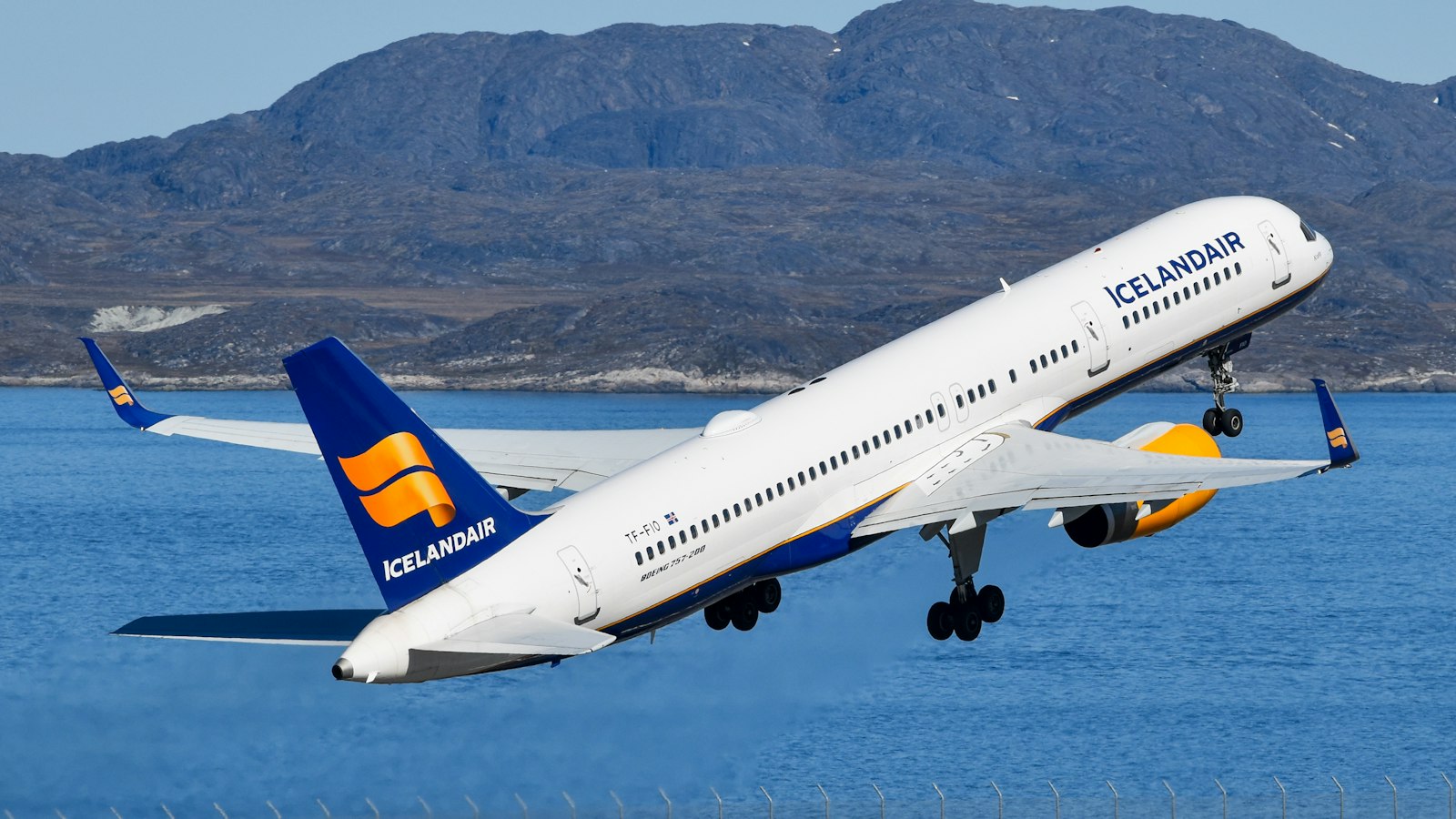
Few countries are as closely tied to the story of aviation as Iceland. Icelandair, the country’s flag carrier, not only connects the island to continents, it has played a central role in shaping Iceland’s economy and culture.
Origins in the north and wartime changes
The origins of Icelandair date to 1937, when Flugfélag Akureyrar was established in Akureyri, a northern Icelandic town. Its first flights used a single floatplane, and after some early setbacks, the hub moved to Reykjavík by 1940. Rebranded as Flugfélag Íslands (the Flight Company of Iceland), the airline soon began scheduled seaplane flights in the Reykjavík area, including Skerjafjörður and Vatnagarðar. Two previous, unrelated airlines had actually used the Flugfélag Íslands name, one as early as 1919.
World War II rapidly changed Icelandic aviation. In 1940, the country was occupied by Britain, leading to the building of Reykjavík Airport. This would later become a centre for both domestic and international services. Iceland’s strategic position grew more important as air connections expanded between Europe and North America. The airline adopted the international name Iceland Airways, and carried out its first commercial flight over the Atlantic in 1945, from Reykjavík to Scotland, using a Consolidated PBY Catalina amphibious aircraft.
Competition, the “Hippie Airline,” and the Atlantic Bridge
The postwar decades saw another major player join the scene: Loftleiðir, later known abroad as Icelandic Airlines, started in 1944. Quickly, competition for routes emerged between Loftleiðir and Flugfélag Íslands. By 1952, concerns over financial viability led the authorities to divide domestic routes between the two, prompting Loftleiðir to focus on international flights. In 1953, it launched a pioneering low-fare transatlantic service, earning a reputation as the “Hippie Airline” in the late 1960s for shuttling young travelers between Europe and America. Costs were low, punctuality unpredictable, and the carrier was seen as a rite of passage by many Americans crossing the Atlantic.
The two airlines moved most international operations to Keflavík Airport as their fleets modernised, and both added jet aircraft in the late 1960s and early 1970s. Eventually, the realities of the 1970s oil crisis led to the government pushing for a merger. In 1973, a holding company united the pair. Two-thirds of passengers were on international routes by this time. By 1979, the shared company, Flugleiðir (“Flight Routes”), fully merged under the international brand Icelandair.
Through the decades, Icelandair continued to base its business on the Atlantic bridge concept: connections between North America and Europe, with Iceland as the stopover hub. The airline has also been a major domestic carrier through its Air Iceland subsidiary, focusing on flights within the country.
Adapting to new challenges
Icelandair’s story mirrors Iceland’s own resilience. In times of crisis, such as the ash cloud from Eyjafjallajökull volcano in 2010, the airline moved operations temporarily to Glasgow to maintain service. Its main hub remains at Keflavík International Airport, with headquarters in Hafnarfjörður, near Reykjavík. The airline has used Boeing 757s as its transatlantic workhorses and experimented with other models to adapt to changing technology and travel demand.
As the only airline to use Iceland as a true international bridge, Icelandair’s history is a window into how geography, politics, and ambition can make a remote island central to the movement of people across the Atlantic.
Sources
- Wikipedia
- Wikipedia (Icelandic) in Icelandic


