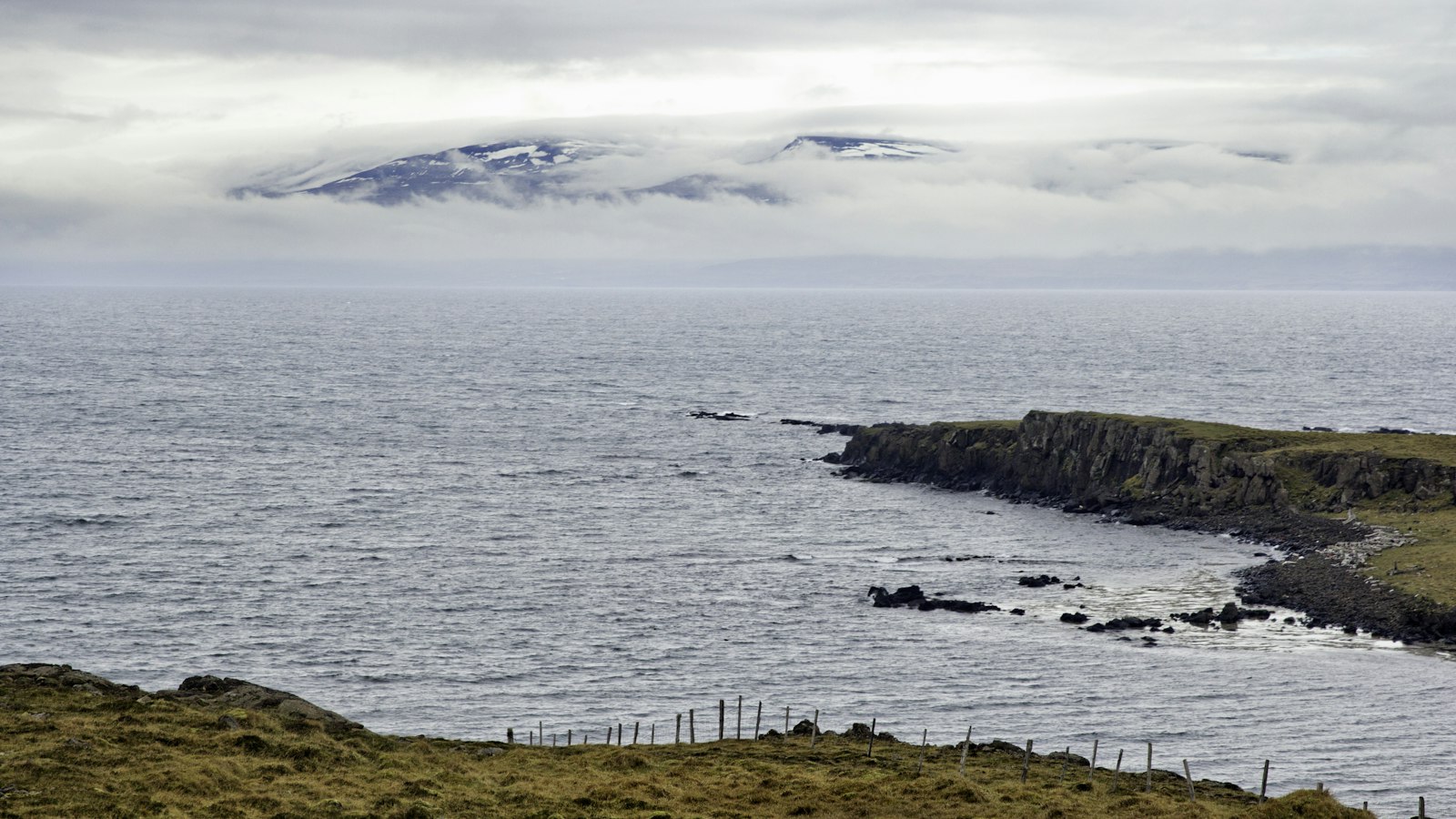
Húnaflói, whose name means ‘Polar Bear Cub Bay,’ is a northern inlet connecting the waters of the Iceland Sea with dramatic coastlines and intricate fjords. Flanked by the remote Strandir coast in the northwest and the headland of Skagi to the east, this wide bay marks a natural divide and a region layered with centuries of human and animal activity.
Coastlines shaped by geography and history
The bay itself reaches about 100 kilometres from north to south, framed by seven major fjords. Among these, Steingrímsfjörður is the largest along Strandir, tracing an inward curve of nearly 28 kilometres. The Vatnsnes peninsula juts in from the west, sheltering Húnafjörður, the longest of Húnaflói’s arms. Within the same system, Hrútafjörður measures 36 kilometres, formerly marking boundaries between regions in the island’s evolving administration.
Many of these places are woven into Iceland’s early narratives. Documents such as Landnámabók and sagas including Grettis saga and Vatnsdæla saga reference the same fjords and peninsulas. Archaeological finds point to settlement here since the late ninth century, making the region not only a geographical connector but also a witness to Iceland’s earliest chapters.
Human life on the water’s edge
Today, communities on Húnaflói’s shores number in the low thousands. Most villages hug the inner reaches of fjords. Hólmavík, the largest settlement on Strandir, is home to just over 300 residents and sits among gently rolling farmland beside Steingrímsfjörður. Drangsnes, a smaller hamlet, is positioned at the point where this fjord widens toward the main bay, close to the island of Grímsey. This 49-hectare island, known locally as Grímsey á Steingrímsfirði, carries the legend of its namesake settler from the saga era and supports a sizable puffin colony.
Further south, settlements such as Borðeyri on Hrútafjörður are tiny, but Hvammstangi, resting on the bank of Miðfjörður, proves central to local life. On the opposing shore, Skagaströnd and Blönduós anchor communities along the edge of Húnafjörður. The southern coast’s shifting shoals, defined by Þingeyrasandur and its lagoons, separate land from open sea with ever-changing boundaries.
Nature and memory intertwined
Much of the bay’s shoreline provides key habitat for birds and mammals. The low grassy cliffs of Grímsey host tens of thousands of nesting Atlantic puffins each summer, a vital slice of their global breeding population. Húnaflói’s waters have also been considered for harbour seal protection, testament to its wider ecological importance.
A dramatic episode from Iceland’s medieval civil conflicts unfolded here: on 25 June 1244, rival fleets clashed in the Battle of the Gulf. Detailed accounts in Sturlunga saga preserve the memory of a day when the calm expanse turned into a stage for history.
Sources
- Wikipedia
- Wikipedia (Icelandic) in Icelandic


