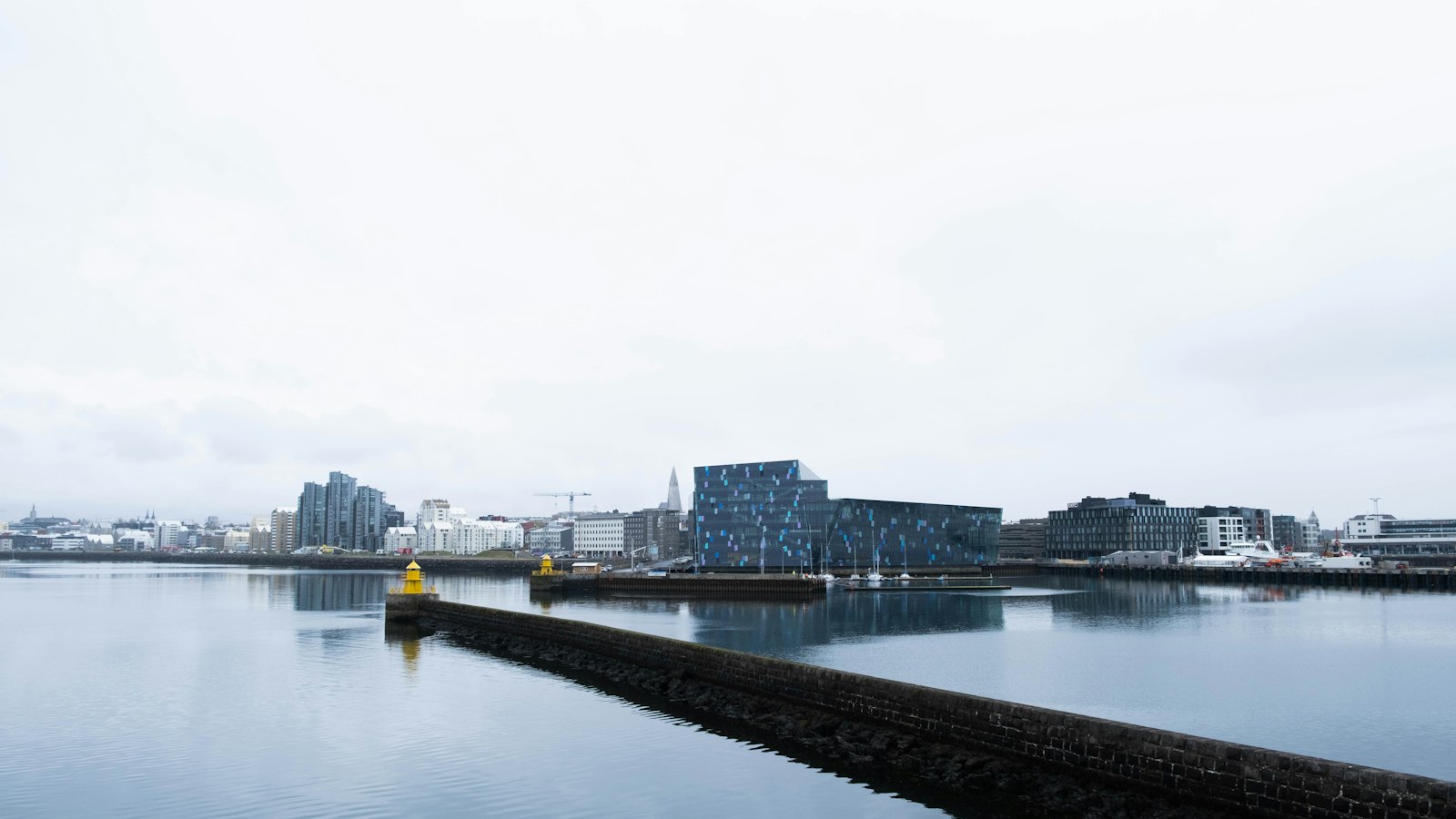
In the southwest of Iceland, a broad expanse of water forms the bay called Faxaflói, situated between the peninsulas of Snæfellsnes to the north and Reykjanes to the south. Its waters meet the capital, Reykjavík, and touch several of the country’s largest communities.
Centuries of fishing and early settlement
For generations, the communities on the shores of Faxaflói have relied on fishing. In earlier centuries, people ventured out in small vessels, harvesting sustenance from the nearby sea. Fishing grounds in the bay have long provided a livelihood, although modern boats now travel further from shore in search of their catch.
Faxaflói stands out for its relatively small number of islands, most of which are found close to shore. This differs sharply from Breiðafjörður, the large bay to the north, known for its countless islands. South of the capital, the waters of Faxaflói open into several notable fjords, including Kollafjörður and Borgarfjörður.
A name from Icelandic legend
The bay’s Icelandic name translates as “Faxi’s Bay” or “Faxe’s Bay.” Faxi is remembered as a companion of Hrafna-Flóki, one of the first Norse explorers to reach Iceland. The story comes from the Landnámabók, a medieval Icelandic text recounting the early settlement of the island. Older texts sometimes used different versions of the bay’s name, but the term “Faxaflói” itself is considered to be relatively modern.
Within Kollafjörður, just north of Reykjavík, lies the island of Viðey. Though uninhabited since the mid-20th century, archaeological remains reveal human activity on Viðey reaching back to the 10th century. A chapel was built there in the 1100s, followed by the founding of a monastery in 1225. The monastery was dissolved during the Protestant Reformation, which swept Iceland in the sixteenth century.
On clear days, people in Reykjavík can look across Faxaflói and see the volcanic peak of Snæfellsjökull, standing about 120 kilometres away. The bay remains a point of orientation and identity for Icelanders, threading together a rich tapestry of geography, livelihoods, and legend.
Sources
- Wikipedia
- Wikipedia (Icelandic) in Icelandic


