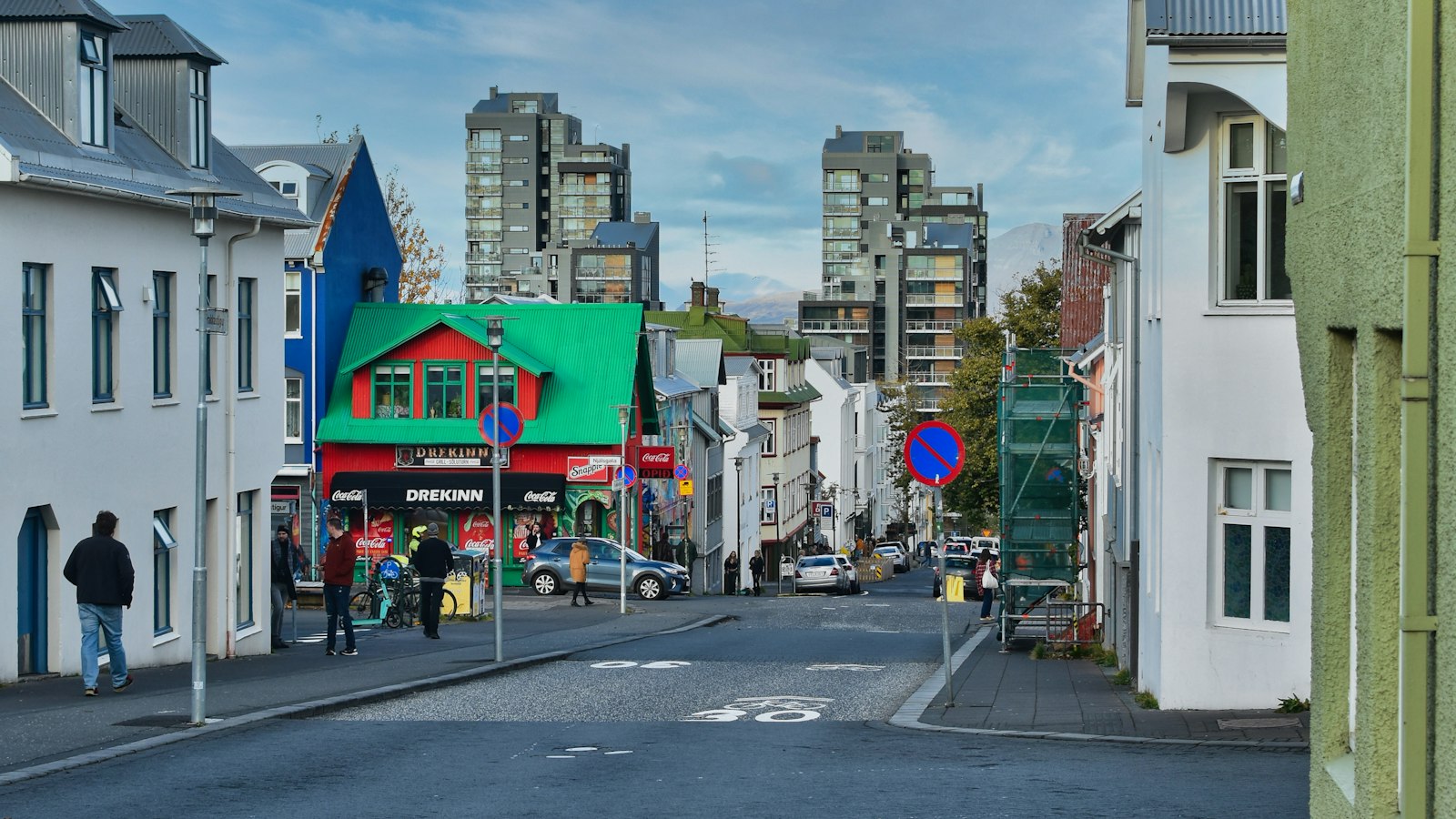
Einar Ragnarsson Kvaran’s story threads together Icelandic heritage, international service and the complex ties of identity and belonging. Born on 19 November 1920 in Reykjavík, he grew up in a family with deep cultural roots and transatlantic connections. His grandfather, Einar Hjörleifsson Kvaran, was a significant figure in Icelandic literature and one of the co-founders of key Icelandic-language newspapers in Manitoba, Canada, reflecting early migration patterns from Iceland to North America.
Einar’s childhood unfolded on both sides of the Atlantic. His family moved first to Gimli, Manitoba, a core settlement for Icelandic immigrants, and later to Árborg, where his father served as a Unitarian Church minister and newspaper publisher from 1930 to 1933. The family returned to Reykjavík before Einar entered Menntaskólinn í Reykjavík, one of Iceland’s oldest educational institutions, founded in 1056. In 1940, he served as Inspector Scholae (a senior student position), following the example set by his grandfather, Hannes Hafstein, decades earlier.
Education took Einar even further afield. He enrolled at the University of California at Berkeley, earning a degree in Marine Engineering in 1945. During this period, he married Clara Caldwell. The couple soon returned to Iceland, where Einar worked at the State Herring and Meal Factory in Siglufjörður and they welcomed their first three sons.
From fisheries to the United Nations
The next chapter saw Einar build a career spanning global waters and international cooperation. In 1952, he joined the Food and Agriculture Organization (FAO) of the United Nations, beginning with a posting to Sri Lanka (then Ceylon), where his fourth son was born. Subsequent assignments took him to the Philippines, Indonesia, Malta and ultimately to the FAO headquarters in Rome. His work focused on fisheries development and management; he contributed research on the mechanisation of fisheries in Ceylon and the economics of the fishing industry.
Einar’s professional life mingled technical knowledge and practical problem-solving, hallmarks of Icelandic engagement with marine resources. His scholarly contributions were presented from Rome to the Philippines, linking Icelandic expertise with international development.
A life of service and remembrance
After retiring in 1980, Einar and Clara settled in Pueblo, Colorado, close to Clara’s family. There, community service became central to their daily lives. Together they delivered meals to homebound residents through the Meals on Wheels programme for 17 years, rarely missing a shift and continuing a tradition of public and voluntary service cherished in Icelandic communities abroad. Einar also volunteered with a tax assistance programme, helping fellow residents navigate paperwork and forms.
Citizenship became another thread in Einar’s journey. In 1997, he became a United States citizen, describing his growing involvement with American civic life: though rooted in Iceland, his interest in US presidential elections had come to outweigh events back home.
All the while, Einar continued to cultivate his passion for genealogy. He wrote the “Our Ancestors” series for Lögberg-Heimskringla, the Winnipeg-based newspaper created by merging two Icelandic-language papers that his grandfather helped found. These articles drew colourful figures from Iceland’s past, not to write a standard history, as Einar explained, but as a kind of family photo album whose snapshots evoked the diversity and drama of Icelandic heritage.
Before his death on 13 December 2012, Einar asked for some of his ashes to be spread in the Hvalvatn area in Iceland, where he had spent youthful summers as a guide and horse handler. His story reflects not only the global reach of Icelandic families but also a lifelong commitment to service, learning and the preservation of memory.


