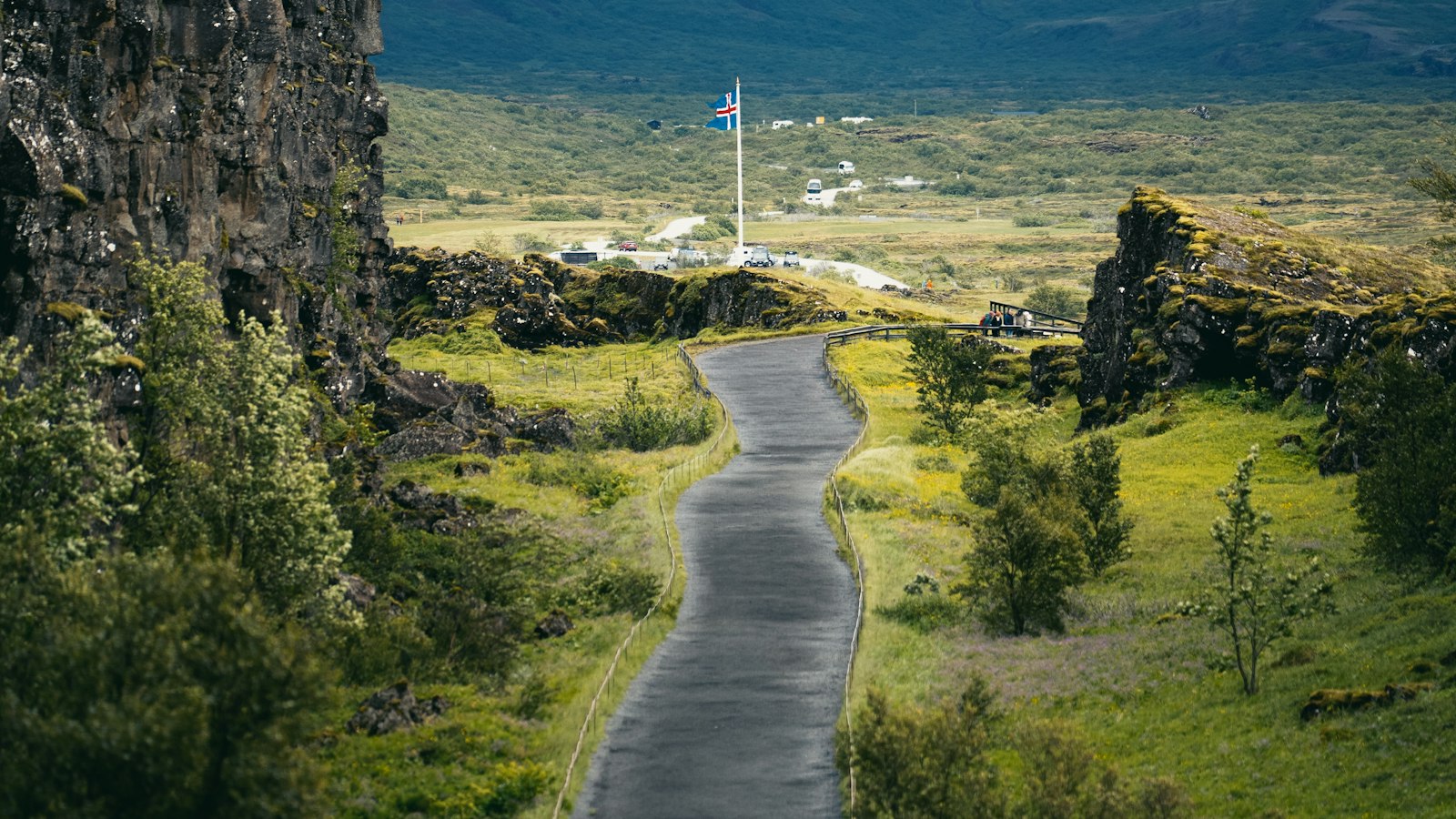
The Althing, or Alþingi, occupies a unique place in both Icelandic identity and world history. Established around 930 at Þingvellir, meaning ‘assembly fields’ east of what is now Reykjavík, it is credited as the oldest legislature still in existence. The creation and evolution of the Althing mirror key moments in the nation’s narrative, from settlement through centuries under foreign crowns and, ultimately, to independence in the 20th century.
Assembly at Þingvellir and early Icelandic law
When settlers chose Þingvellir for their general assembly, it was more than a point on the map; the site was accessible for most early Icelanders and held communal significance. Annual meetings brought together the powerful district chieftains, known as goðar, to decide laws and settle disputes. This open-air parliament became a crucial occasion for farmers, traders, and families, many of whom set up temporary camps during the sessions. Central to these gatherings was the Lögberg, or Law Rock, where the Lawspeaker, charged with reciting the laws, presided.
Early Icelandic law was strongly influenced by legal frameworks from Norway, notably shaped by Úlfljótr, who had returned from years abroad to introduce a set of statutes. This system allowed the Althing not only to legislate but also to judge, an early convergence of lawmaking and justice. Courts of district judges would hear legal disputes during the annual assembly. The saga literature credits the Althing with landmark decisions, such as the adoption of Christianity around the year 1000 under the guidance of chieftain Þorgeir Ljósvetningagoði.
Foreign rule, decline and revival
As Iceland fell under Norwegian, then Danish, rule from the mid-13th century, the Althing’s independence was steadily curtailed. The king, his commissioners, and newly appointed legal administrators gradually absorbed much of its legislative and executive power. By 1800, after more than eight centuries, the Althing was dissolved entirely, with a high court in Reykjavík assuming its functions.
The spirit of self-government was not easily extinguished. Following agitation by Icelandic nationalist groups, King Christian VIII of Denmark decreed the assembly’s restoration in 1843, and its first session in the new era took place in 1845 in Reykjavík, initially as a consultative body. Over time, its powers expanded, especially after the grant of home rule in 1904 and then full sovereignty in 1918. The Althing met at several locations, finally moving to its stone Alþingishús beside Austurvöllur square in 1881.
Today, the Althing is a unicameral body of 63 members, elected every four years on a proportional system. Universal suffrage for all Icelandic citizens over 18 reflects hard-won democratic reforms over the 19th and 20th centuries. Regular sessions still begin on the second Tuesday in September, a reminder of ancient rhythms in modern times.
Sources
- Wikipedia
- Wikipedia (Icelandic) in Icelandic


