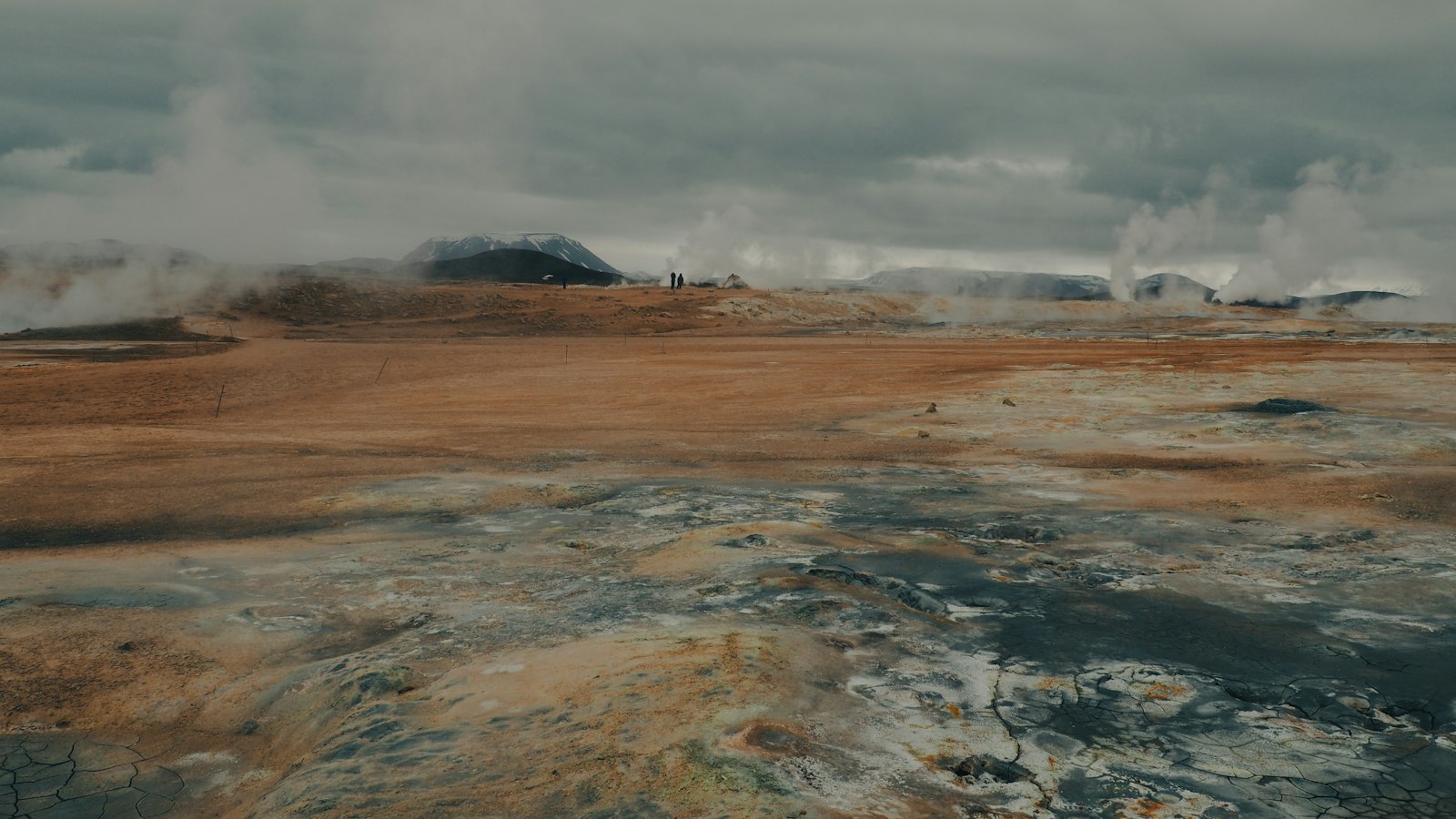
Among the range of life that has adapted to Iceland’s unique climate and geology is a particularly inconspicuous fern: Ophioglossum azoricum, also known as the small adder’s-tongue or lesser adder’s-tongue fern. While this species has a widespread Atlantic–Mediterranean distribution, in Iceland it is an especially rare and remarkable presence.
Geothermal lifelines in a cold climate
Ophioglossum azoricum is native to several temperate regions stretching across islands and coasts bordering the northern Atlantic Ocean. Its distribution reaches from as far north as Greenland and Iceland all the way south to the Macaronesian islands and the Iberian Peninsula. Beyond these maritime homes, it also appears in the Toscana region of Italy, parts of central Europe like the Czech Republic and Poland, and as far east as Cyprus, Turkey, and Lebanon.
Yet in the subarctic conditions of Iceland and Greenland, this fern’s survival depends on a natural oddity: geothermal activity. In these northern reaches, it grows only in places where heated earth creates a microclimate warm enough to permit its growth. Such geothermal pockets mimic the milder environments the species favours elsewhere, allowing it to endure despite the broader cold and treeless landscape.
A fern of fleeting appearance
The small adder’s-tongue fern is modest in almost every way. Typically supporting just one to three leaves from its upright rhizome, each leaf is lens-shaped or narrowly elliptical, measuring 2–4 centimetres in length. The plant does not form large fronds, instead presenting a single pointed blade alongside a slender spore-bearing spike. This spike, which can carry 4–18 spore capsules on each side, splits open when mature to release its spores to the wind.
In most of its European habitats, Ophioglossum azoricum prefers open or sparsely vegetated soils, common on exposed clifftops above the sea. An unusual exception occurs in England’s New Forest, where tightly grazed, damp grassland provides a rare inland home. In Iceland, however, the fern is restricted to sites where soil warmth is maintained by geothermal energy, such as the banks of warm springs or areas with clay-rich hot soils.
Ophioglossum azoricum is closely related to and sometimes grouped as a subspecies of Ophioglossum vulgatum. Botanical studies suggest it resulted from a hybrid between O. vulgatum and O. lusitanicum. Distinctive in the plant world for its exceptionally high chromosome count, 2n equals about 480, it attracts scientific interest for genetic as well as ecological reasons.
Listed as endangered in Iceland, Ophioglossum azoricum is both a botanical rarity and an indicator of the island’s dynamic relationship between geology and living things. Its continued survival remains tied to the warmth seeping up from the deep earth, underscoring how closely Icelandic biodiversity is linked to the island’s active geological heart.
Sources
- Wikipedia
- Wikipedia (Icelandic) in Icelandic


