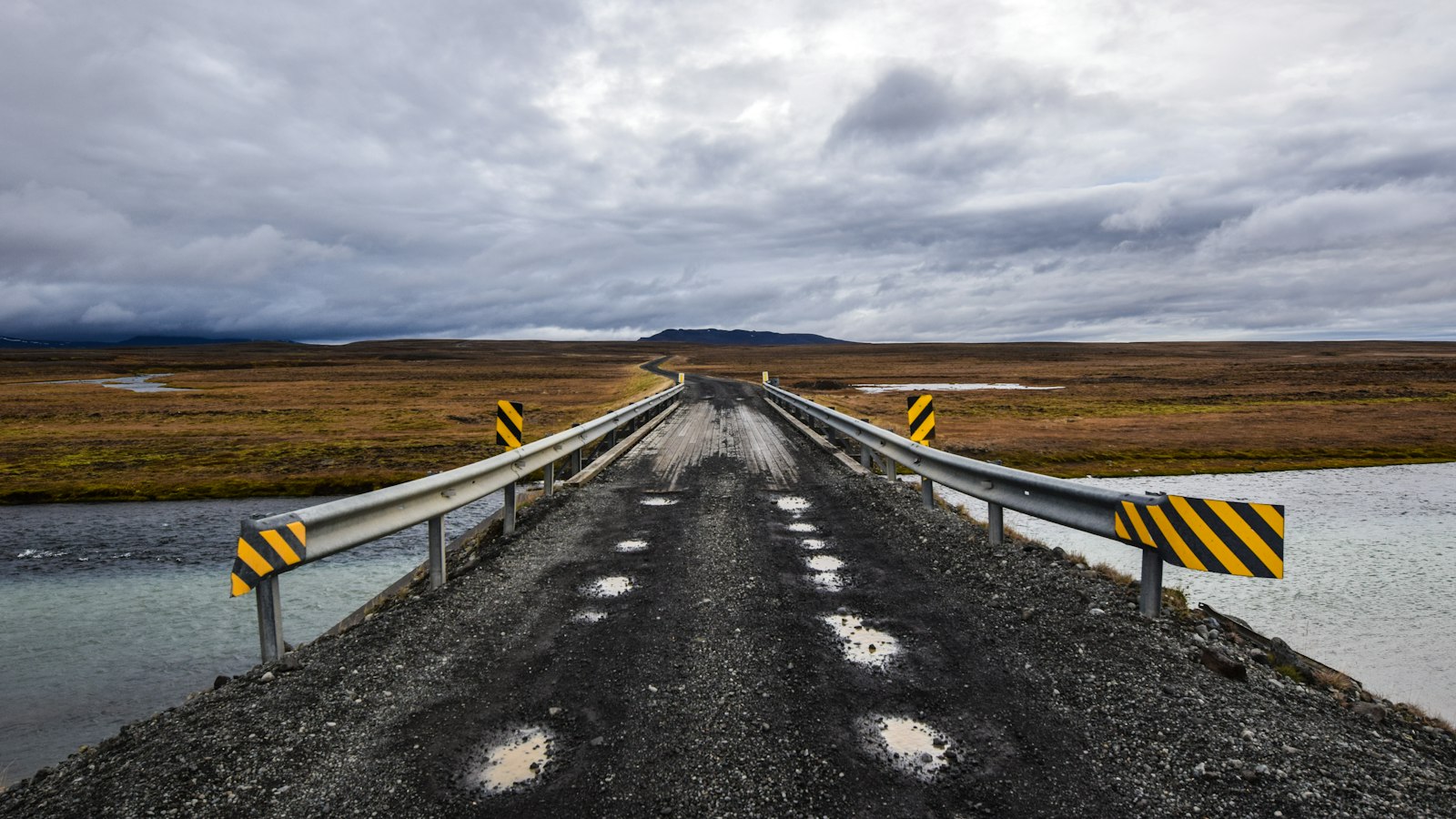
In the landscape of western Iceland, amid farmsteads and the steady course of rivers, the Hvítá bridge (Hvítárbrú) stands as a testament to early twentieth-century engineering on the island. Opened in 1928, this reinforced concrete bridge stretches 106 metres across the Hvítá river, linking the surroundings of Ferjukot and Hvítárvalla. Its presence once shaped travel and connection between the northern and southern regions, especially before the era of wider roads and larger bridges.
A milestone in Icelandic engineering
The bridge was designed by Árni Pálsson, an Icelandic engineer born in 1897, who captured the prevailing trends and necessities of his time. Emphasising function and cost, he opted for a narrow, single-lane design, at just 3 metres wide, the bridge could only allow one vehicle to pass at a time. Each of the two graceful arches spans 51 metres over the river below. Construction began in April 1928, involving the use of 1,100 cubic metres of concrete and 22 metric tons of steel. In a testament to careful budgeting, the anticipated cost of 169,000 Icelandic krónas was more or less met.
Role in Iceland’s road network
For more than five decades, the Hvítá bridge was a critical artery for travellers and goods making the journey between the island’s north and south. It was part of the route known as Hringvegurinn, or the Ring Road, until the inauguration of the Borgarfjörður bridge at Borgarnes in 1981 shifted the flow of long-distance traffic. Positioned just 4 kilometres upstream from the Hvítá’s mouth at Borgarfjörður, near the Ferjukot farmstead in what is now the Borgarbyggð municipality, the bridge enabled vital connections in a region defined by wide water crossings and shifting weather.
When the bridge formally opened on 1 November 1928, Prime Minister Tryggvi Þórhallsson was in attendance despite freezing, snowy conditions. Around 500 people gathered for the event, which saw Anna Guðrún, the Prime Minister’s wife, perform the symbolic ribbon cutting. Such ceremonies highlighted the significance of modern infrastructure in a country where natural barriers often shaped daily life.
The bridge’s endurance and functional elegance did not go unrecognised. During the 2002 anniversary convention of Verkfræðingafélag Íslands (the Icelandic engineering association), the Hvítá bridge was honoured as the most outstanding Icelandic engineering achievement from 1921 to 1930. Today, it remains visible evidence of the ambitions and abilities of its era, one lane, two arches, and a story that spans both a river and decades of Icelandic life.
Sources
- Wikipedia
- Wikipedia (Icelandic) in Icelandic


