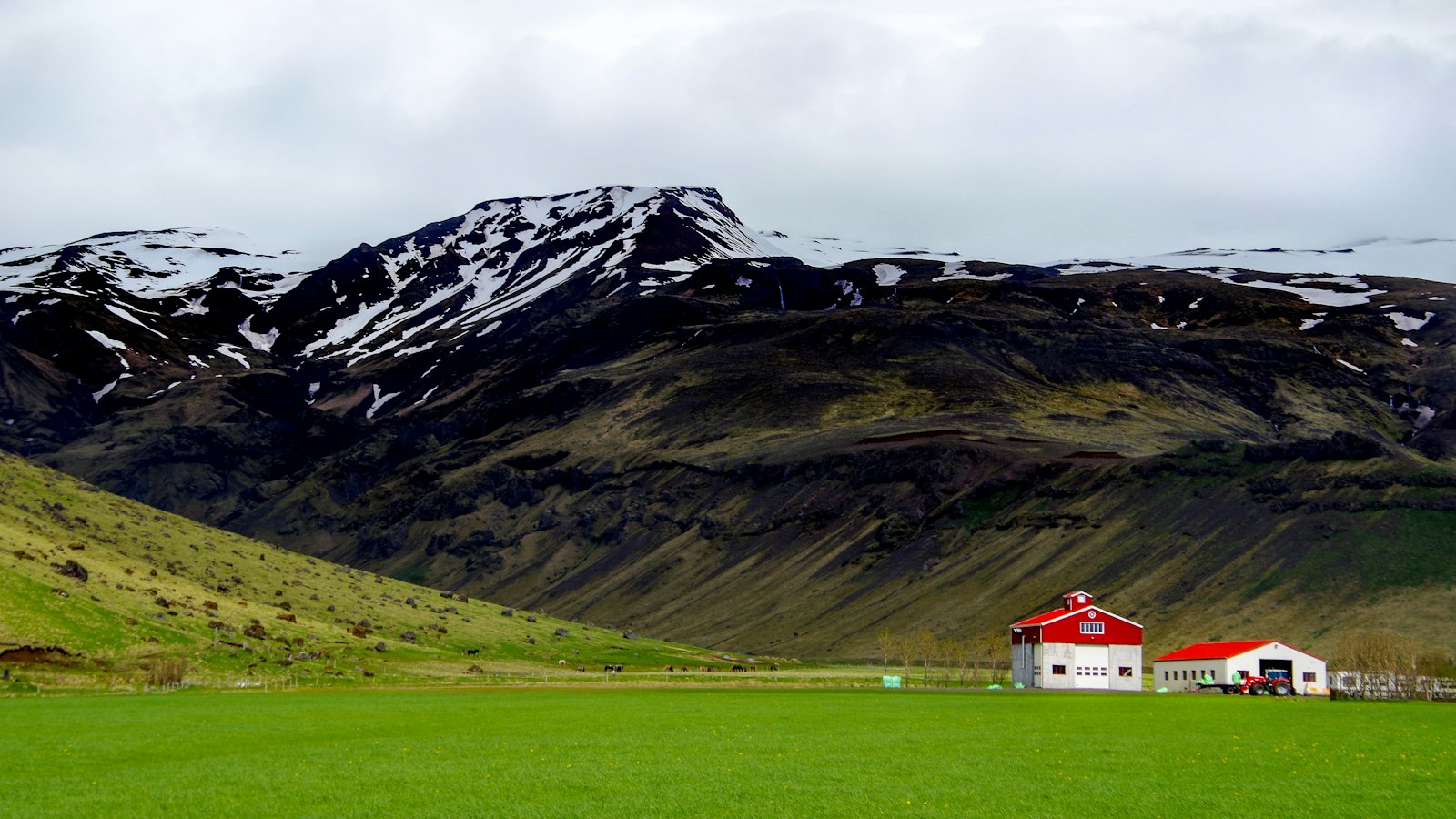
Tucked in the rich agricultural expanse of Skagafjörður’s Langholt, the settlement known as Stóra-Seyla traces centuries of Icelandic history and changing names. The area it occupies stretches generously between the waterways of Húseyjarkvísl to the east and Sæmundará on its western side.
Originally carrying the simpler title Seyla, the manor’s identity shifted in the 1600s as a new smallholding called Litla-Seyla emerged on land separated from the main estate. In contemporary records, after Litla-Seyla was renamed Brautarholt in 1915, the principal farm was customarily referred to again as Seyla, though the full name Stóra-Seyla, meaning “Big Seyla”, remained official. The word “Seyla” itself is understood to refer to a bog, a nod to the characteristic wetlands of the region.
Family ties, land and annals
Stóra-Seyla’s documented past is interwoven with the movements of notable Icelanders. In 1508, Gottskálk Nikulásson, who held the office of bishop, provided Seyla as part of his daughter Kristín’s dowry. Her marriage to the lawyer Þorvarður Erlendsson secured the estate’s place in family lines for decades. By the early 17th century, Þorbergur Hrólfsson had taken over the property. His descendants and kin maintained links to the farm for generations, though there were interruptions in their tenure.
Þorbergur’s son, Halldór Þorbergsson, later became known for his writings, with the Seyluannáll or “Seyla Annals” among his contributions to local historical chronicles. Another figure of note, Marteinn Arnoddson, lived at Seyla in 1713. Arnoddson operated a printing press based in nearby Hólar, connecting Seyla to the early days of Icelandic print culture.
A medieval church and its unusual burial
In medieval times, Seyla also featured a church. This site plays a role in the Sturlunga Saga, a collection of important historical tales. In 1255, Oddur Þórarinsson was killed in Geldingaholt. As he had been excommunicated, church custom forbade him burial in consecrated ground. Nevertheless, his body was brought to Seyla and placed beneath the wall of the church’s cemetery, since no traditional plot was available.
Sources
- Wikipedia
- Wikipedia (Icelandic) in Icelandic


